by epionepainandspines | Oct 22, 2026 | Blog
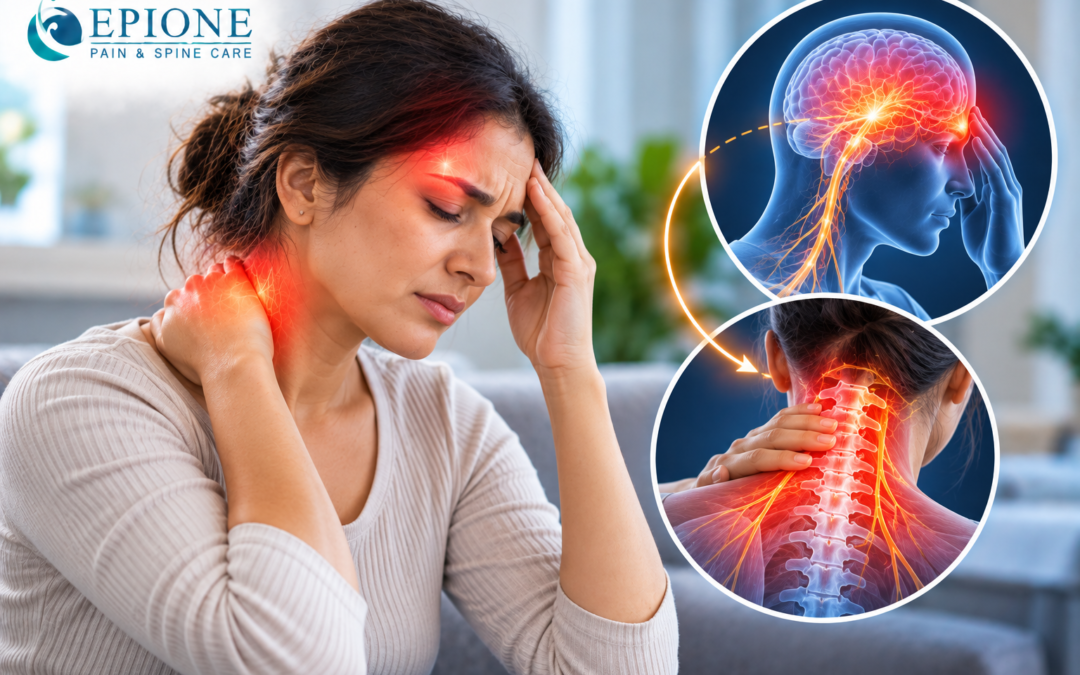
Quick answer: Neck pain is common in people with migraine and can be a migraine symptom, a trigger, or a separate cervical problem. Newer research is exploring shared pain-processing mechanisms, including central sensitization, which may help explain why migraine,...
by epionepainandspines | Oct 22, 2026 | Blog
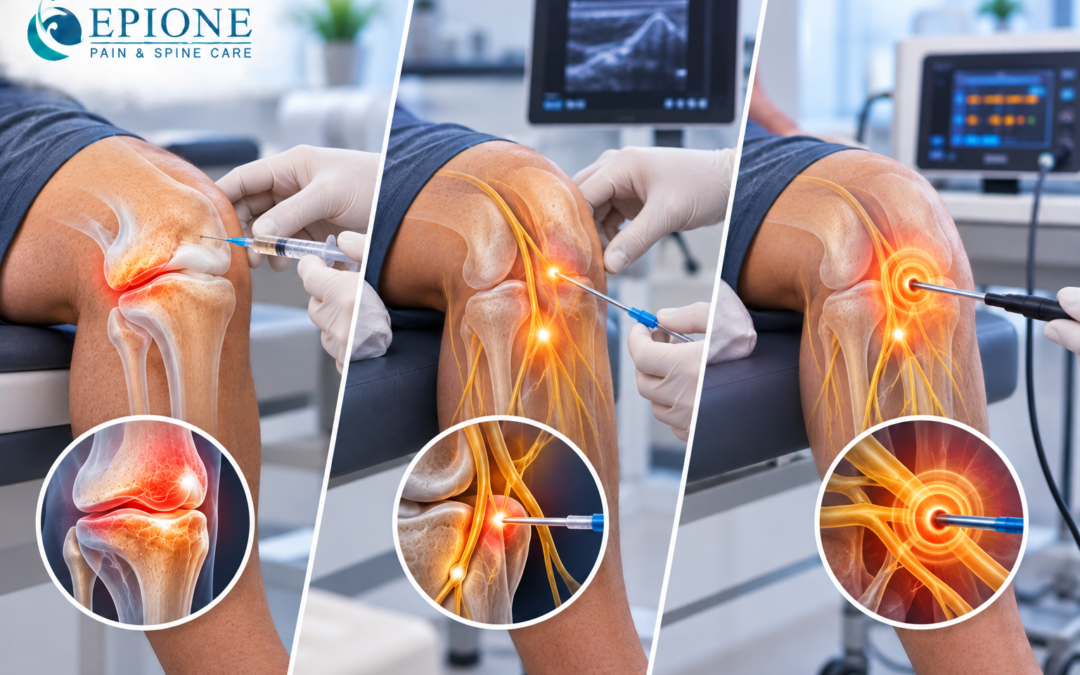
Quick answer: A knee joint injection places medication inside the joint, a genicular nerve block targets sensory nerves around the knee, and radiofrequency ablation uses energy to reduce pain signaling from selected nerves. They are not interchangeable, and the right...
by epionepainandspines | Oct 22, 2026 | Blog
Quick answer: Genicular nerve blocks can be performed with local anesthetic, and some clinicians add corticosteroid. A 2026 randomized placebo-controlled trial specifically examined whether adding steroid provides additional clinical value; the result should inform...
by epionepainandspines | Oct 22, 2026 | Blog
Quick answer: NaV1.8 inhibitors are a new class of pain medicines designed to reduce peripheral pain signaling without acting on opioid receptors. Suzetrigine (Journavx) was approved by the U.S. FDA in January 2025 for moderate-to-severe acute pain in adults; that...
by epionepainandspines | Oct 22, 2026 | Blog
Quick answer: Peripheral nerve stimulation (PNS) delivers electrical stimulation near a selected peripheral nerve to modulate pain signaling. It is being studied and used in selected neuropathic pain conditions, but candidacy depends on a clear pain target, prior...
by epionepainandspines | Oct 22, 2026 | Blog
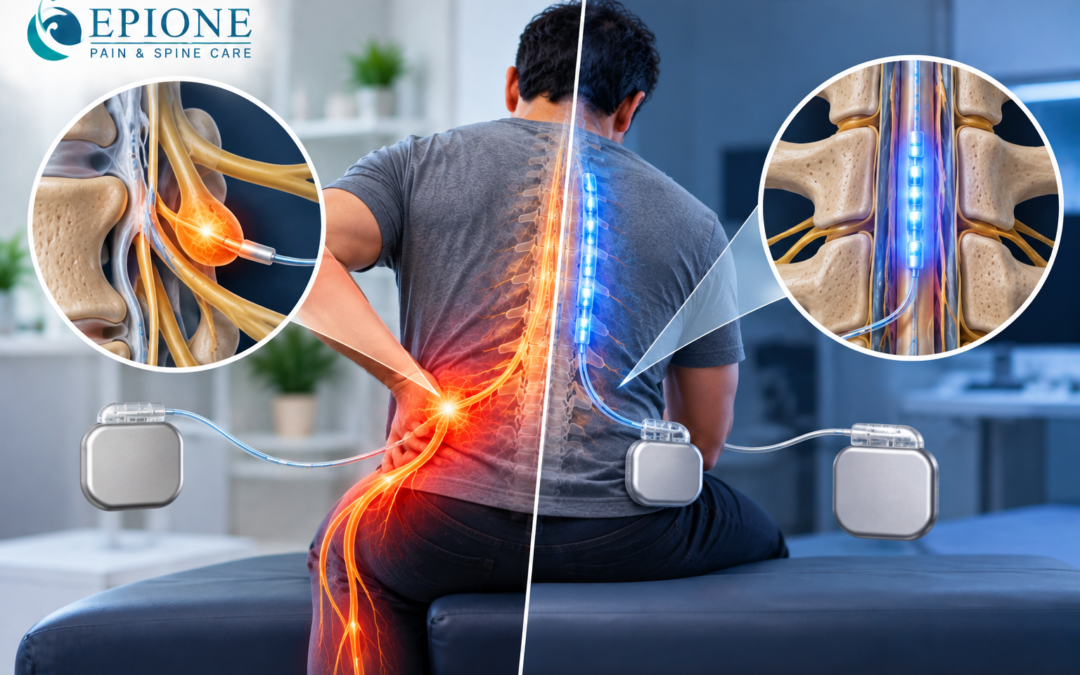
Quick answer: Dorsal root ganglion (DRG) stimulation and spinal cord stimulation (SCS) both use implanted electrical neuromodulation, but they target different neural structures. DRG stimulation can provide highly focal coverage for selected neuropathic pain regions,...