

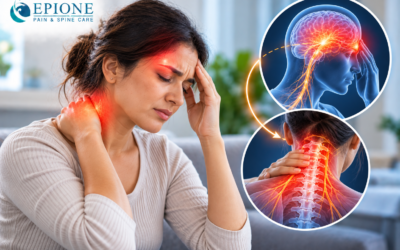
Why Migraine, Neck Pain and Back Pain Can Overlap: What New Pain-Pathway Research Is Showing
Quick answer: Neck pain is common in people with migraine and can be a migraine symptom, a trigger, or a separate cervical problem. Newer research is exploring shared pain-processing mechanisms, including central sensitization, which may help explain why migraine,...
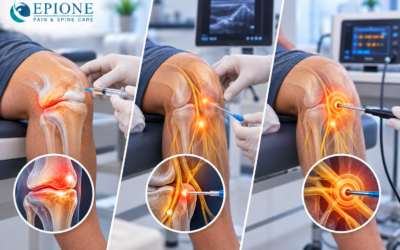
Knee Injection, Genicular Nerve Block or RFA: How Are Non-Surgical Knee Pain Procedures Different?
Quick answer: A knee joint injection places medication inside the joint, a genicular nerve block targets sensory nerves around the knee, and radiofrequency ablation uses energy to reduce pain signaling from selected nerves. They are not interchangeable, and the right...
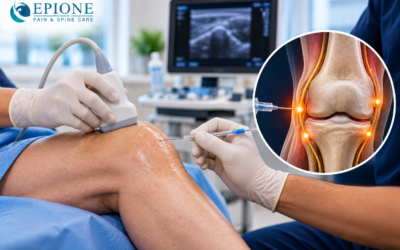
Do Genicular Nerve Blocks Need Steroids? What New 2026 Research Suggests
Quick answer: Genicular nerve blocks can be performed with local anesthetic, and some clinicians add corticosteroid. A 2026 randomized placebo-controlled trial specifically examined whether adding steroid provides additional clinical value; the result should inform...

Beyond Opioids: What Are NaV1.8 Pain Medicines and Why Are Pain Specialists Watching Them?
Quick answer: NaV1.8 inhibitors are a new class of pain medicines designed to reduce peripheral pain signaling without acting on opioid receptors. Suzetrigine (Journavx) was approved by the U.S. FDA in January 2025 for moderate-to-severe acute pain in adults; that...
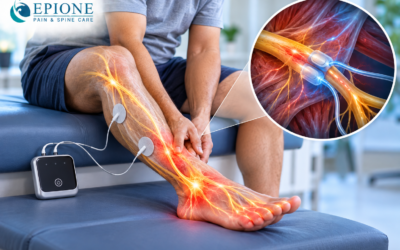
Peripheral Nerve Stimulation for Neuropathic Pain: Where Does It Fit in Modern Pain Care?
Quick answer: Peripheral nerve stimulation (PNS) delivers electrical stimulation near a selected peripheral nerve to modulate pain signaling. It is being studied and used in selected neuropathic pain conditions, but candidacy depends on a clear pain target, prior...
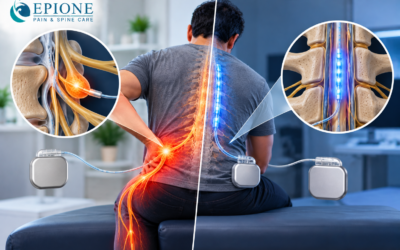
DRG Stimulation vs Spinal Cord Stimulation: Why the Location of Nerve Pain Matters
Quick answer: Dorsal root ganglion (DRG) stimulation and spinal cord stimulation (SCS) both use implanted electrical neuromodulation, but they target different neural structures. DRG stimulation can provide highly focal coverage for selected neuropathic pain regions,...
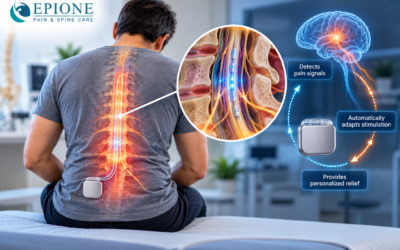
Smart Spinal Cord Stimulation: How Closed-Loop SCS Adjusts to the Body in Real Time
Quick answer: Closed-loop spinal cord stimulation is a form of neuromodulation that measures the nervous system’s response to each stimulation pulse and adjusts output in real time. The goal is to keep stimulation within a therapeutic range despite changes in posture...

Menopause Joint Pain or Arthritis? How to Tell When Midlife Aches Need Evaluation
Quick answer: Menopause-related aches and arthritis can overlap, and age alone cannot distinguish them. Diffuse stiffness that fluctuates with sleep and menopausal symptoms may look different from persistent joint swelling, mechanical loss of motion or inflammatory...

Musculoskeletal Symptoms in Menopause: Why Joint and Muscle Pain Can Increase in Midlife
Quick answer: Muscle and joint symptoms are commonly reported around perimenopause and menopause, but the field is still defining the best terminology and mechanisms. The phrase “musculoskeletal syndrome of menopause” is an evolving concept rather than a single...
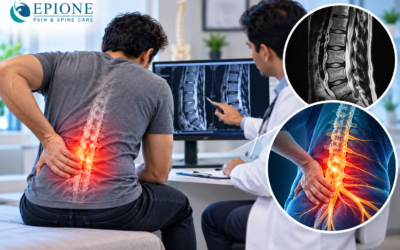
Severe Back Pain but a “Normal” MRI? Why Scan Findings and Pain Do Not Always Match
Quick answer: A normal or mildly abnormal MRI does not mean that back pain is imaginary. MRI shows anatomy, while pain depends on how tissues, nerves, movement, inflammation and the nervous system interact; the diagnosis should therefore combine symptoms, examination...