

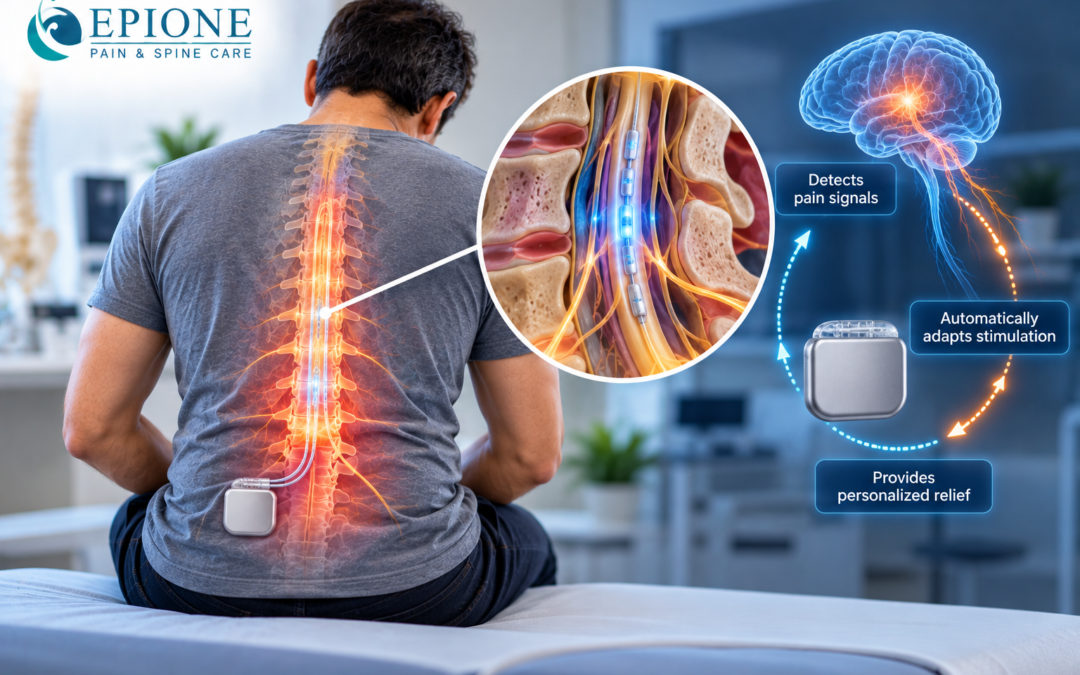
Quick answer: Closed-loop spinal cord stimulation is a form of neuromodulation that measures the nervous system’s response to each stimulation pulse and adjusts output in real time. The goal is to keep stimulation within a therapeutic range despite changes in posture or electrode-to-spinal-cord distance.
Key takeaways
- Closed loop spinal cord stimulation should be understood in clinical context, not from one symptom or scan alone.
- The most useful treatment plan starts with a plausible pain mechanism and measurable functional goals.
- Newer research can improve patient selection, but emerging evidence should not be marketed as a guaranteed cure.
People rarely search for “closed loop spinal cord stimulation” because they want a textbook definition. Usually there is a real decision behind the search: a scan report that is confusing, pain that has not improved, or a new treatment name that sounds promising but is hard to evaluate. This guide is written to make that decision easier. It explains what clinicians mean by the term, where the evidence is strong or still emerging, and which questions are worth taking to a specialist appointment.
Why “closed loop” is different
Traditional spinal cord stimulation delivers programmed electrical stimulation according to settings selected during device programming. Closed-loop systems add feedback: they can measure evoked compound action potentials, or ECAPs, which reflect neural response, and automatically adjust stimulation to keep it closer to a target level.
This is conceptually similar to other feedback-controlled technologies in medicine. It does not mean the device “thinks” or diagnoses pain. It means stimulation can be adjusted based on a measurable physiological signal rather than remaining fixed while the patient changes posture or activity.
What problem is the technology trying to solve?
The distance between implanted electrodes and the spinal cord can change slightly with movement and body position. In an open-loop system, that can affect how much neural tissue is recruited by a fixed stimulus. Closed-loop systems aim to reduce that variability and deliver more consistent dosing of stimulation.
A 2026 systematic review and a separate meta-analysis reported encouraging outcomes for selected chronic pain populations, including chronic back and leg pain. At the same time, the evidence base includes a limited number of studies and should not be interpreted as proof that every closed-loop system is superior for every patient.
Who might be evaluated for spinal cord stimulation
Neuromodulation is generally considered for chronic pain that has not responded adequately to less invasive care and fits an indication for which stimulation may be appropriate. The specific diagnosis, previous surgeries, neurological status, psychological readiness, medication use and functional goals all matter.
Epione’s spinal cord stimulation page describes stimulation as a treatment used in selected resistant pain conditions. People with persistent neuropathic pain or chronic back and leg pain may be assessed for neuromodulation, but a blog should not imply that every patient with severe pain is a candidate.
The trial phase still matters
Many SCS pathways include a temporary trial before permanent implantation. The trial helps determine whether stimulation meaningfully improves pain and function for that individual. A successful trial does not guarantee permanent results, and different centers use different thresholds and outcome measures.
Patients should ask what success will mean before the trial begins: percentage pain reduction, walking tolerance, sleep, reduction in rescue medication, or ability to perform a valued activity. Function-based goals reduce the risk of judging the therapy from one fluctuating pain score.
Closed-loop SCS is not a replacement for diagnosis
Technology can be sophisticated, but it still depends on the right patient and the right pain mechanism. Someone whose pain is driven by untreated mechanical instability, progressive neurological compression or another correctable cause may need a different pathway. Similarly, chronic sciatica treatment should begin with diagnosis, not an assumption that an implant is the inevitable endpoint.
At a multidisciplinary pain management center, neuromodulation can be discussed alongside rehabilitation, medication, interventions and surgical opinions when appropriate. The best device is not always the newest device; it is the one supported by diagnosis, evidence, patient goals and long-term follow-up capability.
Questions to ask about any implanted pain device
Ask about the evidence for your exact condition, the trial process, expected benefits, revision risk, infection risk, battery management, MRI compatibility, programming support and what happens if the device stops helping. Also ask whether the center can provide long-term follow-up rather than only implantation.
Availability of specific closed-loop platforms varies by country, regulatory approval and center. This article is educational and should not be read as a claim that a particular device is available at Epione. A consultation is required to understand which neuromodulation options, if any, are appropriate locally.
What current evidence can—and cannot—tell us
A useful way to read newer pain research is to separate three questions: does the mechanism make biological sense, has it been demonstrated in the type of patient being discussed, and does treating that mechanism improve outcomes that matter to patients? For closed loop spinal cord stimulation, those questions are more useful than asking whether the topic is simply “new” or “advanced.” Related search terms such as smart spinal cord stimulation, closed loop SCS, ECAP spinal cord stimulation, traditional SCS vs closed loop SCS describe overlapping interests, but they should not be treated as interchangeable diagnoses. A study may show promising average improvement while still leaving uncertainty about which individual will respond, how long benefit lasts, and whether the result compares favorably with simpler care. This is particularly important in pain medicine because many studies enroll highly selected patients, use different definitions of success, and combine pain scores with functional outcomes in different ways. For patients, the safest interpretation is that evidence can guide a conversation; it cannot guarantee a personal result. For patients, the same principle improves decision-making: understand what is known, what remains uncertain, and whether the evidence is observational, randomized, or mainly mechanistic.
How a specialist turns the information into a treatment plan
When a patient is trying to understand closed loop spinal cord stimulation, the next step should not be chosen from the search result alone. A specialist first asks what problem needs to be solved: Is the priority walking, sleeping, returning to work, reducing medication, or understanding a confusing scan? The clinician then builds a differential diagnosis, checks for warning signs, reviews previous care and decides whether more testing would actually change management. Where appropriate, that assessment can connect to spinal cord stimulation or neuropathic pain treatment depending on which diagnosis best matches the symptoms. The purpose is to move from a broad symptom or question to the most relevant condition or treatment pathway, without assuming that every patient needs the same test or procedure.
A practical symptom diary before your consultation
Before a consultation, track symptoms for one to two weeks if the condition is stable and non-urgent. Note where the pain begins, where it spreads, what time of day it is worst, which movements or positions change it, whether there is numbness or weakness, how sleep is affected, and what you can no longer do comfortably. Record medicines and supplements, previous injections or procedures, and the actual benefit rather than only whether they were “tried.” If you have imaging, bring both the report and the images when possible. This kind of preparation creates a more human and more accurate consultation because the discussion starts with your lived pattern of symptoms instead of a generic label. It also gives the clinician a baseline for measuring whether treatment is genuinely helping. If symptoms are rapidly worsening, accompanied by new neurological deficits, fever, major trauma, loss of bladder or bowel control, or another emergency feature, do not wait to complete a diary—seek prompt medical assessment.
Expert pain assessment in Hyderabad
For patients in Hyderabad who are exploring newer pain technologies or medicines, expert interpretation matters as much as the headline. Epione identifies Dr. Minal Chandra, MBBS, DA, DNB, FIPM, as its Co-Founder and Consultant Pain Specialist with 15+ years of experience in interventional pain medicine. A consultation can help place closed loop spinal cord stimulation in the context of your diagnosis, previous treatment and options that are actually available locally. Because regulatory approval, device availability and evidence can differ by country and condition, an emerging treatment should not be presented as automatically suitable or available.
Learn more about Epione’s pain specialists and multidisciplinary care: Dr. Minal Chandra at Epione | Book an appointment
References
- 2026 systematic review of closed-loop spinal cord stimulation
- 2026 meta-analysis of closed-loop spinal cord stimulation
If pain is limiting sleep, work, walking or daily activity, consider a specialist review rather than choosing a procedure from a scan or search result alone. Request an Epione consultation and ask about Dr. Minal Chandra’s availability.
Frequently Asked Questions
1. What is closed-loop spinal cord stimulation?
Closed-Loop Spinal Cord Stimulation is an interventional pain treatment described in this article. Its role depends on the pain diagnosis, target and available evidence. For closed loop spinal cord stimulation, the answer depends on the symptom pattern, examination findings, medical history and the goal of treatment. A qualified clinician can explain which findings are clinically important and whether testing, rehabilitation, medication or a targeted procedure is appropriate. Seek prompt medical care if symptoms are rapidly worsening or include a new neurological deficit or other warning sign.
2. What is the main purpose of closed-loop spinal cord stimulation?
Deliver feedback-adjusted neuromodulation for selected chronic pain conditions. For closed loop spinal cord stimulation, the answer depends on the symptom pattern, examination findings, medical history and the goal of treatment. A qualified clinician can explain which findings are clinically important and whether testing, rehabilitation, medication or a targeted procedure is appropriate. Seek prompt medical care if symptoms are rapidly worsening or include a new neurological deficit or other warning sign.
3. How is closed-loop spinal cord stimulation different from traditional open-loop spinal cord stimulation?
The procedures target different parts of the pain pathway or use different technology. The choice should reflect the patient’s diagnosis and pain distribution. For closed loop spinal cord stimulation, the answer depends on the symptom pattern, examination findings, medical history and the goal of treatment. A qualified clinician can explain which findings are clinically important and whether testing, rehabilitation, medication or a targeted procedure is appropriate. Seek prompt medical care if symptoms are rapidly worsening or include a new neurological deficit or other warning sign.
4. Who may be considered for this procedure?
A specialist assessment and usually a stimulation trial. For closed loop spinal cord stimulation, the answer depends on the symptom pattern, examination findings, medical history and the goal of treatment. A qualified clinician can explain which findings are clinically important and whether testing, rehabilitation, medication or a targeted procedure is appropriate. Seek prompt medical care if symptoms are rapidly worsening or include a new neurological deficit or other warning sign.
5. Is it a first-line treatment?
Usually not. Most interventional or implantable procedures are considered after appropriate conservative and diagnosis-specific care. For closed loop spinal cord stimulation, the answer depends on the symptom pattern, examination findings, medical history and the goal of treatment. A qualified clinician can explain which findings are clinically important and whether testing, rehabilitation, medication or a targeted procedure is appropriate. Seek prompt medical care if symptoms are rapidly worsening or include a new neurological deficit or other warning sign.
6. Does everyone need a trial first?
Some neuromodulation procedures use a temporary trial, while other procedures do not. The protocol depends on the device, indication and center. For closed loop spinal cord stimulation, the answer depends on the symptom pattern, examination findings, medical history and the goal of treatment. A qualified clinician can explain which findings are clinically important and whether testing, rehabilitation, medication or a targeted procedure is appropriate. Seek prompt medical care if symptoms are rapidly worsening or include a new neurological deficit or other warning sign.
7. Will it cure the underlying disease?
Usually not. Most pain procedures aim to reduce pain signaling or improve function; they do not necessarily reverse the disease causing the pain. For closed loop spinal cord stimulation, the answer depends on the symptom pattern, examination findings, medical history and the goal of treatment. A qualified clinician can explain which findings are clinically important and whether testing, rehabilitation, medication or a targeted procedure is appropriate. Seek prompt medical care if symptoms are rapidly worsening or include a new neurological deficit or other warning sign.
8. How much pain relief should I expect?
Response varies. Published averages cannot predict an individual outcome, so realistic goals should include function as well as pain reduction. For closed loop spinal cord stimulation, the answer depends on the symptom pattern, examination findings, medical history and the goal of treatment. A qualified clinician can explain which findings are clinically important and whether testing, rehabilitation, medication or a targeted procedure is appropriate. Seek prompt medical care if symptoms are rapidly worsening or include a new neurological deficit or other warning sign.
9. How long can benefit last?
Duration depends on the procedure, diagnosis, device or nerve target and individual response. Some treatments are temporary, while implants require long-term follow-up. For closed loop spinal cord stimulation, the answer depends on the symptom pattern, examination findings, medical history and the goal of treatment. A qualified clinician can explain which findings are clinically important and whether testing, rehabilitation, medication or a targeted procedure is appropriate. Seek prompt medical care if symptoms are rapidly worsening or include a new neurological deficit or other warning sign.
10. What are the main risks?
Infection, bleeding, lead migration, device problems, inadequate pain relief and the risks of an implant procedure. For closed loop spinal cord stimulation, the answer depends on the symptom pattern, examination findings, medical history and the goal of treatment. A qualified clinician can explain which findings are clinically important and whether testing, rehabilitation, medication or a targeted procedure is appropriate. Seek prompt medical care if symptoms are rapidly worsening or include a new neurological deficit or other warning sign.
11. Can the procedure be repeated?
Sometimes, depending on the treatment and reason symptoms returned. Repeating a procedure should follow reassessment rather than happen automatically. For closed loop spinal cord stimulation, the answer depends on the symptom pattern, examination findings, medical history and the goal of treatment. A qualified clinician can explain which findings are clinically important and whether testing, rehabilitation, medication or a targeted procedure is appropriate. Seek prompt medical care if symptoms are rapidly worsening or include a new neurological deficit or other warning sign.
12. Do I need to stop blood thinners?
Some procedures require modification of anticoagulant or antiplatelet therapy, but changes must be coordinated with the prescribing clinician. Never stop these medicines on your own. For closed loop spinal cord stimulation, the answer depends on the symptom pattern, examination findings, medical history and the goal of treatment. A qualified clinician can explain which findings are clinically important and whether testing, rehabilitation, medication or a targeted procedure is appropriate. Seek prompt medical care if symptoms are rapidly worsening or include a new neurological deficit or other warning sign.
13. Is the procedure painful?
Local anesthesia and other comfort measures are commonly used, but the experience depends on the procedure. Ask the treating team what to expect. For closed loop spinal cord stimulation, the answer depends on the symptom pattern, examination findings, medical history and the goal of treatment. A qualified clinician can explain which findings are clinically important and whether testing, rehabilitation, medication or a targeted procedure is appropriate. Seek prompt medical care if symptoms are rapidly worsening or include a new neurological deficit or other warning sign.
14. How soon can I return to normal activity?
Recovery instructions vary. Many minimally invasive procedures allow early activity, while implanted devices require more restrictions during healing. For closed loop spinal cord stimulation, the answer depends on the symptom pattern, examination findings, medical history and the goal of treatment. A qualified clinician can explain which findings are clinically important and whether testing, rehabilitation, medication or a targeted procedure is appropriate. Seek prompt medical care if symptoms are rapidly worsening or include a new neurological deficit or other warning sign.
15. Can I have an MRI afterward?
MRI compatibility depends on the specific device and system. Patients with implants should always provide device details before any MRI. For closed loop spinal cord stimulation, the answer depends on the symptom pattern, examination findings, medical history and the goal of treatment. A qualified clinician can explain which findings are clinically important and whether testing, rehabilitation, medication or a targeted procedure is appropriate. Seek prompt medical care if symptoms are rapidly worsening or include a new neurological deficit or other warning sign.
16. Does age prevent treatment?
Not by itself. Medical fitness, diagnosis, infection risk, medications and functional goals are more important than age alone. For closed loop spinal cord stimulation, the answer depends on the symptom pattern, examination findings, medical history and the goal of treatment. A qualified clinician can explain which findings are clinically important and whether testing, rehabilitation, medication or a targeted procedure is appropriate. Seek prompt medical care if symptoms are rapidly worsening or include a new neurological deficit or other warning sign.
17. Can physiotherapy continue after the procedure?
Often yes, and rehabilitation may be important to convert pain relief into better function. Timing should follow the treating clinician’s advice. For closed loop spinal cord stimulation, the answer depends on the symptom pattern, examination findings, medical history and the goal of treatment. A qualified clinician can explain which findings are clinically important and whether testing, rehabilitation, medication or a targeted procedure is appropriate. Seek prompt medical care if symptoms are rapidly worsening or include a new neurological deficit or other warning sign.
18. When should I call the doctor after a procedure?
Contact the treating team for fever, increasing redness or drainage, new neurological symptoms, severe unexpected pain, or any post-procedure concern listed in your discharge instructions. For closed loop spinal cord stimulation, the answer depends on the symptom pattern, examination findings, medical history and the goal of treatment. A qualified clinician can explain which findings are clinically important and whether testing, rehabilitation, medication or a targeted procedure is appropriate. Seek prompt medical care if symptoms are rapidly worsening or include a new neurological deficit or other warning sign.
19. How do I know whether a center has the right expertise?
Ask how often the team performs the procedure, how patients are selected, how outcomes are tracked, and who provides long-term follow-up. For closed loop spinal cord stimulation, the answer depends on the symptom pattern, examination findings, medical history and the goal of treatment. A qualified clinician can explain which findings are clinically important and whether testing, rehabilitation, medication or a targeted procedure is appropriate. Seek prompt medical care if symptoms are rapidly worsening or include a new neurological deficit or other warning sign.
20. What is the most important question before proceeding?
Ask exactly what pain generator is being targeted and what evidence suggests that treating it is likely to improve your function. For closed loop spinal cord stimulation, the answer depends on the symptom pattern, examination findings, medical history and the goal of treatment. A qualified clinician can explain which findings are clinically important and whether testing, rehabilitation, medication or a targeted procedure is appropriate. Seek prompt medical care if symptoms are rapidly worsening or include a new neurological deficit or other warning sign.