

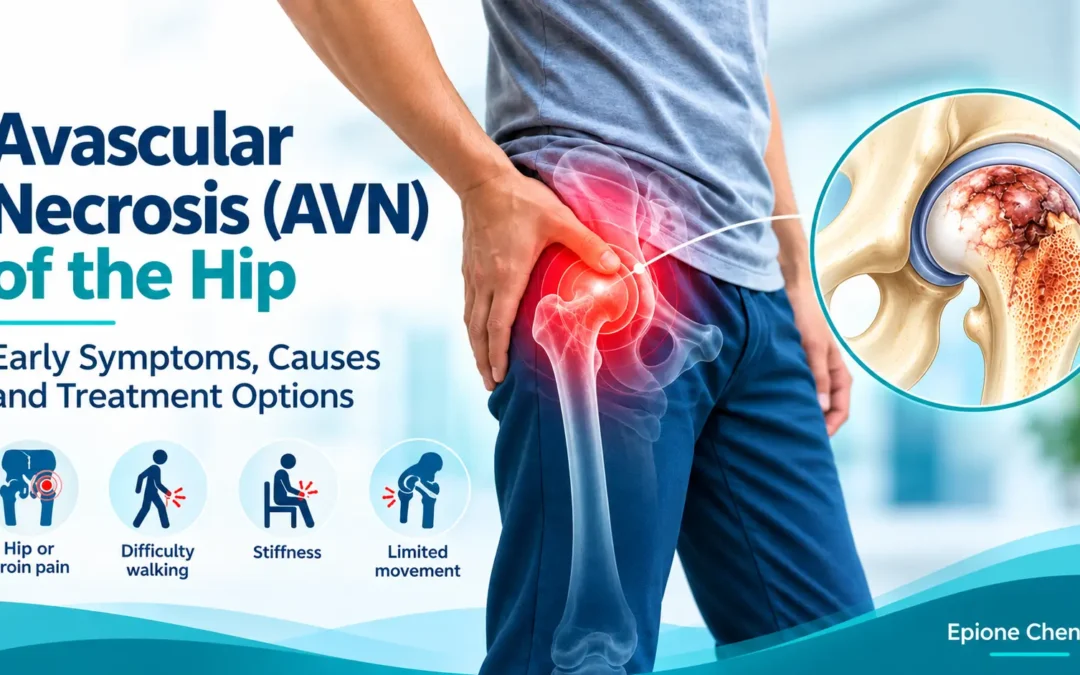
Avascular necrosis of the hip is a condition in which reduced blood supply damages bone tissue in the femoral head. It may cause hip or groin pain, stiffness and difficulty walking as the condition progresses.
The condition can develop gradually, and symptoms may not be noticeable in the early stages. Understanding the possible causes, symptoms, diagnosis and treatment options can help people make informed decisions about seeking medical care. You can also learn more about chronic pain causes, symptoms and treatment options to understand persistent pain and when medical assessment may be appropriate.
This article explains how hip AVN develops, the signs to look out for and the treatment approaches a qualified doctor may consider based on the stage of the condition.
What Is Avascular Necrosis (AVN) of the Hip?
Avascular necrosis, also known as osteonecrosis, occurs when the blood supply to a section of bone is reduced or interrupted. Without an adequate blood supply, bone tissue can become damaged and gradually lose its strength.
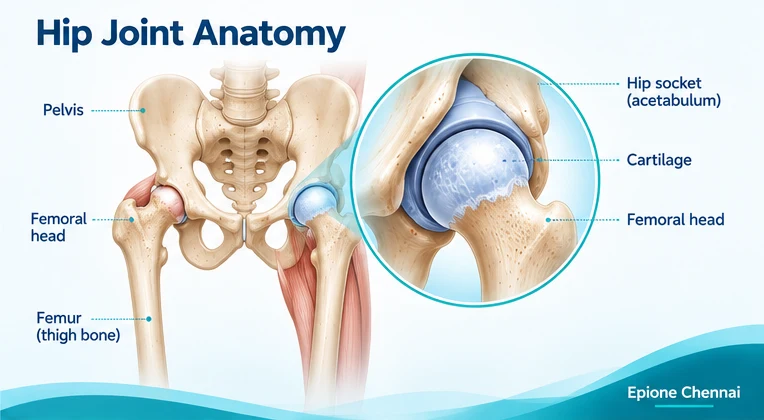
In the hip, AVN commonly affects the femoral head, which is the rounded upper end of the thigh bone that fits into the hip socket.
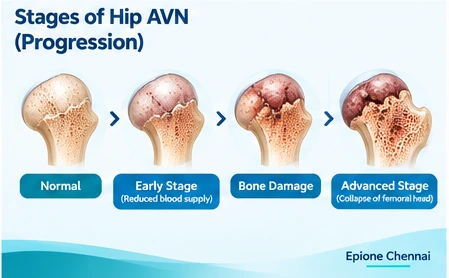
As the condition progresses, the affected bone may weaken and the surface of the femoral head may collapse. This can damage the hip joint and contribute to arthritis.
AVN may affect one hip or both hips. The severity and rate of progression vary from person to person.
Doctor Explains Avascular Necrosis (AVN) of the Hip
Watch this short video to learn more about avascular necrosis (AVN) and understand the condition from a doctor’s perspective.
What Are the Early Symptoms of Hip AVN?
Symptoms can vary depending on the stage of the condition. Some people may not experience noticeable symptoms during the early stages.
When symptoms develop, they may include:
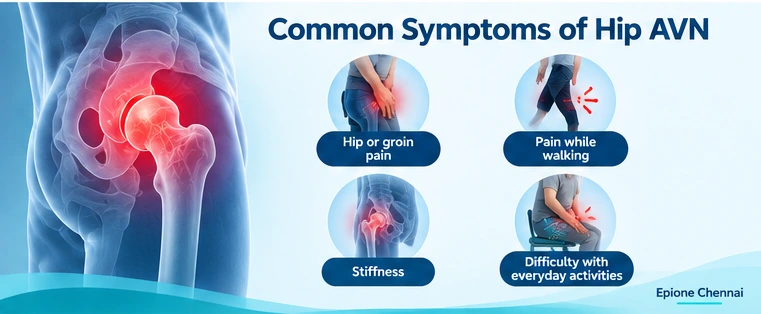
– Deep hip or groin pain: Discomfort may be felt in the groin, buttock or side of the hip.
– Pain while walking: Pain may become noticeable when standing, walking or putting weight on the affected leg.
– Hip stiffness: Moving the hip may become uncomfortable, particularly during certain activities.
– Difficulty with everyday movements: Activities such as bending, squatting or putting on socks and shoes may become difficult.
– Pain at rest: In more advanced cases, discomfort may also occur while sitting or resting.
These symptoms do not necessarily indicate AVN. Other hip conditions can cause similar problems, so a clinical assessment is important to determine the cause.
What Causes Avascular Necrosis of the Hip?
AVN develops when the blood supply to part of the bone is disrupted. Several factors may contribute to this.
1. Previous injury
A hip fracture or dislocation can damage the blood vessels supplying the femoral head. In some cases, AVN develops after such an injury.
2. Long-term or high-dose corticosteroid use
Corticosteroid medicines are associated with an increased risk of AVN, particularly with certain doses and durations of use. The relationship depends on individual circumstances and other risk factors.
People taking prescribed corticosteroids should not stop or change their medication without consulting the prescribing doctor.
3. Excessive alcohol consumption
Heavy alcohol consumption is associated with an increased risk of osteonecrosis. The precise contribution varies between individuals.
4. Certain medical conditions
Some conditions, including sickle cell disease and certain blood or autoimmune disorders, may affect blood flow and increase the risk of AVN.
5. Unknown causes
In some people, AVN develops without an identifiable cause. A doctor may review the person’s medical history, medication use and other relevant factors to investigate possible contributing causes.
How Is Hip AVN Diagnosed?
Hip AVN cannot be confirmed from symptoms alone. Diagnosis usually involves a medical history, physical examination and appropriate imaging tests.
Medical examination
The doctor may ask when the pain began, where it is located, whether it worsens with activity and whether there is a history of injury or corticosteroid use.
Hip movement, tenderness and the ability to bear weight may also be assessed.
X-ray
An X-ray can help identify changes in the bone structure and signs of more advanced disease. However, early AVN may not be visible on an X-ray.
MRI scan
An MRI can detect changes associated with AVN before they become apparent on an X-ray. Depending on the symptoms and examination findings, the doctor may recommend an MRI when AVN is suspected.
The choice of investigation depends on the individual clinical situation.
What Are the Treatment Options for Hip AVN?
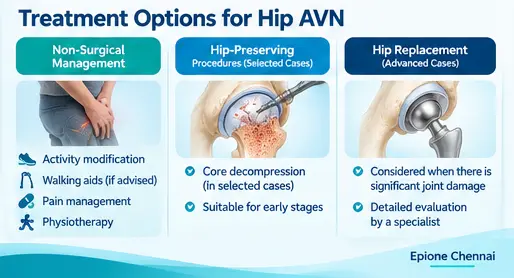
Treatment depends on several factors, including the stage of AVN, the extent of bone damage, whether the femoral head has collapsed, the person’s symptoms and their overall health.
There is no single treatment suitable for every patient.
1. Non-surgical management
In selected early-stage cases, a doctor may recommend measures such as:
– Modifying activities that place excessive load on the affected hip.
– Using walking aids when advised to reduce weight-bearing stress.
– Appropriate pain management under medical supervision.
– Physiotherapy tailored to the person’s condition and functional needs.
These measures may help manage symptoms and reduce stress on the joint. They do not reliably restore damaged bone or prevent progression in every case.
2. Procedures intended to preserve the hip joint
For selected patients, particularly before significant collapse of the femoral head, a specialist may consider procedures intended to preserve the joint, such as core decompression.
Suitability depends on the stage and extent of the disease. These procedures have limitations, and outcomes cannot be guaranteed.
3. Joint replacement
When AVN has progressed to collapse of the femoral head and substantial joint damage, hip replacement may be considered.
The decision depends on symptoms, imaging findings, functional limitations, overall health and the expected benefits and risks of surgery.
A specialist can explain the available options and whether joint-preserving treatment or joint replacement is appropriate.
Can Hip AVN Be Managed Without Surgery?
Whether AVN can be managed without surgery depends largely on the stage of the condition and the amount of damage to the femoral head.
Some people with early-stage disease may be suitable for non-surgical management or procedures intended to preserve the joint. However, non-surgical measures may not stop disease progression, and advanced AVN may require surgery.
It is important to understand the diagnosis and discuss the benefits, limitations and risks of each option with a qualified specialist before making a treatment decision.
When Should You Consult a Doctor for Hip Pain?
Consider seeking medical assessment if hip or groin pain persists, repeatedly returns or interferes with walking and everyday activities.
Medical assessment is particularly important if you have a history of hip injury, long-term corticosteroid use or a condition associated with an increased risk of AVN.
Seek urgent medical care if you develop sudden severe hip pain, cannot bear weight on the affected leg or experience significant pain after an injury.
Early assessment can help identify the cause of symptoms and determine whether further investigations are needed.

Frequently Asked Questions About Hip AVN
1. Can AVN of the hip occur without an injury?
Yes. AVN can develop without a previous hip injury. Certain medications, medical conditions and other risk factors may contribute, and some cases have no identifiable cause.
2. Can an X-ray detect AVN in its early stages?
Not always. Early AVN may not be visible on an X-ray. An MRI may be recommended if the doctor suspects AVN despite normal or inconclusive X-ray findings.
3. Is hip AVN always treated with surgery?
No. Treatment depends on the stage of the disease, the extent of bone damage and the person’s symptoms. Some cases may be managed non-surgically, while others may require a procedure or joint replacement.
4. Does hip AVN affect walking?
It can. Pain during weight-bearing activities may make walking difficult. In more advanced cases, damage to the femoral head may further affect mobility.
5. Can hip AVN affect both hips?
Yes. AVN can affect one or both hips. A doctor may recommend further assessment of the other hip depending on the clinical history and findings.
6. Which specialist should I consult for suspected hip AVN?
An orthopedic specialist experienced in hip conditions can assess the symptoms, review imaging and explain suitable treatment options. Depending on the clinical situation, other specialists may also be involved.
Conclusion
Avascular necrosis of the hip is a condition in which reduced blood supply damages bone tissue in the femoral head. Symptoms may include deep hip or groin pain, stiffness and discomfort while walking, although some people have no symptoms in the early stages.
Diagnosis may involve an examination, X-rays and MRI. Treatment varies according to the stage of AVN and the extent of joint damage, with options ranging from non-surgical management to procedures and hip replacement.
Persistent hip pain should be assessed by a qualified healthcare professional to establish the cause and discuss appropriate care.
Medical information disclaimer: This article is intended for general educational purposes and is not a substitute for professional medical advice, diagnosis or treatment. Individual treatment decisions should be made with a qualified healthcare professional.