by epionepainandspines | Oct 22, 2026 | Blog
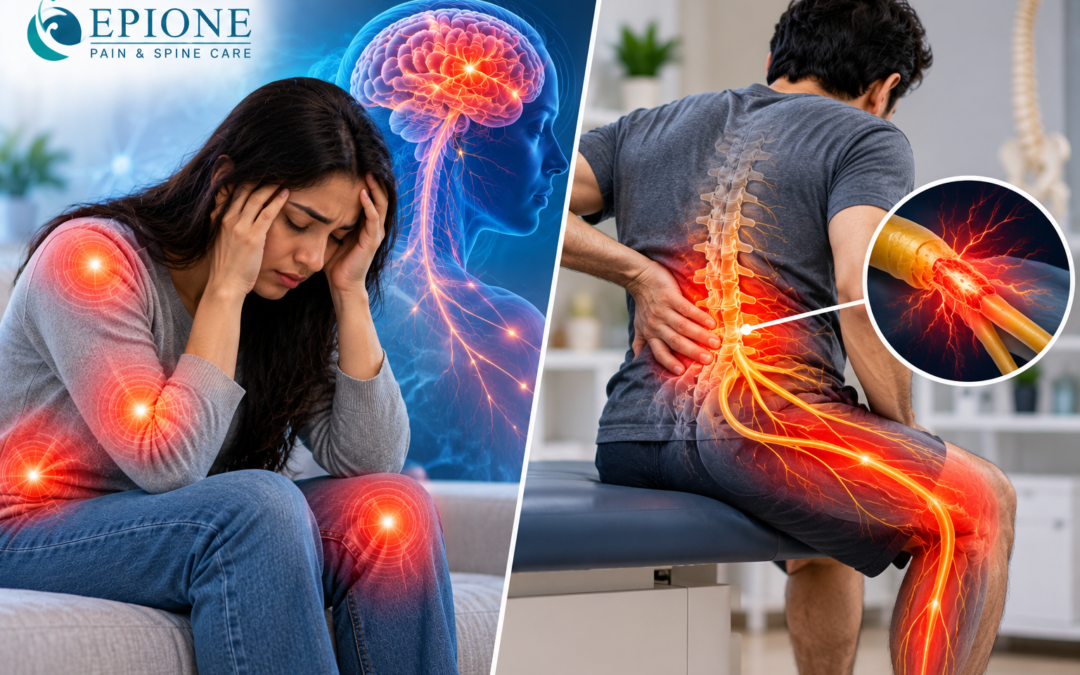
Quick answer: Neuropathic pain results from a lesion or disease affecting the somatosensory nervous system, while nociplastic pain describes altered nociception that is not fully explained by tissue damage or a clear nerve lesion. The two mechanisms can overlap, so...
by epionepainandspines | Oct 22, 2026 | Blog
Quick answer: Nociplastic pain is a mechanistic pain descriptor for pain associated with altered nociception when the symptoms are not fully explained by ongoing tissue damage or a clear lesion of the somatosensory nervous system. It is not the same as “imagined...
by epionepainandspines | Oct 20, 2026 | Blog
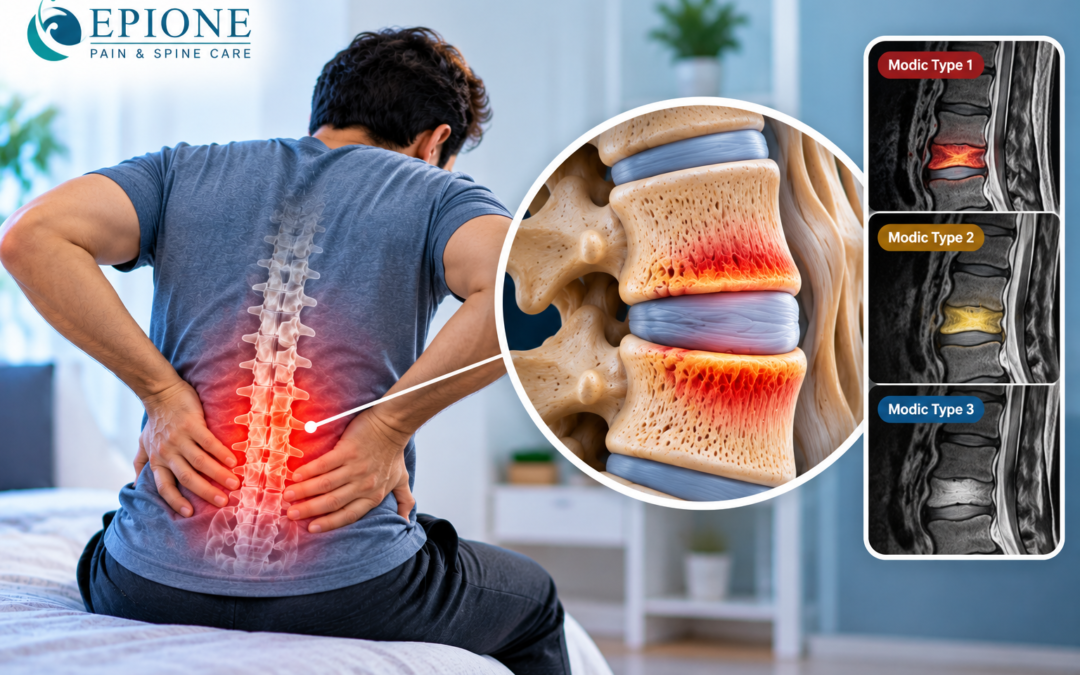
Quick answer: Modic changes are MRI signal changes in the vertebral bone next to a spinal disc. They can be associated with endplate degeneration and, in selected patients, vertebrogenic pain, but they are not automatically the cause of symptoms and should not be...
by epionepainandspines | Oct 20, 2026 | Blog
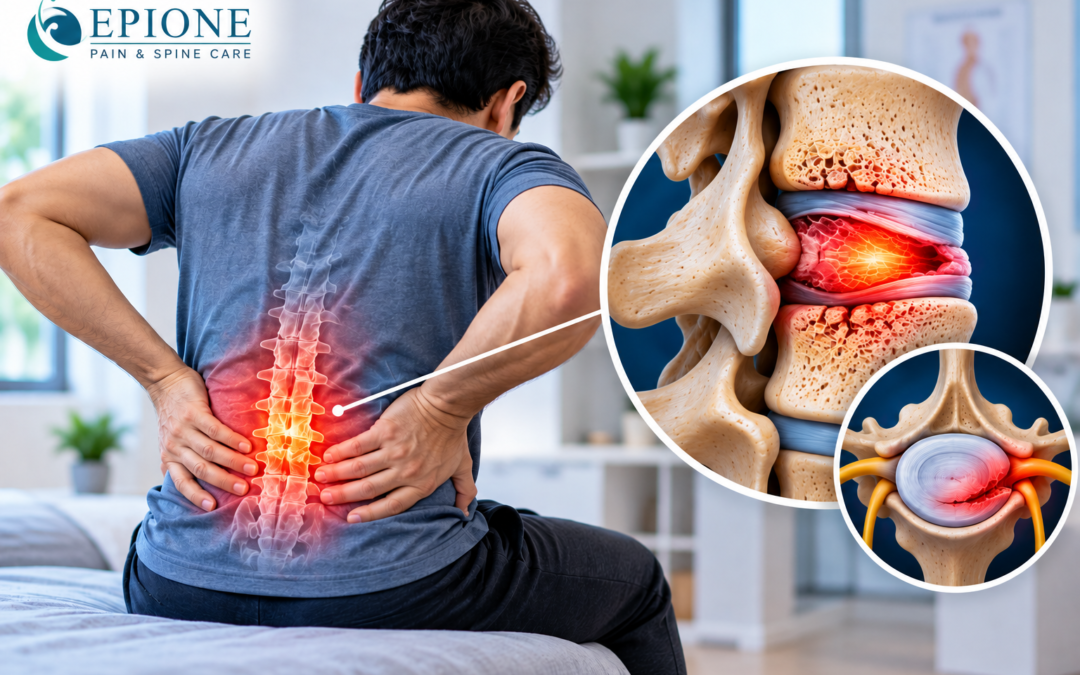
Quick answer: Vertebrogenic low back pain is a proposed pain mechanism in which damaged vertebral endplates and signaling through the basivertebral nerve contribute to chronic axial low back pain. MRI features such as Modic type 1 or type 2 changes may support the...
by epionepainandspines | Oct 20, 2026 | Blog
Quick answer: Cluneal nerve entrapment is a peripheral nerve pain syndrome that can produce localized low back pain, upper-buttock pain and sometimes leg symptoms that resemble sciatica. A careful examination and, in selected cases, a targeted diagnostic nerve block...