

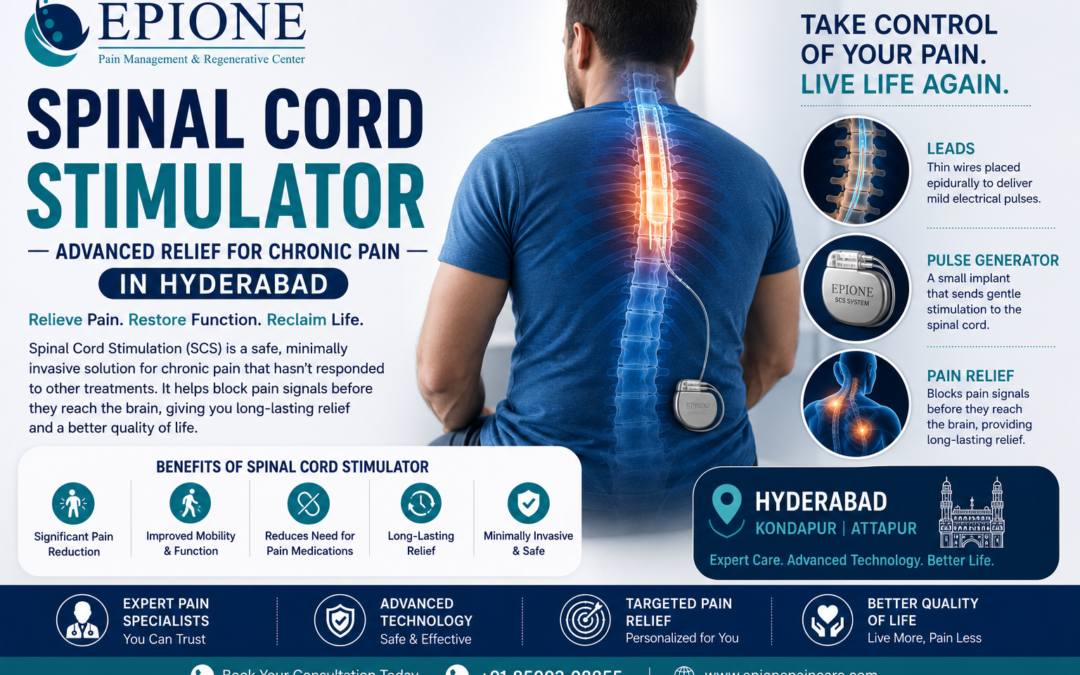
When chronic pain doesn’t respond to medications, physiotherapy, or even multiple procedures, it can feel like you’ve run out of options. For select patients in this situation, a spinal cord stimulator (SCS) can offer real, lasting relief.
It’s an advanced chronic pain treatment option, but it’s often misunderstood. In this guide, we explain what a spinal cord stimulator is, how it works, and who it’s actually suitable for.
What Is a Spinal Cord Stimulator?
A spinal cord stimulator is a small, implantable device that sends mild electrical pulses to the spinal cord. These pulses interfere with pain signals before they reach the brain, replacing or reducing the sensation of pain.
Many patients describe the effect as a mild tingling sensation replacing sharp or burning pain — and newer SCS technology can even work without any noticeable sensation at all.
How Does a Spinal Cord Stimulator Work?
The process typically involves two stages:
Stage 1: Trial Period
Before permanent implantation, patients undergo a temporary trial where a device is placed for about a week. This allows both the patient and doctor to evaluate how effectively it reduces pain in real, everyday situations.
Stage 2: Permanent SCS Implant
If the trial shows meaningful pain relief (typically 50% or more), a small device is permanently implanted under the skin, usually near the lower back, along with thin wires (leads) positioned near the spinal cord.
Patients can control the device using a handheld remote, adjusting settings based on their comfort and activity level.
Who Needs a Spinal Cord Stimulator?
An SCS implant isn’t a first-line treatment — it’s typically considered for chronic pain conditions that haven’t responded well to other treatments, including:
- Failed back surgery syndrome — persistent pain after one or more spine surgeries
- Complex regional pain syndrome (CRPS)
- Chronic nerve-related (neuropathic) pain
- Peripheral nerve injury pain
- Chronic pain not adequately controlled by medications, injections, or RFA
Your pain specialist will conduct a thorough evaluation, including imaging and pain history, before recommending an SCS trial.
What Are the Benefits of a Spinal Cord Stimulator?
For the right candidates, SCS therapy can offer:
- Significant reduction in chronic pain intensity
- Reduced dependency on long-term pain medications
- Improved ability to perform daily activities
- A reversible option — leads and devices can be removed if needed
Results vary by individual, and your specialist will discuss realistic expectations based on your specific condition.
Is Spinal Cord Stimulator Implantation Safe?
SCS implantation is a well-established, minimally invasive procedure. As with any implanted device, there are potential risks, including infection, lead movement, or device-related discomfort — your specialist will review these in detail based on your health profile before the trial.
Spinal Cord Stimulator vs Other Chronic Pain Treatment Options
Unlike medications, which manage pain systemically, or RFA, which targets specific nerves, SCS works at the spinal cord level — making it particularly useful for widespread or complex chronic pain that hasn’t responded to more targeted treatments.
It’s usually considered after other chronic pain treatment options have been tried, rather than as a first step.
How Epione Approaches Spinal Cord Stimulator Treatment in Hyderabad
Epione Pain Management is one of the first multidisciplinary pain management centres in South India, with over 20+ years of collective clinical experience and 50,000+ patients treated across complex chronic pain conditions.
Led by Dr. Sudheer Dara and Dr. Minal Chandra — widely regarded as one of the best pain management specialists in Hyderabad — our multidisciplinary team carefully evaluates each patient’s pain history and prior treatments before recommending advanced options like spinal cord stimulation, ensuring it’s the right fit before moving forward.
Frequently Asked Questions
What is a spinal cord stimulator?
A spinal cord stimulator is a small implantable device that sends mild electrical pulses to the spinal cord to interrupt chronic pain signals.
How does a spinal cord stimulator relieve pain?
It works by sending electrical impulses that interfere with pain signals travelling to the brain, replacing or reducing the sensation of pain.
Who is a candidate for a spinal cord stimulator?
Candidates typically include patients with failed back surgery syndrome, complex regional pain syndrome, or chronic neuropathic pain not relieved by other treatments.
What is failed back surgery syndrome?
It refers to persistent or recurring pain after one or more spine surgeries, even though the surgery itself was technically successful.
Is spinal cord stimulator surgery reversible?
Yes, the leads and device can be removed if needed, making it a reversible option compared to some other surgical interventions.
What is the SCS trial period?
Before permanent implantation, patients undergo a temporary trial, usually about a week, to assess how well the device reduces their pain.
How long does the SCS trial last?
The trial period typically lasts around 5 to 7 days.
What happens after a successful SCS trial?
If the trial shows meaningful pain relief, a permanent device is implanted under the skin, usually near the lower back.
Does a spinal cord stimulator cure the underlying condition?
No, it doesn’t cure the underlying cause of pain, but it can significantly reduce the pain signals reaching the brain, improving quality of life.
Can I feel the electrical pulses from an SCS?
Many patients feel a mild tingling sensation, though newer SCS technology can operate without any noticeable sensation.
Is spinal cord stimulator implantation painful?
The procedure is performed under anaesthesia, and most patients experience only mild soreness during recovery.
How long does an SCS device last?
Device battery life varies by model and usage, with many modern devices lasting several years before requiring replacement.
What are the risks of spinal cord stimulator implantation?
Potential risks include infection, lead movement, or device-related discomfort, which your specialist will discuss based on your individual health profile.
Can a spinal cord stimulator reduce my need for pain medication?
For many patients, yes — effective pain control from SCS can reduce dependency on long-term pain medications.
Is SCS the first treatment option for chronic pain?
No, SCS is generally considered after other chronic pain treatment options, like medications, injections, or RFA, haven’t provided adequate relief.
Can the spinal cord stimulator settings be adjusted?
Yes, patients can typically adjust settings using a handheld remote based on their pain levels and activity.
Does insurance cover spinal cord stimulator treatment?
Coverage varies by provider and policy. It’s best to check directly with your insurance provider and clinic regarding coverage specifics.
What conditions besides back pain can SCS treat?
SCS can also help with complex regional pain syndrome, peripheral nerve injury pain, and certain other chronic neuropathic pain conditions.
How soon can I return to normal activities after SCS implantation?
Recovery time varies by individual, but most patients gradually resume normal activities within a few weeks, following their specialist’s guidance.
Can the spinal cord stimulator be removed later if needed?
Yes, the device and leads can be surgically removed if the patient no longer needs or wants the therapy.
Who is the best pain management specialist in Hyderabad for spinal cord stimulator treatment?
Epione Pain Management, led by Dr. Sudheer Dara and Dr. Minal Chandra, is regarded among the leading pain management specialists in Hyderabad for advanced chronic pain treatments, including spinal cord stimulation.
Conclusion
For patients living with chronic pain that hasn’t responded to other treatments, a spinal cord stimulator can offer a meaningful path forward. With a careful trial process and experienced specialists guiding the decision, it can help restore comfort and daily function for the right candidates.
If you’ve tried multiple treatments without lasting relief, a detailed evaluation can help determine if SCS is worth considering.
Book Your Consultation
Talk to Epione’s pain management specialists today about your chronic pain treatment options.
📞 Call: +91 7000017062 / +91 9502020251 💬 WhatsApp: +91 8466044441 📧 Email: contact@epionepainandspine.com 📍 Jubilee Hills, Hyderabad: 8-2-293/82/A 245, 2nd Floor, Apurupa, Road No. 36, Jubilee Hills, Hyderabad – 500034 📍 Kothapet, Hyderabad: 1st Floor, Satyam Shivam Complex, above Paradise Restaurant, near Victoria Memorial Metro Station, Kothapet
Working Hours: Mon–Sat, 8:00 AM – 7:00 PM | Sun, 9:00 AM – 12:30 PM