

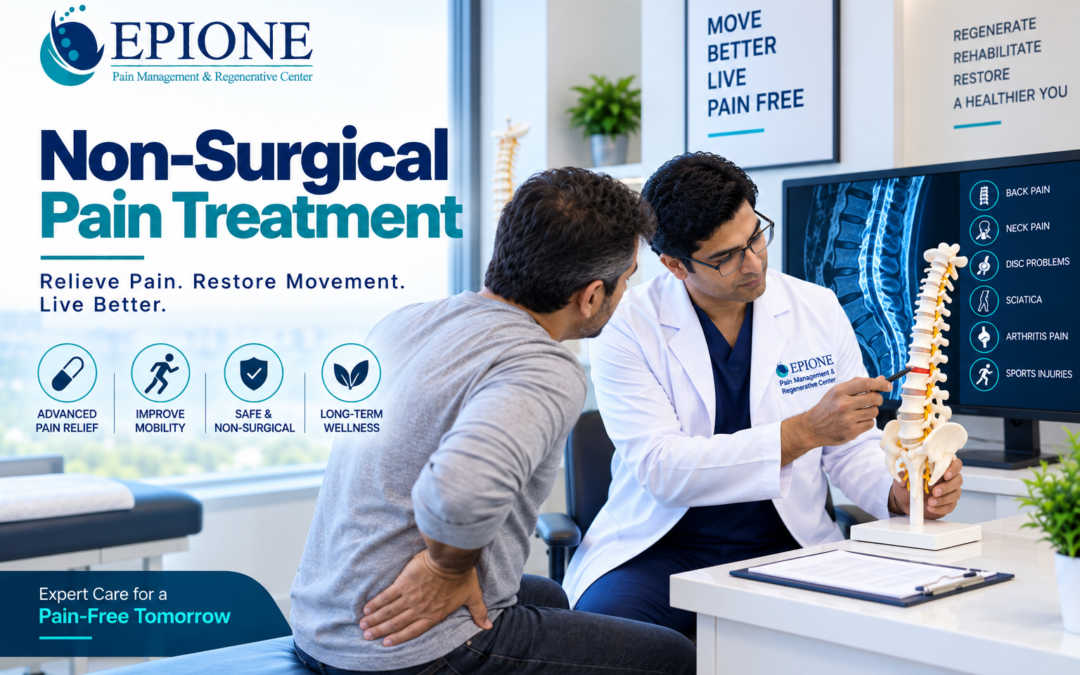
Top Non Surgical Pain Treatments for Chronic Pain
Chronic pain rarely has one universal solution. Non-surgical pain treatment can range from exercise and self-management to condition-specific medicines, psychological therapies, image-guided procedures, and coordinated care across specialties.
The most effective plan is usually the one that identifies the pain mechanism, sets functional goals, and combines interventions rather than repeatedly chasing short-term relief.
1. Education and self-management
Understanding the diagnosis, what movements are safe, how to manage flares, and when symptoms require reassessment can reduce fear and unnecessary restriction. Education is particularly useful in chronic musculoskeletal pain, where pain intensity does not always map directly to tissue damage.
Self-management does not mean patients are left alone. It means they have practical tools between appointments.
2. Exercise and rehabilitation
Exercise improves strength, mobility, cardiovascular health, and confidence. Programs should be tailored to the condition: knee arthritis, neuropathic pain, chronic back pain, and frozen shoulder need different loading strategies.
Progress should be measured by function as well as pain, such as walking distance, sleep, work capacity, and ability to perform daily tasks.
3. Medication when there is a clear role
Medication selection depends on whether pain is inflammatory, nociceptive, neuropathic, migraine-related, cancer-related, or another type. Risks vary with age, kidney and liver function, cardiovascular disease, pregnancy, and other medicines.
Chronic pain care should include periodic review of whether each medicine is still helping enough to justify side effects and long-term risk.
4. Psychological and behavioural approaches
Cognitive behavioural therapy and other pain-focused psychological strategies can support pacing, sleep, coping, and return to valued activity. This is not because pain is “all in the mind,” but because chronic pain involves nervous-system processing, behaviour, stress, and physical function.
These therapies are especially useful when pain has disrupted sleep, mood, work, or confidence.
5. Interventional pain procedures
Selected nerve blocks, epidural injections, radiofrequency procedures, or other image-guided interventions may be appropriate when a specific target is identified. They should have a defined purpose and a follow-up plan rather than being repeated automatically.
Some conditions will not benefit from an intervention and are better managed with rehabilitation or another specialty.
How to decide whether a treatment is worth continuing
Before starting treatment, agree on a measurable goal such as improved sleep, longer walking tolerance, fewer headache days, or reduced interference with work. After an appropriate trial, compare the benefit with side effects, cost, inconvenience, and any new risks.
Chronic pain care often requires adjustment. Stopping an ineffective therapy and changing direction is not failure; it is part of responsible treatment. Repeated procedures or medicines without meaningful benefit should trigger reassessment of the diagnosis and plan.
6. Multidisciplinary care
Complex pain may require coordination between pain medicine, physiotherapy, neurology, orthopaedics, rheumatology, psychology, or other clinicians. Epione presents itself as a multidisciplinary pain centre, and Dr. Minal Chandra’s profile can be linked as the internal pain-specialist reference for Hyderabad readers.
Frequently Asked Questions
What is non-surgical pain treatment?
It includes any evidence-based pain care that does not require an operation, from rehabilitation and medicines to behavioural therapy and selected minimally invasive procedures.
Can chronic pain be treated without surgery?
Often yes, depending on the cause. Some structural or emergency conditions still require surgical evaluation.
Are pain injections considered non-surgical?
They are generally categorized as minimally invasive procedures rather than surgery, but they still have risks and specific indications.
How long should I try conservative care?
It depends on the diagnosis, severity, neurological findings, and progress. Red flags or worsening deficits should not wait for a routine conservative timeline.
What is the goal of chronic pain treatment?
Meaningful improvement in function, sleep, activity and quality of life, alongside realistic pain reduction.
When to Get Personalized Help
Persistent or recurrent pain deserves an individual assessment. A pain specialist can review your symptoms, examination findings, imaging when needed, previous treatments, and goals before recommending the next step.
For a personalized pain assessment, learn more about Dr. Minal Chandra, Co-founder and Consultant Pain Specialist at Epione Pain & Spine. Treatment recommendations should always follow an individual clinical evaluation.