

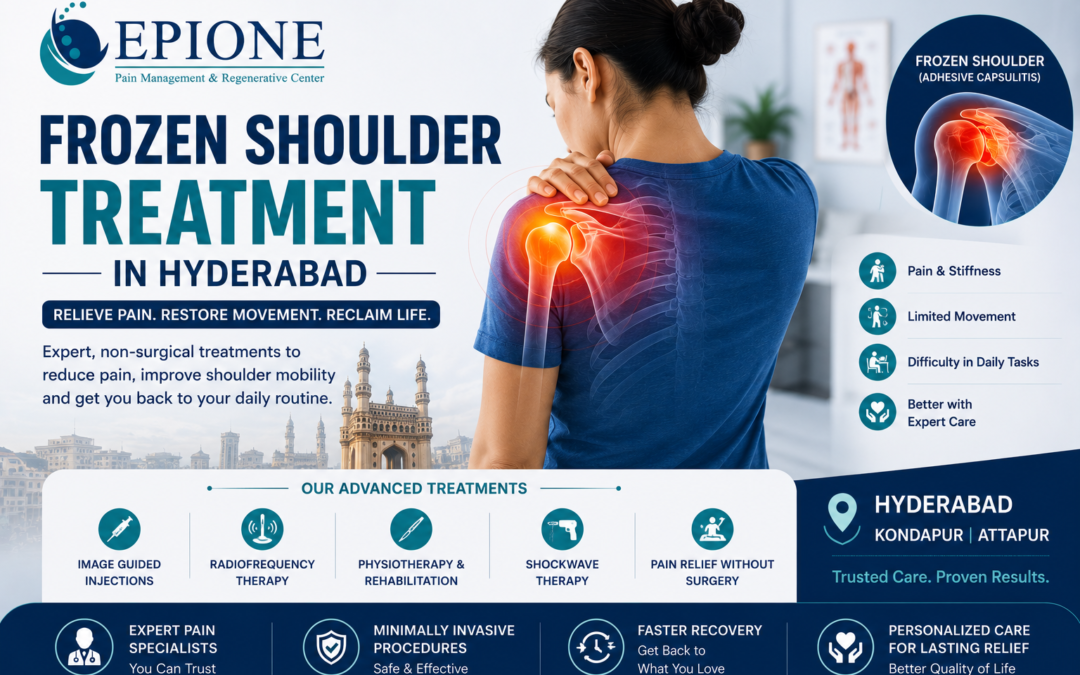
Can’t lift your arm to comb your hair or reach for a shelf? You might be dealing with frozen shoulder — a condition that can turn simple daily tasks into painful struggles.
The good news: most cases of frozen shoulder don’t need surgery. With the right diagnosis and treatment plan, you can regain movement and get back to your normal life.
In this guide, we break down what frozen shoulder is, why it happens, and what non-surgical treatment options are available right here in Hyderabad.
What Is Frozen Shoulder?
Frozen shoulder, medically known as adhesive capsulitis, is a condition where the capsule around your shoulder joint becomes thick and tight.
This tightening restricts movement and causes stiffness and pain. Over time, it can feel like your shoulder is genuinely “frozen” in place.
It usually develops slowly, often over several months, and can affect one or both shoulders.
What Causes Frozen Shoulder?
Frozen shoulder doesn’t always have one clear cause. Some common risk factors include:
- Prolonged immobility — after surgery, a fracture, or an injury that keeps your arm still for a long time
- Diabetes — people with diabetes are significantly more likely to develop frozen shoulder
- Thyroid disorders — both hypothyroidism and hyperthyroidism are linked to higher risk
- Age and gender — most common in people between 40 and 60 years, and more frequent in women
- Previous shoulder injury or surgery
In many cases, doctors aren’t able to pinpoint one exact trigger — which is why proper diagnosis by a pain specialist matters.
Frozen Shoulder Symptoms and Its 3 Stages
Frozen shoulder typically develops in three stages:
Stage 1: Freezing Stage
Pain gradually increases, and shoulder movement starts becoming limited. This stage can last anywhere from 6 weeks to 9 months.
Stage 2: Frozen Stage
Pain may reduce slightly, but stiffness remains — or worsens. Daily activities like dressing or reaching overhead become difficult. This stage can last 4 to 12 months.
Stage 3: Thawing Stage
Shoulder movement slowly starts improving. This recovery phase can take anywhere from 6 months to 2 years.
Common symptoms across these stages include:
- Dull, aching pain in the outer shoulder
- Stiffness that worsens at night
- Difficulty raising your arm above shoulder height
- Trouble with everyday movements like wearing a shirt or reaching your back pocket
When Should You See a Pain Specialist?
Don’t wait for the pain to “go away on its own.” If you notice:
- Shoulder stiffness lasting more than 2–3 weeks
- Pain that disturbs your sleep
- Reduced range of motion affecting daily tasks
…it’s time to consult a pain management specialist. Early diagnosis often means faster, simpler treatment — and a much lower chance of the condition dragging on for months.
Non-Surgical Treatment Options for Frozen Shoulder in Hyderabad
Most people with frozen shoulder respond well to non-surgical, interventional treatments. Here are the options commonly used:
Physiotherapy & Guided Stretching
Targeted shoulder pain without surgery, physiotherapy helps maintain and gradually restore range of motion. A structured stretching program is often the first line of treatment.
Nerve Blocks & Injections
Suprascapular nerve blocks and corticosteroid injections can significantly reduce pain and inflammation, making physiotherapy more effective and less painful for the patient.
Hydrodilatation
This procedure involves injecting a sterile fluid into the shoulder joint capsule to gently stretch and expand it, helping relieve stiffness.
Regenerative Therapy (PRP)
For select patients, Platelet-Rich Plasma (PRP) therapy may support the body’s natural healing process in and around the shoulder joint.
Radiofrequency Ablation (RFA)
In cases of persistent nerve-related pain, RFA may be used to interrupt pain signals and provide longer-lasting relief.
The right combination depends on your stage of frozen shoulder, overall health, and how your body responds — which is why a proper consultation is essential before starting treatment.
Why Choose Epione for Frozen Shoulder Treatment in Hyderabad?
Epione Pain Management is one of the first multidisciplinary pain management centres in South India, with over 20+ years of collective clinical experience and more than 50,000 patients treated across conditions.
Our approach to frozen shoulder combines pain specialists with orthopedicians, neurologists, and physiotherapists — so your treatment plan isn’t limited to just one type of therapy. It’s built around what your shoulder actually needs.
Led by Dr. Sudheer Dara, a pioneer in pain medicine with 20+ years of experience, and Dr. Minal Chandra, widely regarded as one of the best frozen shoulder treatment in Hyderabad, our team uses a multidisciplinary, multimodal approach to treat shoulder pain — without rushing patients toward surgery unless it’s truly necessary.
If you’ve been living with shoulder stiffness for weeks and nothing seems to help, an expert evaluation can make all the difference.
Frequently Asked Questions
What is frozen shoulder?
Frozen shoulder, or adhesive capsulitis, is a condition where the tissue around the shoulder joint thickens and tightens, causing pain and restricted movement.
What are the early signs of frozen shoulder?
Early signs include a dull ache in the shoulder, mild stiffness, and slowly reducing range of motion, especially when raising your arm.
What causes frozen shoulder?
Common causes include prolonged immobility, diabetes, thyroid disorders, and previous shoulder injury or surgery. In many cases, no single clear cause is found.
Is frozen shoulder more common in women?
Yes, frozen shoulder is more frequently seen in women, particularly those between 40 and 60 years of age.
Does diabetes increase the risk of frozen shoulder?
Yes, people with diabetes have a notably higher risk of developing frozen shoulder compared to those without it.
What are the three stages of frozen shoulder?
The three stages are the freezing stage (increasing pain), the frozen stage (stiffness dominates), and the thawing stage (gradual recovery of movement).
How long does frozen shoulder usually last?
Frozen shoulder can last anywhere from several months to around 2–3 years if left untreated, though proper treatment often shortens this timeline.
Can frozen shoulder heal on its own without treatment?
Some mild cases may improve gradually, but many patients experience prolonged pain and stiffness without proper treatment. Early intervention generally leads to better outcomes.
Is surgery necessary for frozen shoulder?
Surgery is rarely the first option. Most patients respond well to non-surgical treatments like physiotherapy, injections, and hydrodilatation.
What is hydrodilatation for frozen shoulder?
Hydrodilatation is a procedure where sterile fluid is injected into the shoulder joint capsule to help stretch it and relieve stiffness.
Do steroid injections help with frozen shoulder pain?
Yes, corticosteroid injections can reduce inflammation and pain, making it easier to participate in physiotherapy.
Can physiotherapy alone treat frozen shoulder?
Physiotherapy is often a core part of treatment, especially in early stages, though it’s frequently combined with other therapies for faster relief.
What exercises should be avoided with frozen shoulder?
Avoid sudden, jerky movements or heavy overhead lifting until a physiotherapist confirms your shoulder can handle that range and load.
Can frozen shoulder affect both shoulders at the same time?
Yes, it’s possible for frozen shoulder to develop in the opposite shoulder, sometimes even before the first one fully recovers.
How is frozen shoulder different from a rotator cuff injury?
Frozen shoulder involves stiffness and restricted movement due to a tightened joint capsule, while a rotator cuff injury usually involves pain from a torn or damaged tendon, with movement often still possible, though painful.
When should I see a pain specialist for shoulder stiffness?
If shoulder stiffness or pain lasts more than 2–3 weeks, disturbs your sleep, or limits daily activities, it’s a good time to consult a pain specialist.
Can frozen shoulder come back after treatment?
Recurrence in the same shoulder is uncommon once fully treated, though the opposite shoulder can sometimes be affected later.
Is frozen shoulder linked to age?
Yes, it’s most commonly diagnosed in people between 40 and 60 years old, though it can occur at other ages too.
What lifestyle changes help manage frozen shoulder?
Staying consistent with prescribed exercises, avoiding prolonged immobility, and managing underlying conditions like diabetes or thyroid issues can support recovery.
How is frozen shoulder diagnosed?
Diagnosis typically involves a physical examination of shoulder movement, along with imaging like X-rays or MRI to rule out other causes of shoulder pain.
Who is the best pain management specialist in Hyderabad for shoulder pain?
Epione Pain Management, led by Dr. Sudheer Dara and Dr. Minal Chandra, is regarded among the leading pain management specialists in Hyderabad, offering multidisciplinary, non-surgical treatment for frozen shoulder and other chronic pain conditions.
Conclusion
Frozen shoulder can feel frustrating, especially when it limits movements you never had to think about before. But with the right diagnosis and a structured, non-surgical treatment plan, most patients see real improvement in pain and mobility over time.
The key is not waiting too long. The earlier you seek expert care, the smoother your recovery journey is likely to be.
Book Your Consultation
If shoulder stiffness or pain is affecting your daily life, talk to Epione’s pain management specialists today.
📞 Call: +91 7000017062 / +91 9502020251 💬 WhatsApp: +91 8466044441 📧 Email: contact@epionepainandspine.com 📍 Jubilee Hills, Hyderabad: 8-2-293/82/A 245, 2nd Floor, Apurupa, Road No. 36, Jubilee Hills, Hyderabad – 500034 📍 Kothapet, Hyderabad: 1st Floor, Satyam Shivam Complex, above Paradise Restaurant, near Victoria Memorial Metro Station, Kothapet
Working Hours: Mon–Sat, 8:00 AM – 7:00 PM | Sun, 9:00 AM – 12:30 PM