
Are you tired of waking up with a stiff, aching back? Does sitting at your desk for a few hours feel like a punishment rather than a normal part of your workday? Chronic spinal pain can drain your energy, alter your mood, and keep you from enjoying the activities you love most. If you are experiencing a deep, nagging ache in your lower back or neck that just won’t go away, you are not alone.
Many patients in India suffer from this exact scenario, and a significant portion of them eventually discover that worn-out spinal discs are to blame. Fortunately, an effective degenerative disc disease treatment plan can help you reclaim your life. Today, advanced medical care focuses on restoring your mobility and drastically reducing your pain, allowing you to return to your daily routine without constant discomfort.
What is Degenerative Disc Disease Treatment?
Degenerative disc disease treatment focuses on relieving chronic back or neck pain, improving spinal mobility, and preventing further disc deterioration. The primary goal is to provide effective relief through a combination of physical therapy, lifestyle modifications, pain management injections, and medications. In most cases, patients achieve excellent results through targeted spine treatment without surgery.
Understanding Degenerative Disc Disease (DDD)
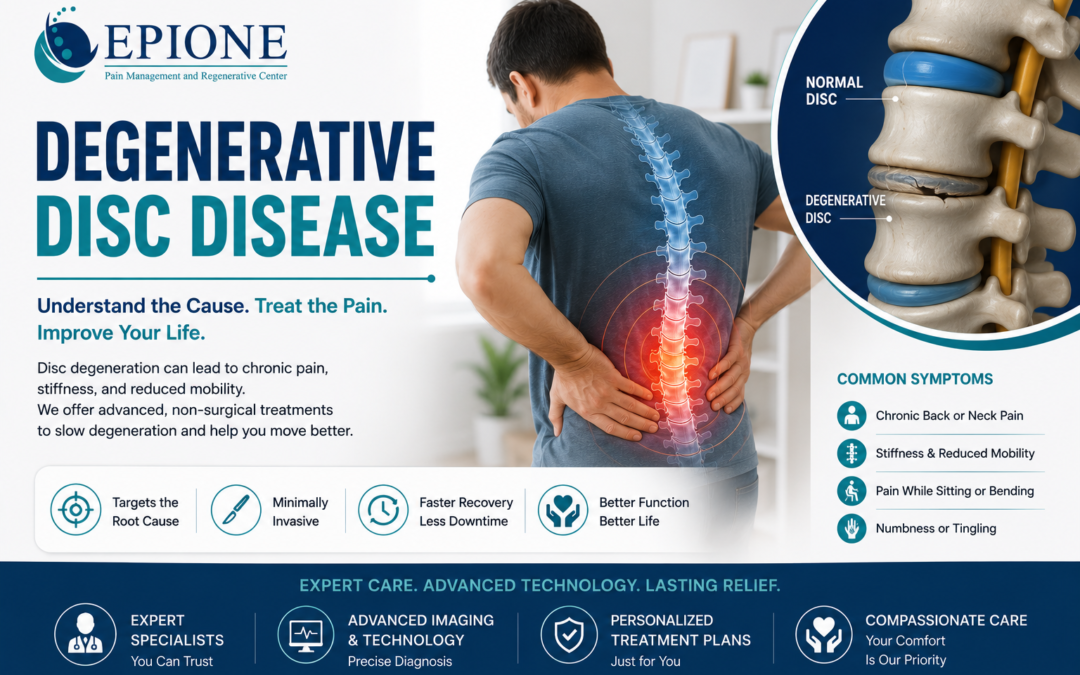
Despite its name, degenerative disc disease isn’t actually a “disease.” Rather, it is a natural, age-related condition that happens when one or more of the discs between the vertebrae of the spinal column break down or degrade, leading to pain. These spinal discs act as shock absorbers between your bones, allowing your back to stay flexible. As we age, these discs can lose their hydration and elasticity.
When these discs wear down, the bones can begin to rub against each other, causing inflammation, nerve irritation, and severe stiffness.
Common Symptoms You Shouldn’t Ignore
How do you know if your back ache is just a minor muscle strain or something more serious? People with DDD typically experience a specific set of symptoms. If you notice any of the following, it is time to seek professional care:
- Pain that worsens when sitting: Unlike a muscle strain, disc pain often feels worse when you sit down, as this puts more pressure on your lower spinal discs.
- Pain that radiates: You might feel sharp pain shooting down your buttocks and thighs, a condition often requiring targeted Sciatica Treatment.
- Numbness and tingling: A tingling sensation in your extremities can indicate that a degraded disc is pressing against a spinal nerve.
- Pain relief when walking or moving: Interestingly, changing positions, walking, or lying down often temporarily relieves the discomfort.
- Flare-ups: The pain can come and go, lasting for a few days or even weeks before subsiding and eventually returning.
Primary Causes and Risk Factors
Why do some people develop severe DDD while others do not? The spine is a complex structure, and several factors contribute to the breakdown of spinal discs.
| Risk Factor | Description |
|---|---|
| Aging | The most common cause. Over time, spinal discs lose their water content, becoming thinner and less effective at absorbing shock. |
| Genetics | A family history of back problems or early spinal degradation can increase your risk of developing DDD. |
| Physical Labor | Jobs that require heavy lifting, constant bending, or repetitive twisting can accelerate disc wear and tear. |
| Obesity | Excess body weight places significantly more stress on the joints and discs of the lower spine. |
| Acute Injuries | A past fall, car accident, or sports injury can trigger the early onset of disc degeneration in the affected area. |
How is Degenerative Disc Disease Diagnosed?
Proper diagnosis is the critical first step before beginning any degenerative disc disease treatment. At Epione Pain and Spine Clinic, our specialists start by listening to your medical history and conducting a thorough physical exam to check your flexibility, muscle strength, and nerve function.
To confirm the diagnosis and rule out other conditions, we utilize advanced imaging tests:
- X-rays: To look for bone spurs or narrowing of the disc space.
- MRI (Magnetic Resonance Imaging): The gold standard for visualizing the soft tissues, allowing doctors to see exactly how much hydration the discs have lost and if any nerves are being pinched.
Comprehensive Degenerative Disc Disease Treatment Options
The thought of spine problems often brings up a major fear for patients: the fear of going under the knife. However, the good news is that the vast majority of patients will never need an operation. Our core philosophy centers on conservative, minimally invasive care.
Spine Treatment Without Surgery
Modern medicine has advanced incredibly, making spine treatment without surgery highly effective. Treatments such as Epidural Steroid Injections (ESIs) deliver powerful anti-inflammatory medication directly to the affected spinal nerves, providing rapid and long-lasting pain relief. Another advanced option is Radiofrequency Ablation (RFA), which uses gentle heat to temporarily turn off the pain signals sent by the nerves surrounding the facet joints.
Spine Rehabilitation and Physical Therapy
A cornerstone of long-term recovery is structured spine rehabilitation. Working with a specialized physiotherapist helps strengthen the core muscles that support your spine. By improving your posture, increasing flexibility, and stabilizing your back, physical therapy takes the daily pressure off your damaged discs.
Managing Co-occurring Conditions
Often, DDD doesn’t happen in isolation. A degrading disc can bulge or herniate. If this happens, your doctor will integrate slipped disc treatment protocols into your care plan, focusing on reducing disc pressure and relieving nerve compression. Similarly, for patients dealing with cervical (neck) disc degeneration, customized Neck Pain Treatment is applied to alleviate headaches and shoulder tension.
The Benefits of Early Treatment
Ignoring chronic back pain is never a good strategy. Choosing to seek lower back pain treatment at the first sign of consistent discomfort offers several vital benefits:
- Prevents Nerve Damage: Early intervention relieves pressure on spinal nerves before irreversible damage or chronic weakness occurs.
- Avoids Surgery: The sooner you begin non-invasive therapies, the less likely you are to need complex spinal surgeries in the future.
- Restores Quality of Life: You can return to work, hobbies, and family activities without being held back by a stiff, painful back.
Prevention Tips for a Healthy Spine
While you cannot completely stop the natural aging process, you can slow down disc degeneration and protect your spine by adopting a few healthy daily habits:
- Maintain a Healthy Weight: This reduces the daily mechanical load on your lower back.
- Practice Good Posture: Whether sitting at a desk or standing, keep your spine aligned. Use ergonomic chairs and take frequent breaks to stretch.
- Stay Active: Regular, low-impact aerobic exercises like walking, swimming, or cycling increase blood flow to the spine, delivering healing nutrients to the discs.
- Lift Safely: Always bend at your knees and keep heavy objects close to your body when lifting.
When to See a Spine Specialist
If your back pain lasts for more than two weeks, or if it is preventing you from doing your daily activities, it is time to consult a doctor. Furthermore, you should seek immediate medical attention if you experience “red flag” symptoms such as:
- Sudden loss of bowel or bladder control.
- Severe numbness or weakness in your legs that causes you to stumble.
- Unexplained weight loss accompanying your back pain.
Why Choose Epione Pain and Spine Clinic?
When it comes to your spine, you deserve care that is both compassionate and highly specialized. Epione Pain and Spine Clinic is a premier destination for non-surgical Spine Care in India. We understand the emotional and physical toll that chronic pain takes on a patient.
Our multidisciplinary team of interventional pain specialists, physiotherapists, and spine experts work together to create customized treatment plans. We utilize state-of-the-art diagnostic tools and the latest minimally invasive technologies to treat the root cause of your pain—not just mask the symptoms.
Consult Our Expert Spine Doctors Today
Don’t let degenerative disc disease dictate what you can and cannot do. At Epione, we are dedicated to helping you live a pain-free life through advanced, compassionate care. If you are looking for a reliable, expert-led approach to spine health, our doctors are here to guide you every step of the way.
Frequently Asked Questions (FAQs)
Q1: Can degenerative disc disease be completely cured?
While the natural wear and tear of the spinal discs cannot be reversed, the pain and symptoms can be effectively managed and eliminated. With the right degenerative disc disease treatment, most patients live active, pain-free lives.
Q2: Will I eventually need surgery for my spine?
No, surgery is rarely the first or only option. Over 90% of patients find significant relief through conservative measures, making spine treatment without surgery the preferred standard of care.
Q3: Can physical therapy really help worn-out discs?
Yes. Spine rehabilitation cannot restore the physical disc, but it strengthens the surrounding back and core muscles. Stronger muscles support the spine better, taking the heavy load off the damaged discs and relieving pain.
Q4: How is a degenerated disc different from a slipped disc?
Degenerative disc disease refers to the gradual drying out and flattening of the disc over time. A slipped (or herniated) disc occurs when the soft inner gel of the disc pushes through a crack in the tough outer layer. Both, however, can be managed with similar non-surgical approaches.
Q5: Is walking good for degenerative disc disease?
Absolutely. Walking is an excellent, low-impact exercise that increases blood circulation to the spine, which helps reduce inflammation and keeps the spinal joints mobile and healthy.
Stop Living with Back Pain!
Your journey to a pain-free life begins with an accurate diagnosis and a customized care plan. Let the experts at Epione Pain and Spine Clinic help you find relief with advanced spine treatment without surgery.
Book your consultation today!
Call us now at 8008008729 to schedule an appointment with our senior pain specialists.