
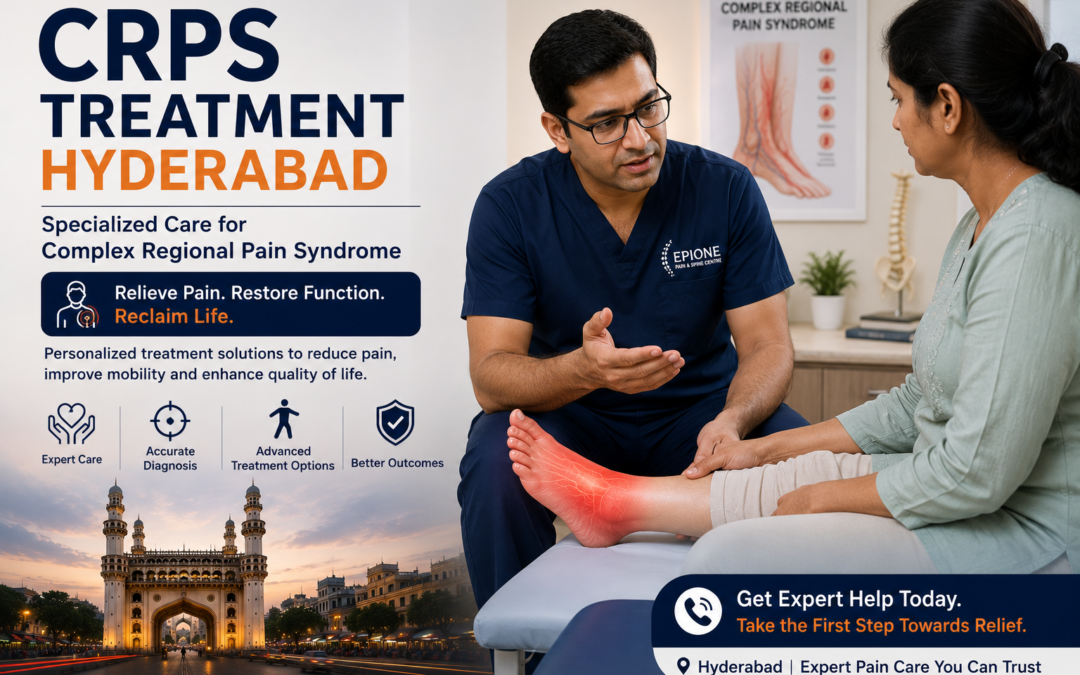
An injury that should have healed weeks ago, but the pain hasn’t gone away — in fact, it’s gotten worse, and the affected area looks and feels different than the rest of your body. This pattern, though uncommon, is a hallmark of Complex Regional Pain Syndrome, or CRPS.
CRPS is frequently missed or misdiagnosed in its early stages, which delays treatment and can allow the condition to progress. This guide explains what CRPS is, how to recognise it, and what treatment options are available.
What Is Complex Regional Pain Syndrome (CRPS)?
CRPS is a chronic pain condition that typically develops after an injury, surgery, or trauma to a limb, but causes pain disproportionately severe compared to what would normally be expected from that injury.
It’s believed to involve abnormal nervous system responses, including changes in blood flow, temperature regulation, and nerve signalling in the affected area.
Complex Regional Pain Syndrome Symptoms
- Burning or throbbing pain, often disproportionate to the original injury
- Changes in skin temperature, colour, or texture in the affected area
- Swelling in the affected limb
- Increased sensitivity to touch, even light contact
- Changes in hair or nail growth in the affected area
- Stiffness and reduced range of motion in the affected limb
- Muscle weakness or tremors, in more advanced cases
Why Is CRPS Often Missed or Misdiagnosed?
CRPS symptoms can resemble other conditions, including nerve injuries or simply prolonged post-injury inflammation. Because there’s no single definitive test, and symptoms vary between patients, diagnosis often relies on a detailed clinical evaluation — which is why early CRPS treatment in Hyderabad matters, as the condition is sometimes overlooked in its early stages, delaying appropriate care.
What Causes Nerve Pain After Injury Like CRPS?
The exact mechanism isn’t fully understood, but CRPS typically develops following:
- Fractures or soft tissue injuries
- Surgical procedures, particularly on a limb
- Nerve injuries
- Prolonged immobilisation of a limb
Not everyone who experiences these events develops CRPS — the reasons some patients develop this abnormal pain response while others don’t isn’t yet fully understood.
How Is CRPS Diagnosed?
Diagnosis typically involves:
- A detailed clinical history and physical examination
- Assessment of specific diagnostic criteria related to pain, skin, and temperature changes
- Ruling out other conditions with imaging or additional tests, as needed
Early diagnosis is particularly important, since CRPS tends to respond better to treatment when addressed in its earlier stages.
CRPS Treatment Options
Physiotherapy
Gentle, graded movement and desensitisation techniques help maintain function and can reduce the nervous system’s heightened pain response over time.
Stellate Ganglion Block
For CRPS affecting the arm, hand, face, or upper body, a stellate ganglion block — an injection targeting a specific nerve cluster in the neck — can help interrupt abnormal pain signals and improve blood flow to the affected area.
Sympathetic Nerve Blocks
Similar nerve block techniques can be used for CRPS affecting the lower body, targeting the relevant sympathetic nerve chain.
Medication
Various medications may be used to help manage nerve-related pain, as part of a broader, individualised treatment plan.
Psychological Support
Given the chronic, often distressing nature of CRPS, psychological support can be a valuable part of comprehensive care, helping patients cope with the condition’s impact on daily life.
Spinal Cord Stimulation
For select patients with CRPS that hasn’t responded adequately to other treatments, spinal cord stimulation may offer an additional option for long-term pain relief.
Can CRPS Be Cured?
Early-stage CRPS often responds well to treatment, with many patients experiencing significant improvement. In cases where diagnosis and treatment are delayed, the condition can become more persistent, making early evaluation particularly important.
When Should You See a Specialist for Suspected CRPS?
Consult a pain specialist if:
- Pain following an injury is disproportionately severe or lasts longer than expected
- You notice changes in skin colour, temperature, or texture in the affected area
- Pain is accompanied by significant swelling or stiffness that isn’t improving
- Standard pain management for your injury isn’t providing relief
How Epione Approaches CRPS Treatment in Hyderabad
Epione Pain Management is one of the first multidisciplinary pain management centres in South India, with over 20+ years of collective clinical experience and 50,000+ patients treated.
Led by Dr. Sudheer Dara and Dr. Minal Chandra — widely regarded as one of the best pain management specialists in Hyderabad — our team specialises in early recognition and comprehensive treatment of CRPS, including nerve blocks like stellate ganglion block, physiotherapy, and psychological support.
Frequently Asked Questions
What is Complex Regional Pain Syndrome (CRPS)?
CRPS is a chronic pain condition that develops after an injury or surgery, causing disproportionately severe pain along with changes in skin, temperature, and nerve function in the affected area.
What are the symptoms of CRPS?
Symptoms include burning or throbbing pain, changes in skin colour or temperature, swelling, increased sensitivity to touch, and stiffness in the affected limb.
Why is CRPS often missed or misdiagnosed?
Because there’s no single definitive test and symptoms can resemble other conditions, CRPS relies on detailed clinical evaluation, which can sometimes delay diagnosis.
What causes CRPS?
CRPS typically develops after fractures, surgery, nerve injuries, or prolonged limb immobilisation, though not everyone who experiences these events develops the condition.
What is a stellate ganglion block?
It’s an injection targeting a nerve cluster in the neck, used to treat CRPS affecting the arm, hand, face, or upper body by interrupting abnormal pain signals.
Can CRPS be treated without surgery?
Yes, CRPS is typically managed with non-surgical treatments including nerve blocks, physiotherapy, medication, and psychological support.
Is CRPS curable?
Early-stage CRPS often responds well to treatment, though the condition can become more persistent if diagnosis and treatment are delayed.
How is CRPS diagnosed?
Diagnosis involves a detailed clinical history and examination, assessment against specific diagnostic criteria, and ruling out other conditions.
Can CRPS affect any part of the body?
Yes, though it most commonly develops in a limb following injury or surgery, CRPS can potentially affect other areas as well.
What is nerve pain after injury, and is it always CRPS?
Nerve pain after injury can have various causes, and CRPS is one specific condition among several possibilities — a proper evaluation is needed to distinguish between them.
Can physiotherapy help with CRPS?
Yes, gentle, graded movement and desensitisation techniques are an important part of CRPS treatment, helping maintain function and reduce pain sensitivity.
How does a sympathetic nerve block help with CRPS?
It targets specific nerve pathways to interrupt abnormal pain signals and improve blood flow, similar to a stellate ganglion block but for different body regions.
Is spinal cord stimulation used for CRPS?
Yes, for select patients whose CRPS hasn’t responded adequately to other treatments, spinal cord stimulation may offer an additional treatment option.
Can CRPS cause changes in skin appearance?
Yes, changes in skin colour, temperature, texture, and even hair or nail growth in the affected area are common features of CRPS.
Does CRPS always follow a major injury?
Not necessarily — CRPS can sometimes develop after relatively minor injuries, which is part of what makes the condition disproportionate and distinctive.
How soon after an injury can CRPS develop?
CRPS can develop at varying times after an injury or surgery, and its onset and progression differ between patients.
Can psychological support help with CRPS?
Yes, given the chronic and often distressing nature of CRPS, psychological support is often a valuable part of comprehensive treatment.
Is CRPS more common in adults or children?
CRPS can occur in both adults and children, though presentation and treatment approach may vary by age group.
What happens if CRPS is left untreated?
Untreated CRPS can become more persistent and harder to manage over time, which is why early diagnosis and treatment are particularly important.
Can medications alone manage CRPS effectively?
Medications are often part of a broader treatment plan, but a combination approach involving nerve blocks, physiotherapy, and psychological support typically provides more comprehensive relief.
Who is the best pain management specialist in Hyderabad for CRPS treatment?
Epione Pain Management, led by Dr. Sudheer Dara and Dr. Minal Chandra, is regarded among the leading pain management specialists in Hyderabad, offering specialised diagnosis and treatment for CRPS.
Conclusion
CRPS is a complex, often under-recognised condition, but early diagnosis and a comprehensive treatment approach can make a meaningful difference in outcomes. If pain after an injury seems disproportionate or is accompanied by unusual skin or temperature changes, it’s worth getting evaluated promptly.
Book Your Consultation
Talk to Epione’s pain management specialists today about CRPS diagnosis and treatment.
📞 Call: +91 7000017062 / +91 9502020251 💬 WhatsApp: +91 8466044441 📧 Email: contact@epionepainandspine.com 📍 Jubilee Hills, Hyderabad: 8-2-293/82/A 245, 2nd Floor, Apurupa, Road No. 36, Jubilee Hills, Hyderabad – 500034 📍 Kothapet, Hyderabad: 1st Floor, Satyam Shivam Complex, above Paradise Restaurant, near Victoria Memorial Metro Station, Kothapet
Working Hours: Mon–Sat, 8:00 AM – 7:00 PM | Sun, 9:00 AM – 12:30 PM