


If you’ve been waking up with a stiff neck lately, or you can’t turn your head fully without wincing, you’re far from alone. Neck pain is one of the most common reasons people walk into a pain clinic today, and a lot of it has to do with how we live now — hours in front of a laptop, phones tilted down, and very little movement in between.
Some neck pain goes away on its own in a few days. Some doesn’t, and that’s usually when people start wondering if something more serious is going on. This guide walks you through the common causes, the symptoms worth paying attention to, and the treatment options available if the pain sticks around.
What Exactly Is Neck Pain?
Neck pain is discomfort, stiffness, or soreness anywhere in the cervical spine — the part of your spine that runs from the base of your skull down to your shoulders. It can be a dull ache that builds up over the day, or a sharp, sudden pain that makes it hard to move your head at all. Sometimes it stays local. Other times it travels down into the shoulders, arms, or even causes headaches.
Common Causes of Neck Pain
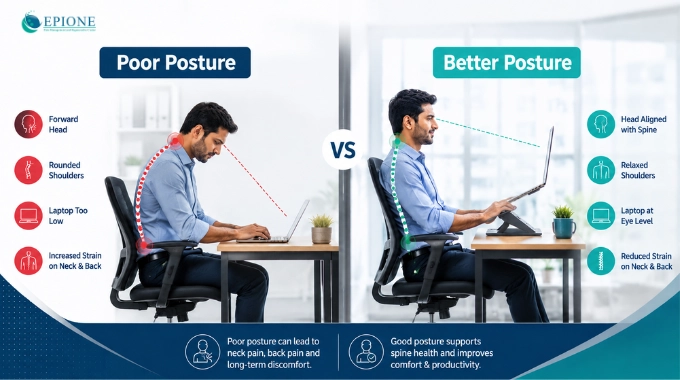
Poor Posture and Desk Work
This is the one we come across most. Hours hunched over a screen, chin tilted down at a phone — the muscles holding your neck up just aren’t built for that kind of constant strain. Some doctors call it “tech neck.” Whatever you call it, it’s become a lot more common in the last few years, and it’s not slowing down.
Cervical Spondylosis
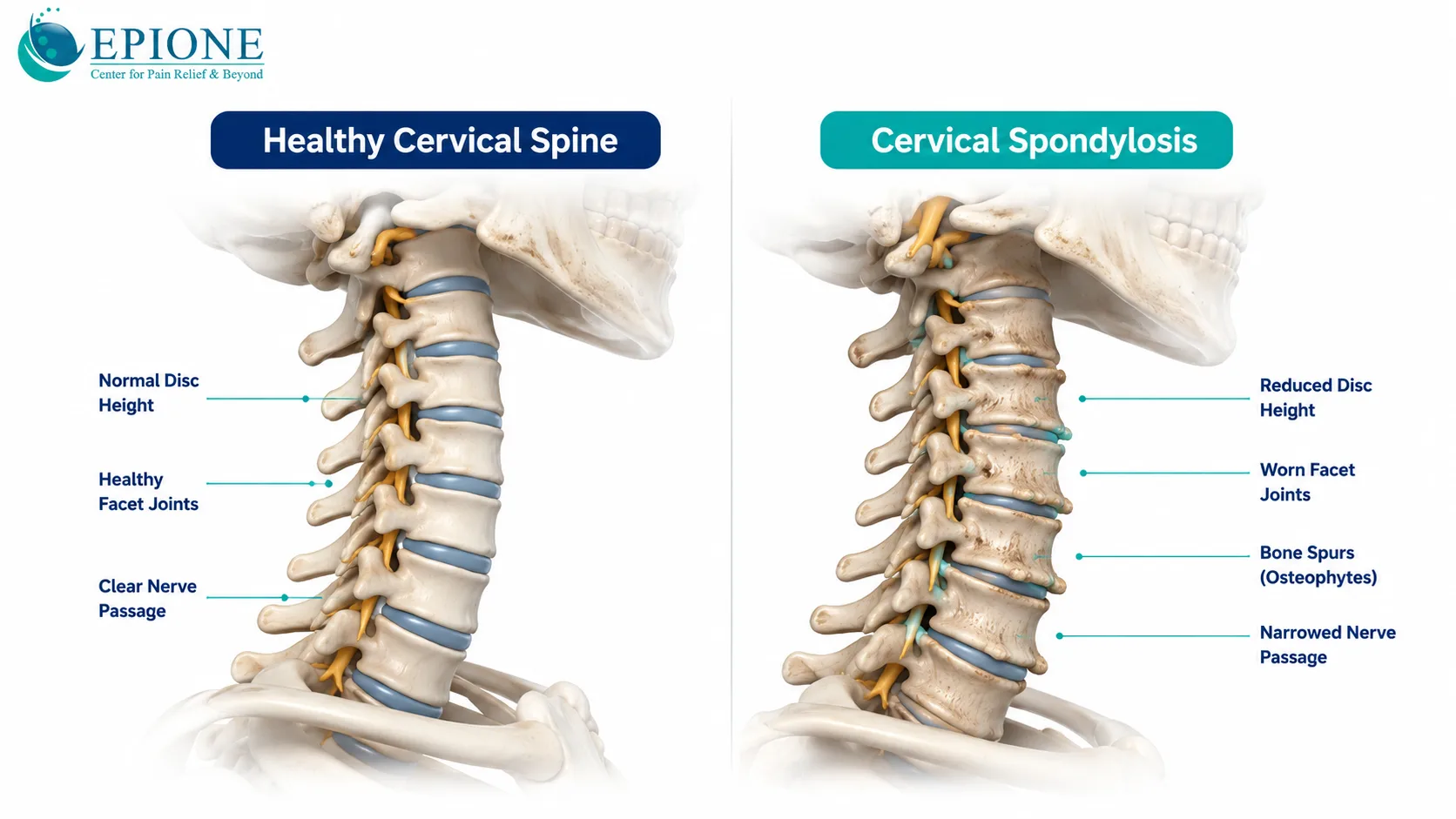
Cervical Spondylosis is age-related wear and tear affecting the neck’s spinal discs and joints. Over time, it can lead to reduced disc height, worn facet joints, bone spurs (osteophytes), and narrowed nerve passages, causing stiffness, reduced range of motion, and persistent discomfort. Treatment typically includes targeted physical therapy, daily neck exercises, and anti-inflammatory medications to manage pain and improve mobility, while non-surgical interventional procedures or surgery may be recommended in severe cases involving nerve compression.
A Simple Muscle Strain
Sleeping in an odd position, an intense workout, or even just turning your head too quickly can strain the neck muscles. This kind of pain usually feels sharp at first and eases up with rest.
A Pinched Nerve or Disc Problem
When a disc in the neck bulges or herniates, it can press against a nearby nerve. This often causes pain that doesn’t stay in the neck — it radiates into the shoulder, arm, or even the fingers, sometimes along with numbness or tingling.
Whiplash
Sudden jerking movements of the head — commonly from car accidents — can strain the neck’s soft tissue. Whiplash pain doesn’t always show up immediately; it can take a day or two to fully set in.
Stress and Tension
It’s easy to overlook, but stress makes people unconsciously tighten their neck and shoulder muscles. Over time, that tension turns into real, physical pain.
Symptoms You Shouldn’t Ignore
Most neck pain is minor and clears up on its own. But certain symptoms are worth taking seriously and getting checked:
- Pain that radiates down into your arm or hand
- Numbness, tingling, or weakness in your arms or fingers
- Neck pain along with a persistent headache
- Pain that doesn’t improve after a week or two
- Difficulty gripping objects or a noticeable loss of strength
- Neck stiffness combined with fever (this can point to something unrelated to muscle strain and needs prompt medical attention)
If you’re dealing with any of these, it’s a good idea to speak with a pain specialist rather than waiting it out.
When Should You See a Specialist?
A lot of people put off seeing a doctor for neck pain, assuming it will just fade away — and often it does. But if the pain has lasted more than a couple of weeks, keeps coming back, or is affecting your sleep and daily routine, that’s usually the point where a proper evaluation makes sense. Catching the underlying cause early tends to make treatment simpler and recovery faster.
How Is Neck Pain Diagnosed?
A specialist will usually start with a physical exam — checking your range of motion, reflexes, and where exactly the pain is coming from. Depending on what they find, they might recommend imaging like an X-ray or MRI to get a clearer picture of the discs, joints, and nerves in your neck. This step matters because two people can have very similar pain but completely different underlying causes.
Treatment Options for Neck Pain
Physical Therapy
For most cases, especially ones linked to posture or muscle strain, targeted physical therapy is often the first line of treatment. It focuses on strengthening the muscles around the neck and improving flexibility, which helps prevent the pain from returning.
Medication
Anti-inflammatory medication or muscle relaxants can help manage pain in the short term, especially during flare-ups, while other treatments address the root cause.
When It’s More Than Muscle — Interventional Procedures
If the pain is persistent, or it’s tied to a pinched nerve, procedures like nerve blocks or cervical epidural injections sometimes come into the picture. The idea here is to target the inflammation directly at the source instead of just numbing the discomfort temporarily.
PRP Therapy — A Regenerative Option
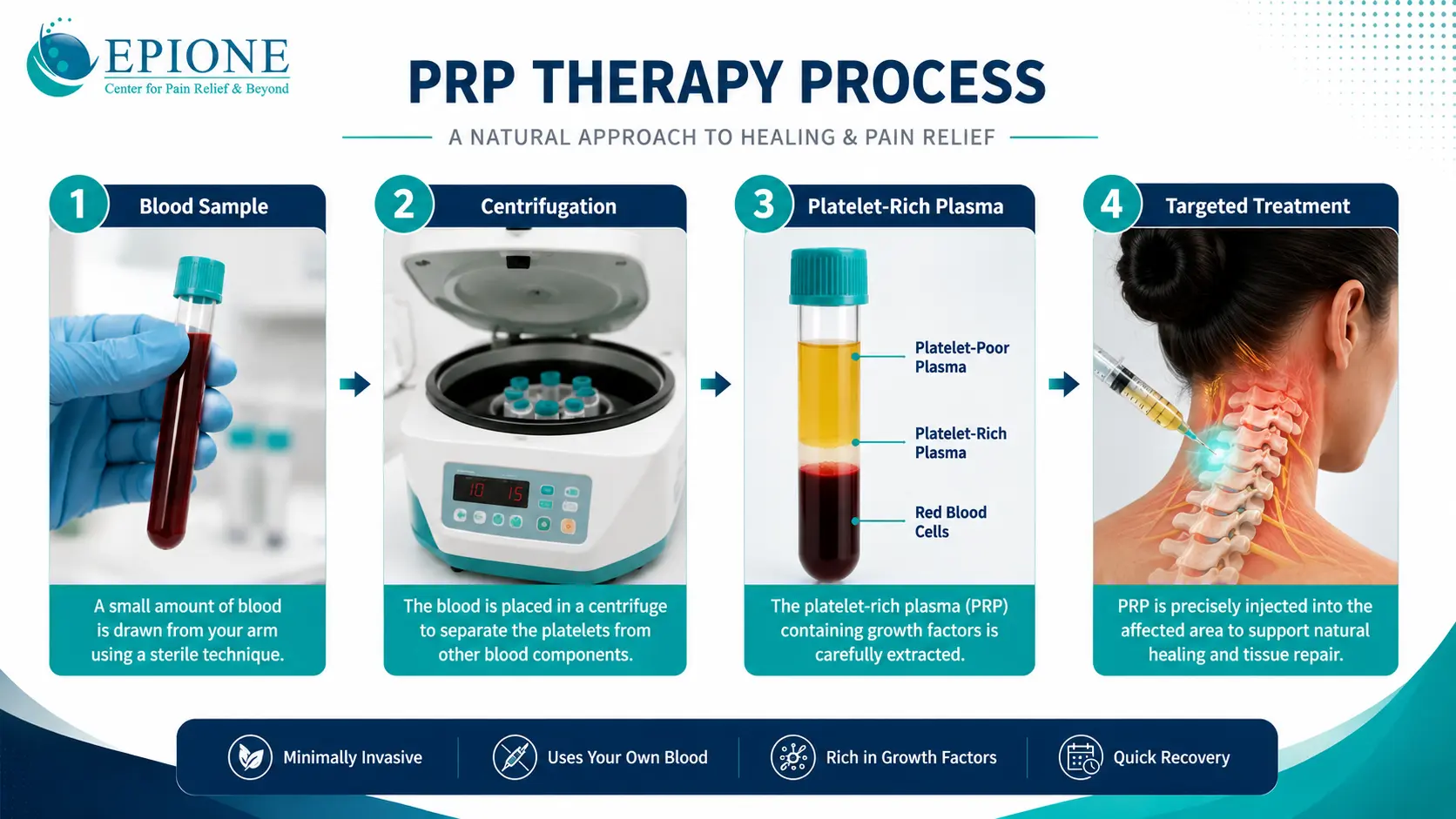
For some patients dealing with chronic neck pain linked to soft tissue or muscle damage, PRP (Platelet-Rich Plasma) therapy is another option worth discussing with a specialist. It works by using concentrated platelets from the patient’s own blood to support the body’s natural healing process in the affected area.
It’s not the right fit for every kind of neck pain, but for the right cases, it’s become a useful addition alongside more conventional treatments – something our team at Epione Pain & Spine evaluates on a patient-by-patient basis.
For Chronic, Harder-to-Treat Cases
When simpler treatments haven’t done enough, options like radiofrequency ablation or other minimally invasive procedures may offer longer relief. These aren’t first-choice treatments — they usually come up after other approaches have already been tried, and the decision really depends on what’s driving the pain in that specific case.
Every case is different, and that’s really the point. Neck pain from sitting wrong all day needs a completely different approach than neck pain from a herniated disc — which is why an individual evaluation matters more than following a standard checklist.
Simple Ways to Prevent Neck Pain
- Keep your screen at eye level instead of looking down
- Take short breaks every 30–40 minutes if you’re at a desk
- Avoid cradling your phone between your ear and shoulder
- Use a supportive pillow that keeps your neck aligned while sleeping
- Stretch your neck and shoulders gently through the day
- Stay active — a sedentary routine makes neck stiffness worse over time
Frequently Asked Questions
What causes sudden neck pain?
Sudden neck pain is usually caused by muscle strain, sleeping in an awkward position, or a quick, jerky head movement. Less commonly, it can be linked to a disc problem or an injury like whiplash.
How long does neck pain usually last?
Mild neck pain from strain or posture often improves within a few days to two weeks with rest and gentle care. Pain that lasts longer than that, or keeps returning, usually needs a proper evaluation.
Can neck pain cause headaches?
Yes. Tight neck muscles and joint irritation in the cervical spine can trigger what’s known as a cervicogenic headache, where pain starts in the neck and spreads up to the head.
Is neck pain a sign of something serious?
Most of the time, no — it’s related to posture, strain, or minor wear and tear. But if it comes with numbness, arm weakness, or doesn’t improve after a couple of weeks, it’s worth getting checked by a specialist.
What is the best treatment for chronic neck pain?
There’s no single answer here — it really depends on what’s causing it. Physical therapy works well for posture-related pain, while nerve-related pain may need targeted procedures like injections or nerve blocks. A specialist can help figure out the right path after an evaluation.
This article is for general informational purposes and isn’t a substitute for professional medical advice. If you’re experiencing persistent or severe neck pain, please consult a qualified pain management specialist for proper diagnosis and treatment.