
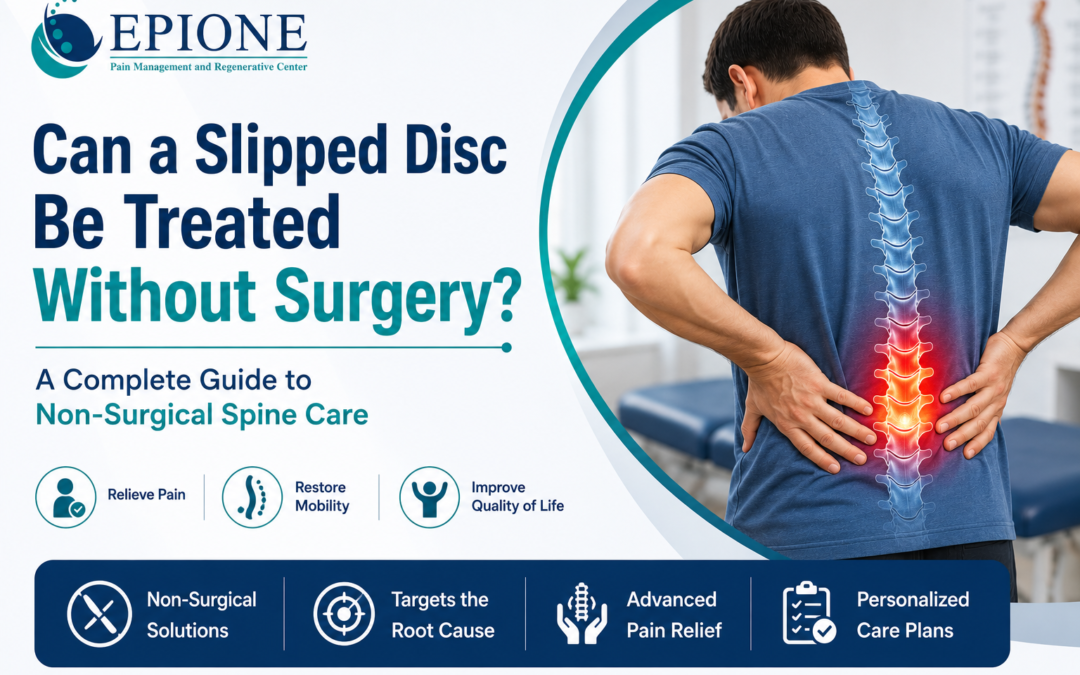
Have you recently been diagnosed with a slipped disc? If so, you are likely experiencing sharp, shooting back pain that makes even simple, everyday movements feel completely impossible. The mere thought of a severe spine injury can be terrifying, and for many patients, the immediate, anxiety-inducing question is: Will I need to undergo spine surgery?
It is completely normal to feel overwhelmed, but there is excellent news. You do not always need to go under the knife to find lasting relief. In fact, for the vast majority of patients, slipped disc treatment without surgery is highly effective. With the right medical guidance, targeted therapies, and advanced pain management techniques, you can heal naturally and reclaim your active, pain-free life.
Can a Slipped Disc Be Treated Without Surgery? (The Short Answer)
Yes, in over 80% to 90% of cases, a slipped disc can be successfully treated without surgery. Through a conservative, multidisciplinary approach involving physical therapy, targeted medications, epidural steroid injections, and specialized pain management techniques, the body can naturally resorb the herniated disc material over time while effectively reducing pain and nerve inflammation.
Understanding a Slipped Disc
To understand your treatment options, it helps to understand the anatomy of your spine. Your spine is made up of a series of bones (vertebrae) stacked onto one another. Between each bone sits an intervertebral disc, which acts as a shock absorber. These discs have a tough, rubbery exterior (annulus fibrosus) and a soft, jelly-like center (nucleus pulposus).
A slipped disc—clinically known as a herniated, bulging, or ruptured disc—occurs when the soft inner jelly pushes through a tear in the tough exterior. When this protruding material presses against sensitive spinal nerves, it triggers intense pain, numbness, and severe discomfort.
Recognizing the Symptoms
A slipped disc can occur anywhere in the spine, but it most frequently happens in the lower back (lumbar spine) or the neck (cervical spine). The symptoms vary depending on the location of the disc and whether it is compressing a nerve.
Common emotional and physical pain points patients experience include:
- Radiating Pain: Sharp, electrical pain shooting down one leg (sciatica) or into the arm.
- Numbness and Tingling: A “pins and needles” sensation in the foot, toes, hands, or fingers.
- Muscle Weakness: Difficulty lifting things, stumbling while walking, or a feeling that your leg might “give out.”
- Localized Ache: Deep, worsening lower back pain, especially after sitting, standing, or sneezing.
If you are suffering from radiating leg pain, seeking specialized sciatica pain treatment early can prevent the nerve damage from worsening.
Major Causes and Risk Factors
Why do slipped discs happen? While an acute injury or heavy lifting can cause a disc to rupture abruptly, the condition often develops gradually due to age-related wear and tear, known as disc degeneration.
Several risk factors increase your likelihood of developing a herniated disc:
- Weight: Excess body weight puts extra mechanical stress on the discs in your lower back.
- Occupation: Jobs requiring repetitive lifting, pulling, pushing, or twisting of the spine.
- Genetics: A family history of spinal or disc degeneration.
- Sedentary Lifestyle: Lack of regular exercise weakens the core muscles that support the spine.
How is a Slipped Disc Diagnosed?
Accurate diagnosis is the foundation of effective spine treatment without surgery. At an advanced clinic like Epione Pain & Spine, a diagnosis begins with a thorough physical and neurological examination. Your pain specialist will check your reflexes, muscle strength, walking ability, and sensitivity to touch.
To pinpoint the exact location of the herniation and assess nerve compression, imaging tests are often utilized:
- MRI (Magnetic Resonance Imaging): The gold standard for visualizing soft tissues like discs and nerves.
- X-rays: To rule out other causes of back pain, such as broken bones or spinal alignment issues.
- CT Scans or EMG: Used occasionally to assess nerve damage or bone structures in complex cases.
Comprehensive Slipped Disc Treatment Without Surgery
The primary goal of conservative herniated disc treatment is to relieve pain, reduce nerve inflammation, and restore your mobility. Here are the most effective, clinically proven non-surgical treatment options available today:
1. Rest and Activity Modification
In the acute phase of intense pain, a short period of rest (1 to 2 days) may be advised. However, prolonged bed rest can actually cause muscles to stiffen and weaken. Modifying your activities—avoiding heavy lifting, deep bending, or prolonged sitting—is crucial to allow the disc space to heal.
2. Medications for Pain and Inflammation
Targeted pharmacological management is often the first step in lower back pain treatment.
- NSAIDs: Over-the-counter or prescription anti-inflammatory drugs to reduce swelling.
- Muscle Relaxants: To ease painful muscle spasms in the back.
- Nerve Pain Medications: Specific drugs designed to calm hyperactive, compressed nerves.
3. Physical Therapy and Rehabilitation
Physical therapy is a cornerstone of non-surgical recovery. A skilled physiotherapist will teach you targeted exercises and stretches designed to:
- Strengthen the core and back muscles to better support the spine.
- Improve flexibility and posture.
- Relieve pressure on the affected spinal nerve (often using the McKenzie method or pelvic traction).
4. Advanced Interventional Pain Management
When medications and physical therapy are not enough, advanced interventional techniques provide profound relief without the need for an operating room.
- Epidural Steroid Injections (ESI): A minimally invasive procedure where a potent anti-inflammatory medication is injected directly into the epidural space around the irritated nerve. This flushes away inflammatory proteins and drastically reduces swelling, providing months of relief while the disc naturally heals.
- Ozone Nucleolysis: An advanced, minimally invasive treatment where medical ozone gas is injected into the disc space to reduce the volume of the herniated disc, relieving pressure on the nerve.
- Nerve Blocks: Diagnostic and therapeutic injections that “turn off” the pain signals traveling from the inflamed nerve to the brain.
Surgical vs. Non-Surgical Spine Treatment (A Quick Comparison)
| Feature | Non-Surgical Treatment | Spine Surgery |
|---|---|---|
| Recovery Time | Weeks to a few months (progressive healing) | Several months |
| Hospital Stay | None (Outpatient procedures) | 1 to several days |
| Risk of Complications | Very Low | Moderate to High |
| Tissue Damage | None | Muscle and bone alteration required |
When to See a Doctor (Red Flag Symptoms)
While the vast majority of cases resolve with non-surgical care, there are rare medical emergencies where surgery is unavoidable. You should seek immediate medical attention if you experience:
- Sudden loss of bowel or bladder control.
- Progressive, severe neurological deficits (like profound weakness in both legs).
- “Saddle anesthesia” (numbness in your inner thighs, back of legs, and groin area).
These are signs of Cauda Equina Syndrome, a rare but serious complication that requires urgent surgical intervention.
The Benefits of Early Treatment
Ignoring back pain or trying to “push through it” can lead to chronic pain and permanent nerve damage. By seeking early intervention from a specialized pain management clinic, you benefit from:
- Faster overall recovery.
- Prevention of chronic, lifelong pain pathways.
- Avoidance of complex, invasive spine surgeries.
- A quicker return to work, sports, and daily activities.
Why Choose Epione Pain & Spine?
At Epione Pain & Spine, we understand how debilitating a slipped disc can be. Our multidisciplinary team of interventional pain specialists, physiotherapists, and spine experts are dedicated to helping you live a pain-free life through advanced, evidence-based care. We pride ourselves on utilizing state-of-the-art diagnostic tools and minimally invasive treatments to offer you the absolute best in non-surgical spine care in India. We treat the root cause of your pain, not just the symptoms.
📅 Take the First Step Towards a Pain-Free Life
You do not have to live with the fear of surgery or the agony of back pain. Our expert pain specialists are ready to evaluate your condition and design a personalized, non-surgical treatment plan tailored just for you.
Doctor Consultation & Appointment Booking
Don’t let a slipped disc control your life. Consult our top-rated specialists today and discover your non-surgical options.
📞 Call us now for appointments and queries: 8008008729
Frequently Asked Questions (FAQs)
1. How long does a slipped disc take to heal without surgery?
With proper non-surgical treatment, including rest, physical therapy, and targeted injections if necessary, most patients experience significant pain relief within 4 to 6 weeks. The disc itself may take a few months to fully resorb and heal.
2. Can a herniated disc go back into place on its own?
While a disc doesn’t “slip back into place” like a dislocated joint, the herniated portion can shrink over time. The body’s immune system recognizes the extruded disc material as foreign and naturally breaks it down and absorbs it, relieving pressure on the nerve.
3. Is walking good for a slipped disc?
Yes, walking is generally one of the best low-impact exercises for a slipped disc. It promotes blood flow, oxygen, and nutrient delivery to the spine, aiding in the healing process. However, you should avoid walking long distances if it severely aggravates your pain.
4. What movements should I avoid with a slipped disc?
You should avoid movements that increase spinal pressure, such as bending forward at the waist, lifting heavy objects, twisting your torso, and high-impact activities like running or jumping until you are medically cleared.
5. Are epidural steroid injections safe for herniated discs?
Yes, when performed by an experienced interventional pain specialist under fluoroscopic (X-ray) guidance, epidural steroid injections are highly safe and incredibly effective for rapidly reducing nerve inflammation and pain.