
Benefits of Minimally Invasive Spine Treatment
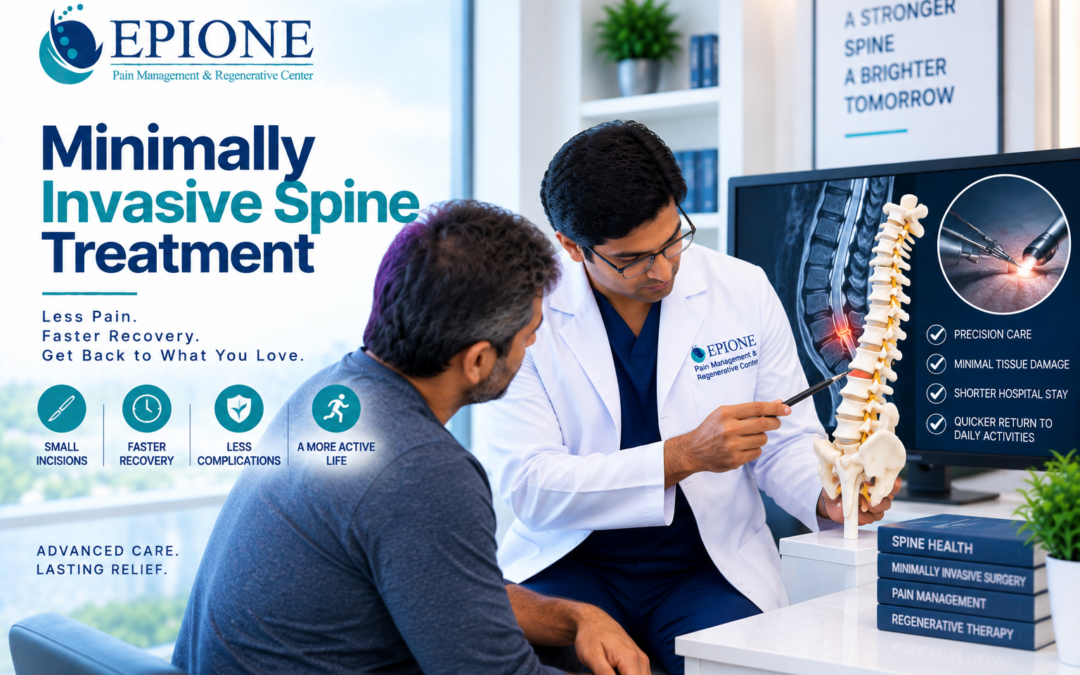
“Minimally invasive spine treatment” is a broad phrase, not a single procedure. It may refer to image-guided pain interventions performed through needles or small instruments, or to surgical techniques performed through smaller incisions. These approaches can reduce tissue disruption in selected cases, but they are not automatically better simply because they are less invasive.
The most important question is whether the treatment matches the diagnosis and has a reasonable chance of improving function with acceptable risk.
Minimally invasive pain procedures versus minimally invasive surgery
Pain procedures can include selected epidural injections, nerve-root blocks, facet or medial branch procedures, and radiofrequency techniques. Minimally invasive spine surgery, by contrast, still involves surgical decompression, stabilization, or another operative goal but uses smaller access routes when suitable.
Patients should ask which category is being proposed because the benefits, recovery, evidence, and risks are different.
Potential advantages
For appropriately selected interventions, smaller access routes may mean less tissue disruption, shorter recovery, or the ability to avoid major surgery when surgery is not indicated. Some pain procedures can be performed as day-care treatments and may help a patient resume rehabilitation sooner.
These potential advantages should be weighed against the likelihood of benefit, not used as marketing claims that every procedure is painless, risk-free, or permanent.
Who may be a candidate?
Selection depends on the pain generator and clinical findings. Patients with persistent radicular pain, certain facet-mediated pain patterns, or other specific diagnoses may be considered for targeted procedures. Patients with structural problems requiring decompression or stabilization may need a surgical evaluation instead.
Imaging can support treatment planning when findings match symptoms, but an MRI report alone does not determine candidacy.
What good pre-procedure planning looks like
The specialist should review medicines, allergies, diabetes, anticoagulants, infection risk, pregnancy status when relevant, and prior responses to treatment. The goal of the procedure should be stated in practical terms—for example, reducing leg pain enough to improve walking or enabling progress in physiotherapy.
A clear post-procedure rehabilitation plan is often as important as the intervention itself.
Limitations and red flags
A minimally invasive approach should not delay urgent treatment for cauda equina syndrome, progressive neurological deficit, spinal cord compression, unstable fracture, infection, or another serious condition. Some patients will obtain better outcomes from surgery or another specialty pathway.
Patients should be wary of guarantees that a minimally invasive technique can “replace surgery” for every spinal diagnosis.
How to measure whether treatment is working
Pain intensity is only one outcome. Track whether you can sit, stand, walk, sleep, work, drive, exercise, and perform household tasks more comfortably. For nerve-related problems, changes in numbness, tingling, strength, and how far symptoms travel are also important. A treatment that lowers pain for a few hours but does not improve function may have limited long-term value.
Recovery is rarely perfectly linear. Short flares after an increase in activity can occur without meaning that the spine has been damaged again. The plan should be reviewed when symptoms are progressively worsening, new neurological deficits appear, or there is no functional progress despite consistent care.
Discussing options with a Hyderabad pain specialist
Dr. Minal Chandra’s Epione profile lists image-guided interventional pain procedures among her areas of practice. For internal linking, use a contextual phrase such as “minimally invasive pain treatment in Hyderabad” while keeping the article balanced about indications and limitations.
Frequently Asked Questions
Is minimally invasive spine treatment always non-surgical?
No. Some minimally invasive treatments are pain procedures, while others are true surgical procedures performed through smaller access routes.
Is recovery always faster?
Recovery may be faster for some techniques and diagnoses, but it varies with the procedure, condition, age, and overall health.
Can these treatments avoid surgery?
They may help selected patients who do not have a surgical indication, but they should not delay surgery when neurological or structural problems require it.
Are image-guided injections safe?
They have potential benefits and risks. Safety depends on the indication, technique, clinician, anatomy, medicines, and patient health.
How do I choose between a procedure and physiotherapy?
They are often complementary. A procedure may reduce symptoms in selected cases, while rehabilitation restores function and capacity.
When to Get Personalized Help
Persistent or recurrent pain deserves an individual assessment. A pain specialist can review your symptoms, examination findings, imaging when needed, previous treatments, and goals before recommending the next step.
For a personalized pain assessment, learn more about Dr. Minal Chandra, Co-founder and Consultant Pain Specialist at Epione Pain & Spine. Treatment recommendations should always follow an individual clinical evaluation.