

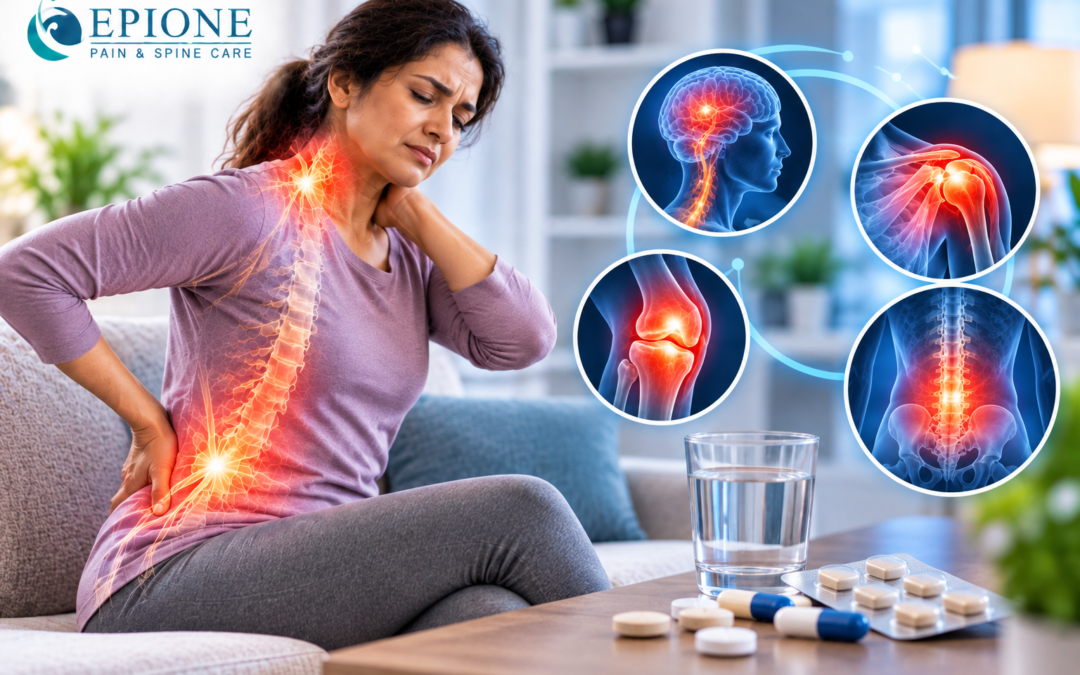
Quick answer: NaV1.8 inhibitors are a new class of pain medicines designed to reduce peripheral pain signaling without acting on opioid receptors. Suzetrigine (Journavx) was approved by the U.S. FDA in January 2025 for moderate-to-severe acute pain in adults; that approval should not be generalized to chronic pain or assumed to apply identically in every country.
Key takeaways
- New non opioid pain medicine should be understood in clinical context, not from one symptom or scan alone.
- The most useful treatment plan starts with a plausible pain mechanism and measurable functional goals.
- Newer research can improve patient selection, but emerging evidence should not be marketed as a guaranteed cure.
People rarely search for “new non opioid pain medicine” because they want a textbook definition. Usually there is a real decision behind the search: a scan report that is confusing, pain that has not improved, or a new treatment name that sounds promising but is hard to evaluate. This guide is written to make that decision easier. It explains what clinicians mean by the term, where the evidence is strong or still emerging, and which questions are worth taking to a specialist appointment.
Why NaV1.8 became a major pain-medicine story
Pain signals begin in peripheral sensory nerves before they reach the spinal cord and brain. NaV1.8 is a sodium channel involved in electrical signaling in nociceptive neurons. Targeting that channel offers a way to reduce pain transmission without directly activating opioid receptors.
In January 2025, the U.S. FDA approved suzetrigine, marketed as Journavx, for moderate-to-severe acute pain in adults. It was the first approved medicine in this new non-opioid class. The development remains highly relevant in 2026 because it represents a different pharmacological strategy rather than another version of an existing opioid.
What “non-opioid” does and does not mean
Non-opioid does not automatically mean risk-free, suitable for everyone or appropriate for every type of pain. Medicines can have contraindications, drug interactions and side effects through many mechanisms. A new class also has less real-world experience than older medicines.
The FDA approval is for acute pain, not a blanket approval for chronic back pain, neuropathy or every painful condition. Patients should be cautious with headlines that imply a “new painkiller” has solved the opioid problem. The more accurate message is that clinicians now have an additional mechanism to consider in defined settings.
Why chronic pain is a different problem
Acute pain is usually linked to a recent injury, procedure or tissue event and is expected to change as healing occurs. Chronic pain can involve ongoing structural disease, nerve injury, altered pain processing, sleep, movement, mood and social factors. One medication rarely addresses all of those mechanisms.
At a pain management center, medication is only one part of the plan. For neuropathic pain treatment, clinicians may use medicines aimed at nerve signaling, rehabilitation and selected interventions. For low back pain treatment, the dominant pain generator and function often guide care more than the availability of a new drug.
How sodium-channel targeting differs from opioids
Opioids mainly work through opioid receptors in the central and peripheral nervous systems and can affect reward, respiration and gastrointestinal function. NaV1.8 inhibition is designed to reduce electrical signaling in specific peripheral nociceptive pathways before those signals reach the brain.
That mechanistic difference is scientifically important, but it should not be oversold. A drug can be non-opioid and still require careful prescribing. It can also work well for one pain context and poorly for another. Mechanism-based medicine asks whether the target is relevant to the condition being treated.
Availability in India and other countries
Regulatory approval is country-specific. U.S. FDA approval does not automatically mean a medicine is approved, marketed or routinely available in India. Formulary decisions, local regulation, pricing and prescribing guidance may differ.
This article therefore should not state that Epione offers suzetrigine unless the clinic independently confirms availability and regulatory status at the time of publication. A safer, more useful approach is educational: explain the science, the approved indication and why non-opioid development matters for the future of pain care.
What patients should ask about any new pain medicine
Ask what type of pain the medicine is approved for, how strong the evidence is for your condition, what side effects and interactions matter, how long it is intended to be used, and how success will be measured. Also ask whether the drug changes the underlying disease or only reduces symptoms.
Never stop prescribed opioids, antidepressants, anticonvulsants or other pain medicines abruptly because of an article about a new treatment. Medication changes should be supervised, especially when dependence, withdrawal or complex medical conditions are involved.
What current evidence can—and cannot—tell us
A useful way to read newer pain research is to separate three questions: does the mechanism make biological sense, has it been demonstrated in the type of patient being discussed, and does treating that mechanism improve outcomes that matter to patients? For new non opioid pain medicine, those questions are more useful than asking whether the topic is simply “new” or “advanced.” Related search terms such as NaV1.8 inhibitor, suzetrigine pain medicine, Journavx, non opioid painkiller describe overlapping interests, but they should not be treated as interchangeable diagnoses. A study may show promising average improvement while still leaving uncertainty about which individual will respond, how long benefit lasts, and whether the result compares favorably with simpler care. This is particularly important in pain medicine because many studies enroll highly selected patients, use different definitions of success, and combine pain scores with functional outcomes in different ways. For patients, the safest interpretation is that evidence can guide a conversation; it cannot guarantee a personal result. For patients, the same principle improves decision-making: understand what is known, what remains uncertain, and whether the evidence is observational, randomized, or mainly mechanistic.
How a specialist turns the information into a treatment plan
When a patient is trying to understand new non opioid pain medicine, the next step should not be chosen from the search result alone. A specialist first asks what problem needs to be solved: Is the priority walking, sleeping, returning to work, reducing medication, or understanding a confusing scan? The clinician then builds a differential diagnosis, checks for warning signs, reviews previous care and decides whether more testing would actually change management. Where appropriate, that assessment can connect to pain management center or neuropathic pain treatment depending on which diagnosis best matches the symptoms. The purpose is to move from a broad symptom or question to the most relevant condition or treatment pathway, without assuming that every patient needs the same test or procedure.
A practical symptom diary before your consultation
Before a consultation, track symptoms for one to two weeks if the condition is stable and non-urgent. Note where the pain begins, where it spreads, what time of day it is worst, which movements or positions change it, whether there is numbness or weakness, how sleep is affected, and what you can no longer do comfortably. Record medicines and supplements, previous injections or procedures, and the actual benefit rather than only whether they were “tried.” If you have imaging, bring both the report and the images when possible. This kind of preparation creates a more human and more accurate consultation because the discussion starts with your lived pattern of symptoms instead of a generic label. It also gives the clinician a baseline for measuring whether treatment is genuinely helping. If symptoms are rapidly worsening, accompanied by new neurological deficits, fever, major trauma, loss of bladder or bowel control, or another emergency feature, do not wait to complete a diary—seek prompt medical assessment.
Expert pain assessment in Hyderabad
For patients in Hyderabad who are exploring newer pain technologies or medicines, expert interpretation matters as much as the headline. Epione identifies Dr. Minal Chandra, MBBS, DA, DNB, FIPM, as its Co-Founder and Consultant Pain Specialist with 15+ years of experience in interventional pain medicine. A consultation can help place new non opioid pain medicine in the context of your diagnosis, previous treatment and options that are actually available locally. Because regulatory approval, device availability and evidence can differ by country and condition, an emerging treatment should not be presented as automatically suitable or available.
Learn more about Epione’s pain specialists and multidisciplinary care: Dr. Minal Chandra at Epione | Book an appointment
References
- FDA approval of suzetrigine (Journavx) for moderate-to-severe acute pain
- FDA Drug Trials Snapshot: Journavx
If pain is limiting sleep, work, walking or daily activity, consider a specialist review rather than choosing a procedure from a scan or search result alone. Request an Epione consultation and ask about Dr. Minal Chandra’s availability.
Frequently Asked Questions
1. What is suzetrigine (Journavx)?
suzetrigine (Journavx) is a non-opioid medicine discussed here in the context of the new NaV1.8 pain-medicine class. For new non opioid pain medicine, the answer depends on the symptom pattern, examination findings, medical history and the goal of treatment. A qualified clinician can explain which findings are clinically important and whether testing, rehabilitation, medication or a targeted procedure is appropriate. Seek prompt medical care if symptoms are rapidly worsening or include a new neurological deficit or other warning sign.
2. How does it work?
Selective inhibition of the nav1.8 sodium channel involved in peripheral pain signaling. For new non opioid pain medicine, the answer depends on the symptom pattern, examination findings, medical history and the goal of treatment. A qualified clinician can explain which findings are clinically important and whether testing, rehabilitation, medication or a targeted procedure is appropriate. Seek prompt medical care if symptoms are rapidly worsening or include a new neurological deficit or other warning sign.
3. Is it an opioid?
No. It does not work through opioid receptors. For new non opioid pain medicine, the answer depends on the symptom pattern, examination findings, medical history and the goal of treatment. A qualified clinician can explain which findings are clinically important and whether testing, rehabilitation, medication or a targeted procedure is appropriate. Seek prompt medical care if symptoms are rapidly worsening or include a new neurological deficit or other warning sign.
4. What is it approved for?
U.s. fda approval for moderate-to-severe acute pain in adults. For new non opioid pain medicine, the answer depends on the symptom pattern, examination findings, medical history and the goal of treatment. A qualified clinician can explain which findings are clinically important and whether testing, rehabilitation, medication or a targeted procedure is appropriate. Seek prompt medical care if symptoms are rapidly worsening or include a new neurological deficit or other warning sign.
5. Is it approved for chronic back pain?
The cited U.S. approval is for acute pain in adults, not a blanket approval for chronic back pain. For new non opioid pain medicine, the answer depends on the symptom pattern, examination findings, medical history and the goal of treatment. A qualified clinician can explain which findings are clinically important and whether testing, rehabilitation, medication or a targeted procedure is appropriate. Seek prompt medical care if symptoms are rapidly worsening or include a new neurological deficit or other warning sign.
6. Is it approved for neuropathy?
The approval discussed here should not be generalized to neuropathy. Evidence and regulatory indications must be checked for each condition. For new non opioid pain medicine, the answer depends on the symptom pattern, examination findings, medical history and the goal of treatment. A qualified clinician can explain which findings are clinically important and whether testing, rehabilitation, medication or a targeted procedure is appropriate. Seek prompt medical care if symptoms are rapidly worsening or include a new neurological deficit or other warning sign.
7. Is it available in India?
Availability and approval are country-specific. U.S. FDA approval does not automatically mean routine availability or approval in India. For new non opioid pain medicine, the answer depends on the symptom pattern, examination findings, medical history and the goal of treatment. A qualified clinician can explain which findings are clinically important and whether testing, rehabilitation, medication or a targeted procedure is appropriate. Seek prompt medical care if symptoms are rapidly worsening or include a new neurological deficit or other warning sign.
8. Can I replace my opioid with it?
Do not change or stop opioid therapy without medical supervision. Suitability depends on the reason for the opioid, dose, duration and individual risks. For new non opioid pain medicine, the answer depends on the symptom pattern, examination findings, medical history and the goal of treatment. A qualified clinician can explain which findings are clinically important and whether testing, rehabilitation, medication or a targeted procedure is appropriate. Seek prompt medical care if symptoms are rapidly worsening or include a new neurological deficit or other warning sign.
9. Is a non-opioid medicine automatically safer?
No. Non-opioid medicines can still have side effects, contraindications and interactions. For new non opioid pain medicine, the answer depends on the symptom pattern, examination findings, medical history and the goal of treatment. A qualified clinician can explain which findings are clinically important and whether testing, rehabilitation, medication or a targeted procedure is appropriate. Seek prompt medical care if symptoms are rapidly worsening or include a new neurological deficit or other warning sign.
10. Does it cause addiction?
Its mechanism does not rely on opioid receptors, but safety and misuse potential should still be assessed from regulatory labeling and clinical data rather than assumed. For new non opioid pain medicine, the answer depends on the symptom pattern, examination findings, medical history and the goal of treatment. A qualified clinician can explain which findings are clinically important and whether testing, rehabilitation, medication or a targeted procedure is appropriate. Seek prompt medical care if symptoms are rapidly worsening or include a new neurological deficit or other warning sign.
11. Can it be used long term?
It is not automatically approved for chronic pain, and availability differs by country. Long-term use depends on evidence, labeling and medical supervision. For new non opioid pain medicine, the answer depends on the symptom pattern, examination findings, medical history and the goal of treatment. A qualified clinician can explain which findings are clinically important and whether testing, rehabilitation, medication or a targeted procedure is appropriate. Seek prompt medical care if symptoms are rapidly worsening or include a new neurological deficit or other warning sign.
12. Does it cure the cause of pain?
No. Analgesics reduce symptoms; they do not necessarily reverse the underlying injury or disease. For new non opioid pain medicine, the answer depends on the symptom pattern, examination findings, medical history and the goal of treatment. A qualified clinician can explain which findings are clinically important and whether testing, rehabilitation, medication or a targeted procedure is appropriate. Seek prompt medical care if symptoms are rapidly worsening or include a new neurological deficit or other warning sign.
13. Can it be combined with other pain medicines?
Combination therapy must be reviewed for interactions and duplication. A prescriber should know all prescription drugs, over-the-counter medicines and supplements being used. For new non opioid pain medicine, the answer depends on the symptom pattern, examination findings, medical history and the goal of treatment. A qualified clinician can explain which findings are clinically important and whether testing, rehabilitation, medication or a targeted procedure is appropriate. Seek prompt medical care if symptoms are rapidly worsening or include a new neurological deficit or other warning sign.
14. What side effects can occur?
Side effects vary by medicine and should be checked in the current prescribing information. Patients should not rely on a blog as a substitute for the product label. For new non opioid pain medicine, the answer depends on the symptom pattern, examination findings, medical history and the goal of treatment. A qualified clinician can explain which findings are clinically important and whether testing, rehabilitation, medication or a targeted procedure is appropriate. Seek prompt medical care if symptoms are rapidly worsening or include a new neurological deficit or other warning sign.
15. Who should avoid it?
Prescribing requires review of contraindications, interactions and individual medical history. Specific contraindications should be verified from current regulatory labeling. For new non opioid pain medicine, the answer depends on the symptom pattern, examination findings, medical history and the goal of treatment. A qualified clinician can explain which findings are clinically important and whether testing, rehabilitation, medication or a targeted procedure is appropriate. Seek prompt medical care if symptoms are rapidly worsening or include a new neurological deficit or other warning sign.
16. Why are pain specialists interested in NaV1.8?
It targets peripheral nociceptive signaling through a mechanism distinct from opioids, expanding the range of pharmacological strategies available for pain. For new non opioid pain medicine, the answer depends on the symptom pattern, examination findings, medical history and the goal of treatment. A qualified clinician can explain which findings are clinically important and whether testing, rehabilitation, medication or a targeted procedure is appropriate. Seek prompt medical care if symptoms are rapidly worsening or include a new neurological deficit or other warning sign.
17. Will NaV1.8 medicines replace opioids?
It is too early to say. Different pain states respond to different mechanisms, and opioids will not be replaced by one class in every clinical situation. For new non opioid pain medicine, the answer depends on the symptom pattern, examination findings, medical history and the goal of treatment. A qualified clinician can explain which findings are clinically important and whether testing, rehabilitation, medication or a targeted procedure is appropriate. Seek prompt medical care if symptoms are rapidly worsening or include a new neurological deficit or other warning sign.
18. What should I ask before taking a new pain medicine?
Ask about the approved indication, expected benefit, side effects, interactions, duration, cost and how success will be measured. For new non opioid pain medicine, the answer depends on the symptom pattern, examination findings, medical history and the goal of treatment. A qualified clinician can explain which findings are clinically important and whether testing, rehabilitation, medication or a targeted procedure is appropriate. Seek prompt medical care if symptoms are rapidly worsening or include a new neurological deficit or other warning sign.
19. Should I ask specifically for suzetrigine?
Discuss the pain problem rather than requesting a specific drug. The clinician can determine whether the medicine is approved, available and suitable for your situation. For new non opioid pain medicine, the answer depends on the symptom pattern, examination findings, medical history and the goal of treatment. A qualified clinician can explain which findings are clinically important and whether testing, rehabilitation, medication or a targeted procedure is appropriate. Seek prompt medical care if symptoms are rapidly worsening or include a new neurological deficit or other warning sign.
20. What is the main takeaway?
New non-opioid medicines are promising additions to pain care, but they should be used according to evidence, regulation and individual clinical assessment. For new non opioid pain medicine, the answer depends on the symptom pattern, examination findings, medical history and the goal of treatment. A qualified clinician can explain which findings are clinically important and whether testing, rehabilitation, medication or a targeted procedure is appropriate. Seek prompt medical care if symptoms are rapidly worsening or include a new neurological deficit or other warning sign.