
Can a Slipped Disc Be Treated Without Surgery in Hyderabad?
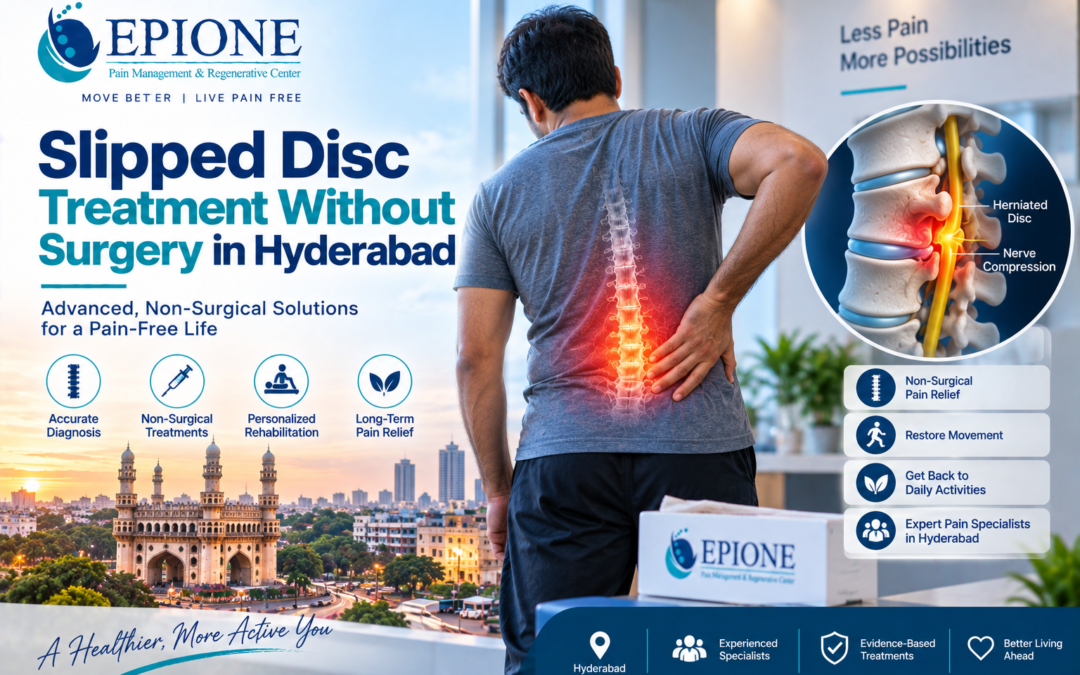
Slipped disc treatment without surgery in hyderabad is best approached as a diagnosis-and-function problem, not as a keyword or scan finding. A slipped disc, more accurately called a disc herniation, occurs when disc material moves beyond its usual boundary and may irritate a nearby nerve. Symptoms can include back pain, leg pain, tingling, numbness, or weakness. Many disc-related episodes improve with time and appropriate conservative care, so an MRI report by itself does not mean surgery is necessary. For patients looking for slipped disc treatment without surgery in Hyderabad, the key is to match treatment to symptoms, neurological findings, and the level of functional limitation. This guide explains what patients should know, what a clinician may assess, where non-surgical care fits, and which warning signs should change the plan. The aim is to help readers ask better questions and understand the pathway from symptoms to an evidence-informed treatment decision. For readers who want condition-specific evaluation and treatment information, explore slipped disc treatment options at Epione.
Understanding the Problem Before Choosing Treatment
Patients often reach this topic after searching for related phrases such as slipped disc treatment Hyderabad, disc bulge treatment Hyderabad, or herniated disc treatment without surgery. Those terms can describe overlapping problems, but they are not interchangeable diagnoses. A useful clinical approach separates the structure seen on imaging from the symptoms a person actually experiences. Two people can have similar scans and very different pain, strength, mobility, sleep, and daily function. This is why a clinician should connect the history, examination, and any tests before recommending treatment.
Symptoms, Causes and Why Similar Scans Can Feel Different
Pain is influenced by more than structural change alone. Tissue irritation, nerve sensitivity, inflammation, muscle guarding, sleep, stress, previous episodes, physical conditioning, and the demands placed on the body can all affect how strongly symptoms are felt. For this reason, related searches such as slipped disc treatment Hyderabad or sciatica treatment in Hyderabad should lead to a proper assessment rather than self-diagnosis. A scan can be clinically useful, but it cannot measure pain intensity, explain every symptom, or determine by itself whether a person needs a procedure or surgery.
How a Clinician Builds the Diagnosis
A pain or spine clinician will usually ask when symptoms began, whether pain travels below the knee, what movements aggravate it, and whether there is numbness or weakness. Examination may include strength, reflexes, sensation, straight-leg-raise testing, gait, and lumbar movement. MRI is most useful when symptoms are persistent, severe, associated with neurological deficit, or when an intervention is being considered. A scan should be interpreted together with the clinical picture because disc bulges are also seen in people who have little or no pain. A well-structured consultation also asks what the patient wants to regain: walking, sleeping, driving, working, exercising, or caring for family. These functional goals matter because a treatment that changes a scan report but does not improve daily life has limited practical value. Where appropriate, blood tests, electrodiagnostic studies, or specialist referrals may be used to rule out competing diagnoses.
If symptoms overlap with related pain patterns, the clinician may also consider sciatica treatment in Hyderabad as part of the differential diagnosis and treatment pathway.
Non-Surgical Treatment Pathway
Initial treatment may include short periods of relative activity modification, medicines where suitable, physiotherapy, progressive exercise, ergonomic changes, and education about safe movement. When radicular pain from nerve-root irritation remains severe despite reasonable conservative care, a targeted epidural or nerve-root injection may be considered in selected patients. The goal is usually to reduce pain enough to restore sleep, walking, and rehabilitation rather than to promise a permanent cure from one procedure. In most non-emergency pain conditions, the first objective is to preserve safe movement and progressively rebuild capacity. Treatment should be stepped rather than random: establish the likely diagnosis, set measurable goals, start the least invasive reasonable option, reassess, and escalate only when the expected benefit justifies the risk. That principle is especially important for searches around L4 L5 disc bulge treatment, where a procedure may sound like a complete solution even though the best results often come from combining targeted pain relief with rehabilitation.
For patients whose symptoms fit the relevant indication, Epione also provides information about caudal epidural injection. The procedure should only be considered after diagnosis and suitability are established.
Where Interventional Pain Procedures May Fit
Interventional pain procedures can be useful when there is a specific clinical target, but they should not be used simply because pain has lasted a long time. The clinician should be able to explain what structure or nerve is being targeted, what diagnostic evidence supports it, what level of relief would count as success, and what the next step will be if the procedure does not help. Temporary pain reduction can still be valuable when it creates a window for walking, strengthening, sleep, work, or physiotherapy. It should not be confused with structural healing unless the treatment actually addresses the structure itself.
A related option that may be relevant for selected diagnoses is pain management in Hyderabad; however, the indication, risks and expected benefit should be confirmed during consultation.
Rehabilitation and Long-Term Function
Rehabilitation is not one generic exercise sheet. The appropriate program depends on irritability, strength, balance, mobility, neurological findings, and the activities that matter to the patient. During a flare, the program may emphasize symptom control and tolerable movement. As symptoms settle, the focus can shift toward progressive loading, endurance, confidence, and return to normal activity. For chronic pain, pacing and consistency are often more useful than repeated cycles of overactivity followed by complete rest. Sleep, weight, diabetes control, smoking, stress, and work ergonomics can also influence recovery and should be addressed when relevant.
Red Flags: When Routine Blog Advice Is Not Enough
Seek urgent evaluation for new bladder or bowel difficulty, saddle numbness, rapidly increasing leg weakness, fever with severe back pain, significant trauma, or severe unremitting pain with systemic illness. These warning signs are not included to alarm readers; they help distinguish routine outpatient pain care from situations that need urgent investigation. A new or rapidly changing symptom deserves more attention than a stable symptom that has already been evaluated.
How to Make a Better Treatment Decision
When considering slipped disc treatment without surgery in Hyderabad, ask four practical questions: What is the most likely pain generator? What evidence supports that diagnosis? What is the least invasive reasonable treatment that could improve function? What would make the clinician change course? A high-quality plan also explains expected timelines, common side effects, follow-up, and what to do if symptoms worsen. For location-specific searches, convenience matters, but clinical reasoning, image guidance when required, sterile technique, follow-up, and transparent discussion of alternatives matter more than promotional claims.
Practical Tips Before Your Consultation
Practical steps that can make the consultation and treatment plan more useful include:
- Do not stop all activity unless a clinician specifically advises it.
- Use pain as a guide, but avoid repeatedly provoking strong radiating symptoms.
- Review workstation and lifting technique once the acute phase settles.
- Ask whether the MRI finding actually matches the side and distribution of symptoms.
- Plan rehabilitation around function, not only pain scores.
Related Questions This Guide Helps Answer
This article is designed to answer the main topic naturally while also covering related patient questions around slipped disc treatment Hyderabad, disc bulge treatment Hyderabad, herniated disc treatment without surgery, L4 L5 disc bulge treatment, and sciatica treatment in Hyderabad. These terms should be used contextually on-page rather than repeated mechanically.
Conclusion
The strongest approach to slipped disc treatment without surgery in Hyderabad is individualized, diagnosis-led, and function-focused. Most patients benefit from understanding the cause of symptoms, using conservative care appropriately, and reserving procedures for situations where there is a clear target and a realistic goal. Persistent pain does not automatically mean surgery is required, and non-surgical care does not mean delaying necessary surgery when neurological or emergency findings are present. A qualified clinician can help match the level of treatment to the severity of symptoms, examination findings, previous response, and personal goals.
Talk to a Pain Specialist
If pain is persistent, recurrent, or limiting daily function, a clinical assessment can help identify the likely source and the least invasive appropriate next step. Visit Epione Pain Management Center to review services and appointment options.
Frequently Asked Questions
Can a slipped disc heal without surgery?
Many disc herniations improve over time with conservative care. The likelihood depends on symptoms, neurological status, disc location, and overall health.
How long should non-surgical treatment be tried?
There is no single timeline for everyone. A clinician may recommend a structured conservative period while monitoring pain, strength, sensation, and function.
Is bed rest recommended?
Prolonged bed rest is generally not preferred. Short-term relative rest may help during severe pain, followed by gradual return to tolerable activity.
Can a slipped disc cause sciatica?
Yes. A lumbar disc herniation can irritate a nerve root and cause pain that travels into the buttock or leg, sometimes with tingling or numbness.
When is an epidural injection considered?
It may be considered for persistent, function-limiting radicular pain when clinical findings support nerve-root inflammation and conservative care has not provided enough relief.
Does every disc bulge need treatment?
No. Disc bulges can be incidental. Treatment is usually aimed at clinically meaningful symptoms and functional limitations.
What are warning signs with a slipped disc?
New bladder or bowel dysfunction, saddle numbness, rapidly worsening weakness, fever, or severe neurological change should be assessed urgently.
How do I choose a specialist in Hyderabad?
Look for a clinician who performs a neurological examination, explains imaging in context, discusses conservative options first when appropriate, and gives clear escalation criteria.