

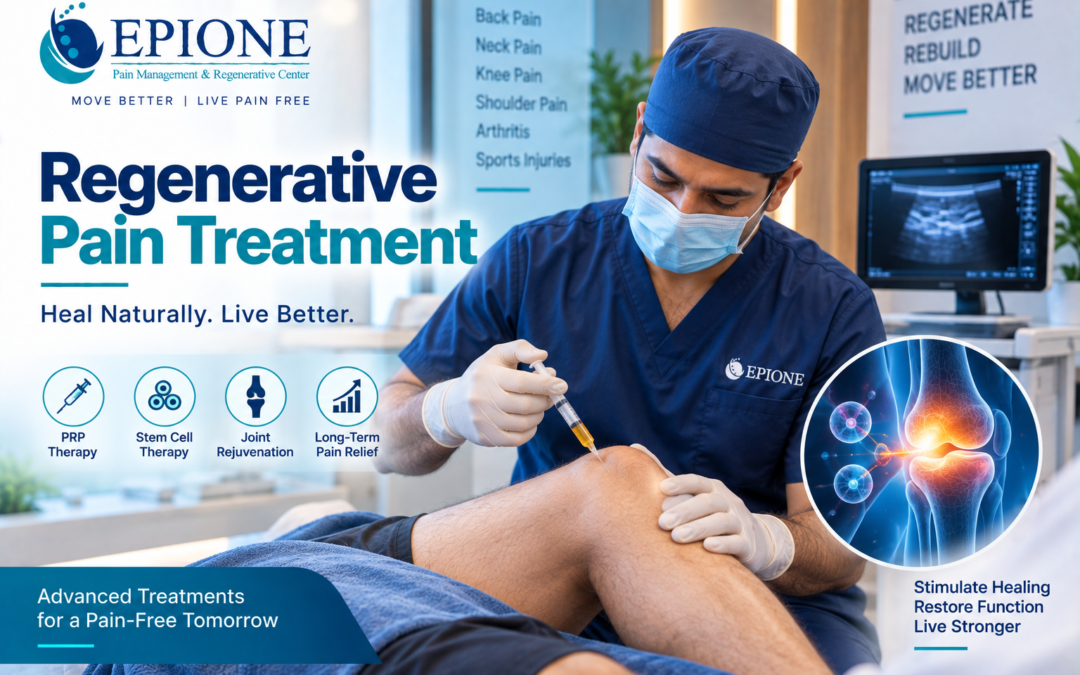
Regenerative Pain Treatment: PRP & Stem Cell Therapy
Regenerative pain treatment is a broad marketing and medical term that can include platelet-rich plasma (PRP), cell-based products, and other biologic approaches intended to influence healing or tissue response. The evidence is not the same for every product, condition, technique, or country.
Patients should be especially cautious with claims that PRP or stem cells can “regrow” joints or permanently cure chronic pain. A responsible discussion separates established uses, emerging evidence, experimental products, and regulatory status.
What is PRP?
PRP is prepared from a patient’s own blood by concentrating platelets and then injecting the preparation into a target area. Platelets release growth factors and other signalling molecules, but PRP preparations vary substantially in concentration, processing, and injection technique.
Evidence is condition-specific. Some musculoskeletal indications have promising or mixed evidence, while others remain uncertain. PRP should not be presented as a universal replacement for rehabilitation or surgery.
What does “stem cell therapy” mean?
The term can refer to very different cell sources and products. This is important because safety, biological activity, regulation, and evidence vary. In many markets, clinics use “stem cell” language loosely for products that may not have strong evidence for the advertised condition.
Patients should ask exactly what product is being used, where it comes from, how it is processed, what regulatory authorization applies, and what published evidence supports the specific indication.
Regulatory and safety caution
The U.S. FDA has warned that many regenerative medicine products marketed for orthopedic pain and other conditions are unapproved in the United States. Regulations differ by country, so this should not be copied directly as an India-specific legal statement, but it illustrates why patients should verify local approval and evidence.
Potential risks can include infection, bleeding, inflammatory reactions, treatment failure, and product-specific complications. “Autologous” or “natural” does not automatically mean risk-free.
Where regenerative treatment may fit in pain care
A biologic procedure, when appropriately used, should fit into a broader diagnosis and rehabilitation plan. The clinician should explain what tissue or condition is being targeted, why the patient is a candidate, what alternative treatments exist, and what outcome is realistic.
Pain improvement does not necessarily prove tissue regeneration, so claims should be measured carefully.
Questions to ask before paying for treatment
Ask for the exact product name and source, evidence for your diagnosis, expected benefit and duration, common and serious risks, total cost, local regulatory status, and what happens if the treatment fails. Ask whether conventional treatments with stronger evidence have been tried or considered.
Be cautious with guaranteed success rates, before-and-after imaging claims without independent review, or packages that require multiple injections before response is known.
How to decide whether a treatment is worth continuing
Before starting treatment, agree on a measurable goal such as improved sleep, longer walking tolerance, fewer headache days, or reduced interference with work. After an appropriate trial, compare the benefit with side effects, cost, inconvenience, and any new risks.
Chronic pain care often requires adjustment. Stopping an ineffective therapy and changing direction is not failure; it is part of responsible treatment. Repeated procedures or medicines without meaningful benefit should trigger reassessment of the diagnosis and plan.
Dr. Minal Chandra and the internal-link context
Epione’s Dr. Minal Chandra profile lists regenerative medicine, including PRP and stem-cell-related therapies, among her areas of specialization. The internal link can be used in a neutral consultation context, while the article should avoid repeating unsupported guarantees or the profile page’s promotional success-rate language.
Frequently Asked Questions
Is PRP the same as stem cell therapy?
No. PRP is made from concentrated components of blood, while cell-based therapies involve different types of cells or cell-containing products.
Can PRP regrow cartilage?
Claims should be cautious. Some studies investigate symptom and tissue effects, but PRP should not be described as guaranteed cartilage regrowth.
Are stem cell injections approved for arthritis?
Approval depends on the product, indication and country. Patients should verify local regulatory status and ask for evidence specific to the treatment offered.
Is regenerative treatment risk-free because it uses my own cells?
No. Autologous products can still involve procedural and product-related risks.
Who should consider regenerative treatment?
Only patients whose diagnosis, evidence, alternatives, medical history and goals have been reviewed by a qualified clinician.
When to Get Personalized Help
Persistent or recurrent pain deserves an individual assessment. A pain specialist can review your symptoms, examination findings, imaging when needed, previous treatments, and goals before recommending the next step.
For a personalized pain assessment, learn more about Dr. Minal Chandra, Co-founder and Consultant Pain Specialist at Epione Pain & Spine. Treatment recommendations should always follow an individual clinical evaluation.