

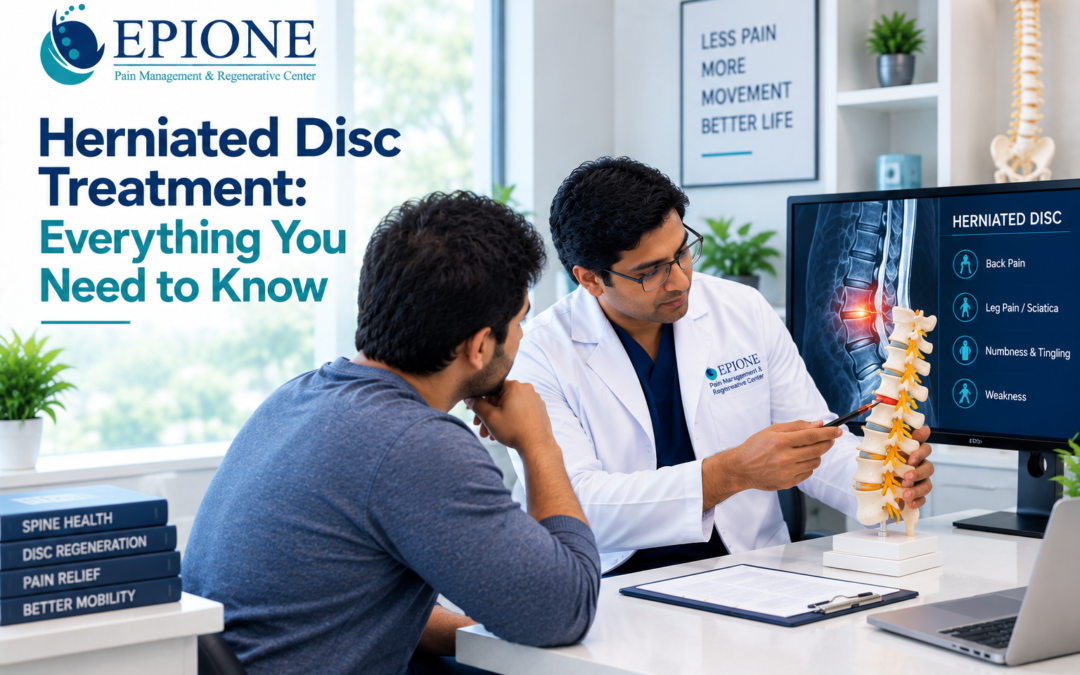
A herniated disc occurs when material from the inner part of a spinal disc pushes through the outer layer. The clinical effect depends on where it happens and whether it irritates a nearby nerve. Some herniations cause no symptoms; others can produce severe leg or arm pain, numbness, tingling, or weakness.
Treatment should be based on the clinical picture rather than the size of a disc herniation alone.
Lumbar versus cervical herniated discs
A lumbar herniated disc can cause sciatica—pain that travels from the lower back or buttock into the leg. A cervical herniated disc can cause pain from the neck into the shoulder, arm, or hand. Both can produce sensory changes or weakness if a nerve root is affected.
Spinal cord symptoms are more relevant in the neck and can include balance problems, hand clumsiness, or gait changes.
How doctors confirm the diagnosis
The history and neurological examination are central. Clinicians assess pain distribution, strength, reflexes, and sensation. MRI may be used when symptoms are severe or persistent, neurological deficits are present, or the result is likely to affect a procedure or surgery decision.
Because asymptomatic disc changes are common, the imaging finding must fit the symptoms.
Conservative treatment
Many herniated discs are initially managed with activity within tolerance, progressive rehabilitation, and medicines when appropriate. Rehabilitation may focus on movement patterns that reduce radiating symptoms, walking, trunk and hip strength, and gradual return to work or exercise.
Prolonged bed rest is generally discouraged for uncomplicated cases because it can reduce conditioning and confidence.
When an epidural or nerve-root injection may be considered
Selected patients with persistent radicular pain may be considered for a targeted injection. The aim is usually to reduce nerve-root inflammation and help the patient resume activity and rehabilitation.
An injection does not physically remove the herniated disc and is not appropriate for every case. Benefits, risks, and alternatives should be discussed.
When surgery may be the right option
Emergency surgery may be required for cauda equina syndrome or certain severe neurological deficits. Elective surgery may be considered when disabling nerve pain persists despite appropriate conservative treatment and imaging shows a matching compressive lesion.
The decision should consider symptom duration, neurological status, work and lifestyle needs, and the likely benefit compared with continued non-surgical care.
How to measure whether treatment is working
Pain intensity is only one outcome. Track whether you can sit, stand, walk, sleep, work, drive, exercise, and perform household tasks more comfortably. For nerve-related problems, changes in numbness, tingling, strength, and how far symptoms travel are also important. A treatment that lowers pain for a few hours but does not improve function may have limited long-term value.
Recovery is rarely perfectly linear. Short flares after an increase in activity can occur without meaning that the spine has been damaged again. The plan should be reviewed when symptoms are progressively worsening, new neurological deficits appear, or there is no functional progress despite consistent care.
Consultation pathway in Hyderabad
For persistent disc-related pain or uncertainty about whether an intervention is appropriate, a pain specialist can review the diagnosis and non-surgical options. This article should link to Dr. Minal Chandra’s Epione profile using a contextual anchor such as “pain specialist in Hyderabad.”
Frequently Asked Questions
Is a herniated disc the same as a slipped disc?
“Slipped disc” is a common non-medical term used for a herniated or ruptured disc.
Can a herniated disc get better without surgery?
Yes. Many people improve with conservative care, especially when neurological function is stable.
Can I exercise with a herniated disc?
Often yes, but exercise should be progressed according to symptoms and neurological findings. Severe or worsening weakness requires assessment first.
How do I know if a nerve is compressed?
Radiating pain, numbness, tingling, weakness, and reflex changes can suggest nerve-root involvement. A clinical examination helps determine significance.
When is disc pain an emergency?
Bladder or bowel dysfunction, saddle numbness, rapidly worsening weakness, or severe spinal cord symptoms require urgent assessment.
When to Get Personalized Help
Persistent or recurrent pain deserves an individual assessment. A pain specialist can review your symptoms, examination findings, imaging when needed, previous treatments, and goals before recommending the next step.
For a personalized pain assessment, learn more about Dr. Minal Chandra, Co-founder and Consultant Pain Specialist at Epione Pain & Spine. Treatment recommendations should always follow an individual clinical evaluation.