

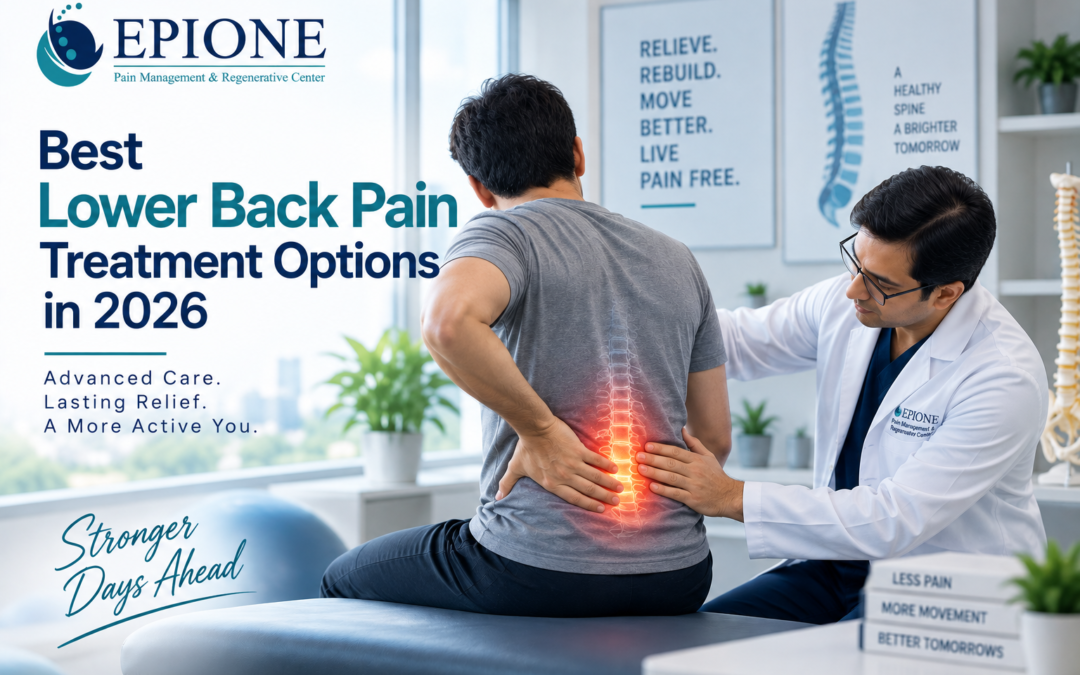
The “best” lower back pain treatment in 2026 is not one procedure or one medicine. Current guidance continues to support a person-centred approach: first identify warning signs and the likely type of back pain, then combine treatments that improve function and reduce unnecessary risk.
For most non-specific and chronic primary low back pain, active rehabilitation, education, self-management, and attention to sleep, stress, work demands, and general health remain central. Targeted procedures or surgery are considered only when the diagnosis and expected benefit justify them.
Step 1: classify the back pain before treating it
Lower back pain can be non-specific mechanical pain, disc-related pain, facet or sacroiliac pain, nerve-root pain such as sciatica, spinal stenosis, fracture, inflammatory disease, or another condition. The same exercise or injection will not be appropriate for every category.
A clinician looks at duration, pain distribution, neurological symptoms, triggers, previous episodes, general health, and examination findings. Imaging is most useful when the result is expected to change management.
2026 first-line approach: movement and graded rehabilitation
Guidelines still favour keeping people active and using exercise-based care rather than prolonged rest for uncomplicated back pain. The exact exercise style matters less than choosing a tolerable, progressive program that improves strength, mobility, confidence, and participation.
For chronic pain, a broader plan may also address fear of movement, poor sleep, low mood, stress, and work barriers. These factors do not mean the pain is “imaginary”; they influence how pain is experienced and how effectively a person can recover.
Medicines: use selectively, not automatically
Pain medicines may have a role, particularly for short-term symptom control, but the risk-benefit balance changes with age, kidney or gastrointestinal conditions, cardiovascular risk, pregnancy, other medicines, and the duration of treatment.
Long-term opioid therapy is not a routine solution for chronic primary low back pain. Medication should support function, not replace rehabilitation or diagnostic reassessment.
When minimally invasive options enter the plan
Interventional pain management may be considered when there is a defined pain generator and conservative care has not provided enough improvement. Depending on the diagnosis, options may include selected nerve-root or epidural injections, diagnostic medial branch blocks, radiofrequency procedures, or other targeted interventions.
The term “minimally invasive” does not mean “risk-free” or “right for everyone.” A specialist should explain the target, expected duration of benefit, alternatives, and what rehabilitation follows the procedure.
When surgery may be appropriate
Surgery is generally reserved for specific structural conditions, such as significant nerve compression with neurological deficit, instability, or persistent disabling symptoms where evidence suggests surgery offers meaningful benefit. An MRI abnormality by itself is not a reason for surgery.
Second opinions can be useful when symptoms, scans, and proposed treatment do not clearly align.
How to measure whether treatment is working
Pain intensity is only one outcome. Track whether you can sit, stand, walk, sleep, work, drive, exercise, and perform household tasks more comfortably. For nerve-related problems, changes in numbness, tingling, strength, and how far symptoms travel are also important. A treatment that lowers pain for a few hours but does not improve function may have limited long-term value.
Recovery is rarely perfectly linear. Short flares after an increase in activity can occur without meaning that the spine has been damaged again. The plan should be reviewed when symptoms are progressively worsening, new neurological deficits appear, or there is no functional progress despite consistent care.
How to choose care in Hyderabad
Look for a clinician or centre that evaluates function and neurological status, explains why a test or procedure is recommended, discusses non-surgical options first when appropriate, and sets realistic goals. Dr. Minal Chandra’s Epione Pain & Spine profile can be used as the internal specialist reference for readers seeking a pain-management consultation in Hyderabad.
Frequently Asked Questions
What is the best lower back pain treatment in 2026?
For most people, there is no single best option. A tailored combination of education, activity, exercise-based rehabilitation, and selective symptom control is usually the starting point.
Do I need an MRI for lower back pain?
Not always. Imaging is more useful when there are red flags, neurological deficits, persistent radicular symptoms, or when the result will influence a treatment decision.
Can chronic back pain improve after months or years?
Yes. Improvement can still occur with a structured, progressive plan, especially when treatment addresses function, strength, sleep, activity, and relevant pain mechanisms.
Are minimally invasive procedures better than physiotherapy?
They serve different purposes. A targeted procedure may reduce symptoms in selected patients, while rehabilitation builds function and resilience. One does not automatically replace the other.
When is lower back pain an emergency?
Seek urgent care for new bladder or bowel dysfunction, saddle numbness, rapidly progressive weakness, significant trauma, or severe pain with fever or systemic illness.
When to Get Personalized Help
Persistent or recurrent pain deserves an individual assessment. A pain specialist can review your symptoms, examination findings, imaging when needed, previous treatments, and goals before recommending the next step.
For a personalized pain assessment, learn more about Dr. Minal Chandra, Co-founder and Consultant Pain Specialist at Epione Pain & Spine. Treatment recommendations should always follow an individual clinical evaluation.