

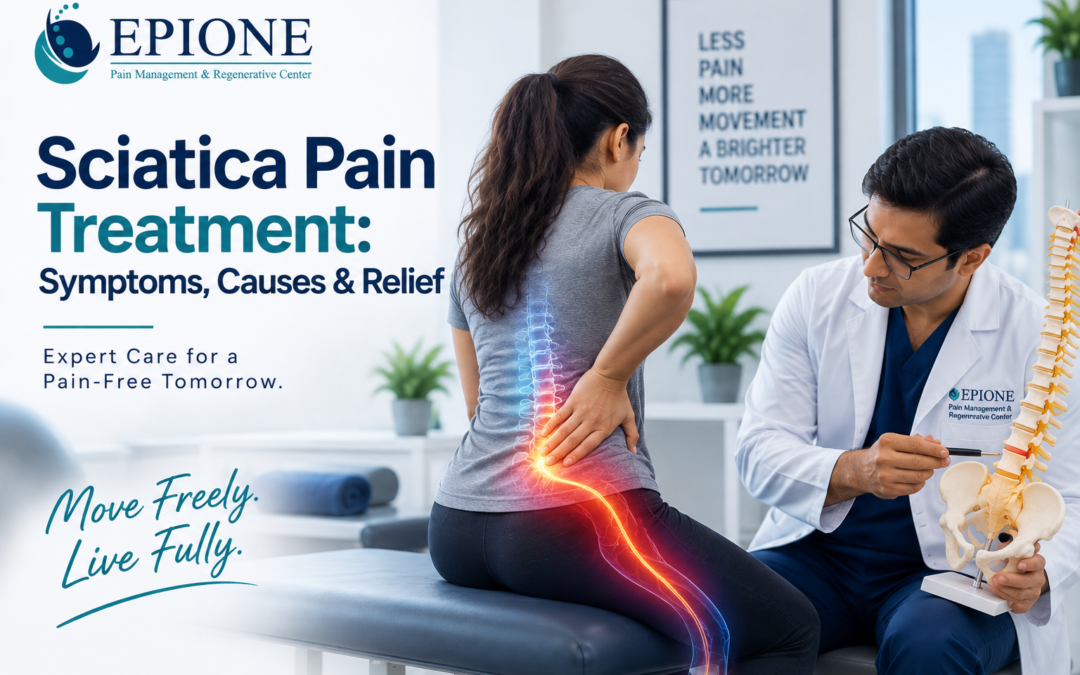
Sciatica describes pain caused by irritation or compression of the sciatic nerve roots, usually in the lower spine. It often feels different from ordinary muscle pain: symptoms can travel from the lower back or buttock down the leg and may include burning, electric pain, tingling, numbness, or weakness.
Effective sciatica pain treatment starts by confirming that the symptoms really are radicular nerve pain and then identifying the likely cause. A herniated disc is common, but spinal narrowing and degenerative changes can also contribute.
How sciatica symptoms typically behave
Sciatica may affect one side more than the other. Pain can worsen with sitting, coughing, sneezing, bending, or particular movements, though patterns vary. Some people have little back pain and mainly feel leg pain. Others have both.
Numbness or tingling alone can be uncomfortable, but weakness is more important clinically because it may signal impaired nerve function. Foot drop or rapidly worsening strength needs prompt assessment.
Common causes of sciatic nerve-root pain
A lumbar herniated disc can inflame or compress a nerve root. Age-related narrowing around the nerves, called spinal stenosis, can also cause leg symptoms, especially with walking or standing. Less commonly, infection, fracture, tumor, or another condition can mimic routine sciatica.
A careful history and neurological examination help distinguish these possibilities. Imaging is considered when red flags are present, symptoms are severe or persistent, or a procedure or surgery is being considered.
Non-surgical sciatica treatment
Most uncomplicated cases begin with conservative care. Staying as active as tolerable, avoiding prolonged bed rest, and using a progressive exercise plan can support recovery. Rehabilitation may focus on positions and movements that reduce leg symptoms, strength, walking tolerance, and gradual return to work or exercise.
Medication choices for sciatica require care because not every medicine that helps other nerve pain conditions has the same evidence for sciatica. A clinician should review benefits, risks, other conditions, and current medicines.
Role of targeted pain procedures
Persistent severe radicular pain may be assessed for an epidural or selective nerve-root injection in appropriately selected patients. Such procedures aim to reduce inflammation around the affected nerve and may create a window for better movement and rehabilitation.
They are not guaranteed cures and are not needed for everyone. The decision should be based on the clinical pattern, imaging when relevant, severity, and previous response to conservative treatment.
When sciatica needs urgent attention
Urgent assessment is needed for new bladder or bowel dysfunction, numbness in the saddle area, rapidly worsening weakness, or symptoms affecting both legs with neurological change. Fever, major trauma, or severe systemic illness with back pain also needs prompt evaluation.
These features are different from ordinary fluctuating sciatica and should not be delayed for routine physiotherapy or home remedies.
How to measure whether treatment is working
Pain intensity is only one outcome. Track whether you can sit, stand, walk, sleep, work, drive, exercise, and perform household tasks more comfortably. For nerve-related problems, changes in numbness, tingling, strength, and how far symptoms travel are also important. A treatment that lowers pain for a few hours but does not improve function may have limited long-term value.
Recovery is rarely perfectly linear. Short flares after an increase in activity can occur without meaning that the spine has been damaged again. The plan should be reviewed when symptoms are progressively worsening, new neurological deficits appear, or there is no functional progress despite consistent care.
Choosing the next step
If sciatica is stopping you from sleeping, walking, working, or progressing through rehabilitation, specialist assessment can clarify whether the main problem is nerve inflammation, mechanical compression, or another pain generator. In Hyderabad, readers can review the profile of Dr. Minal Chandra at Epione Pain & Spine for a pain-specialist consultation pathway.
Frequently Asked Questions
What is the fastest way to relieve sciatica?
There is no single fastest treatment for everyone. Short-term symptom control, staying active within tolerance, and treatment matched to the cause are usually more useful than chasing one quick fix.
Does sciatica always come from a slipped disc?
No. Herniated discs are common causes, but spinal stenosis, degenerative changes, and other conditions can also irritate nerve roots.
Can sciatica be treated without surgery?
Yes, many cases improve with non-surgical care. Surgery is considered more strongly when there is significant neurological deficit or persistent disabling symptoms from a clear compressive cause.
Should I stretch the sciatic nerve?
Aggressive stretching can aggravate some people. Exercises should be selected according to the clinical pattern and ideally guided by a qualified professional.
When should I see a specialist?
Seek specialist assessment for persistent severe pain, recurrent episodes, numbness or weakness, or failure to improve with an appropriate conservative plan.
When to Get Personalized Help
Persistent or recurrent pain deserves an individual assessment. A pain specialist can review your symptoms, examination findings, imaging when needed, previous treatments, and goals before recommending the next step.
For a personalized pain assessment, learn more about Dr. Minal Chandra, Co-founder and Consultant Pain Specialist at Epione Pain & Spine. Treatment recommendations should always follow an individual clinical evaluation.