

Waking up with a stiff neck once in a while is normal. But when that stiffness turns into a daily struggle — with pain that spreads to your shoulders or a constant ache at the back of your head — it could be cervical spondylosis.
This is one of the most common neck conditions in adults, especially past the age of 40. The good news is that most cases respond well to non-surgical treatment, especially when addressed early.
Let’s break down what cervical spondylosis is, why it happens, and what modern, non-surgical treatment options look like today.
What Is Cervical Spondylosis?
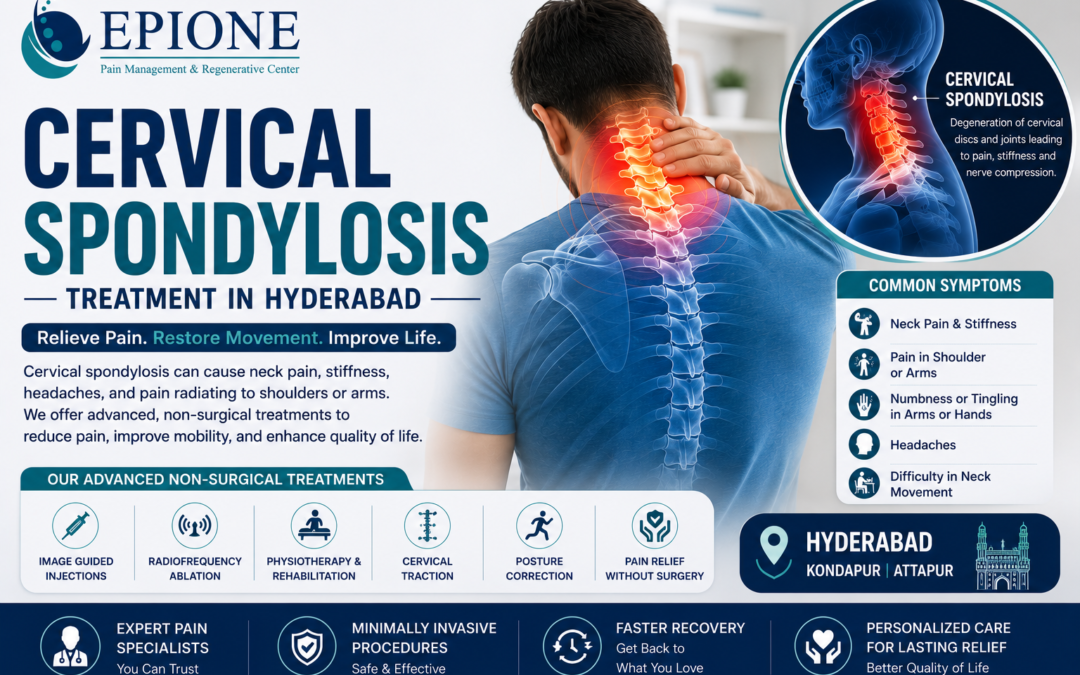
Cervical spondylosis refers to age-related wear and tear affecting the discs and joints in your neck (cervical spine). As the discs between the vertebrae lose hydration and height over time, the spine’s structure changes — sometimes leading to bone spurs, disc bulges, or nerve compression.
It’s essentially the neck’s version of osteoarthritis, and it’s extremely common — most people show some signs of it on imaging by their 60s, even without noticeable symptoms.
What Causes Cervical Spondylosis?
Several factors contribute to the development of cervical spondylosis:
- Natural ageing — discs gradually lose water content and elasticity, making them less able to absorb shock
- Poor posture — especially prolonged forward-head posture from desk work or phone use
- Previous neck injury — old whiplash or trauma can accelerate wear
- Repetitive strain — jobs or activities that involve constant neck movement or heavy lifting
- Genetics — family history can play a role in how early spine degeneration begins
- Sedentary lifestyle — weak neck and upper back muscles offer less support to the spine
Neck Stiffness Causes & Other Common Symptoms
Cervical spondylosis symptoms vary from mild to significant, depending on how much the condition has progressed. Common symptoms include:
- Neck stiffness, especially in the morning or after sitting for long periods
- Dull to sharp neck pain that may worsen with movement
- Headaches originating from the back of the head
- Pain, numbness, or tingling radiating into the shoulders, arms, or hands (if a nerve is involved)
- A grinding or popping sensation when turning the neck
- Muscle weakness in the arms, in more advanced cases
- Reduced neck flexibility, making it harder to look over your shoulder while driving
When Should You See a Neck Pain Specialist?
Occasional neck stiffness usually resolves with rest. But it’s time to consult a neck pain specialist if you notice:
- Neck pain or stiffness lasting more than 2–3 weeks
- Pain, tingling, or numbness spreading into your arms or hands
- Weakness in your grip or arm strength
- Headaches that consistently start from the neck
- Neck pain that disturbs your sleep or daily activities
Early evaluation helps rule out nerve involvement and prevents the condition from progressing further.
Cervical Spondylosis Exercises & Non-Surgical Treatment Options
The vast majority of cervical spondylosis cases are managed successfully without surgery. Common approaches include:
Physiotherapy & Cervical Spondylosis Exercises
Gentle neck stretches, posture correction exercises, and strengthening of the surrounding muscles form the foundation of treatment. A physiotherapist can guide you on safe, effective movements for your specific condition.
Cervical Facet Joint Injections
These targeted injections can reduce inflammation and pain in the small joints of the cervical spine, offering relief that supports rehabilitation.
Cervical Medial Branch Block
This procedure targets the specific nerves responsible for transmitting pain from the cervical facet joints, helping both diagnose and treat the source of pain.
Radiofrequency Ablation (RFA)
For chronic, recurring neck pain, RFA can provide longer-lasting relief by disrupting pain signals from targeted nerves.
Posture & Ergonomic Correction
Simple changes — like adjusting your desk setup, screen height, and sleeping position — can meaningfully reduce daily strain on the cervical spine.
Lifestyle Modifications
Regular movement breaks, mindful posture during phone use, and consistent exercise all help slow the progression of cervical spondylosis.
The right treatment plan depends on how advanced your condition is and whether any nerve involvement is present — which is why proper diagnosis matters before starting treatment.
How Epione Approaches Cervical Spondylosis Treatment in Hyderabad
Epione Pain Management is one of the first multidisciplinary pain management centres in South India, with over 20+ years of collective clinical experience and 50,000+ patients treated.
Our team, led by Dr. Sudheer Dara and Dr. Minal Chandra — widely regarded as one of the best pain management specialists in Hyderabad — offers comprehensive cervical spondylosis treatment in Hyderabad, working alongside neurologists, orthopedicians, and physiotherapists to treat the condition with a combination of interventional and rehabilitative care.
Rather than jumping to invasive procedures, our approach focuses on identifying the exact source of your neck pain and building a treatment plan that addresses it directly — helping you regain comfortable, pain-free movement.
Frequently Asked Questions
What is cervical spondylosis?
Cervical spondylosis is age-related wear and tear of the discs and joints in the neck, often leading to stiffness, pain, and sometimes nerve compression.
What causes cervical spondylosis?
Common causes include natural ageing, poor posture, previous neck injury, repetitive strain, genetics, and a sedentary lifestyle.
Is cervical spondylosis the same as a herniated disc?
No, cervical spondylosis refers to general age-related spine degeneration, while a herniated disc is a specific condition where disc material pushes out and may press on nearby nerves.
What are the early symptoms of cervical spondylosis?
Early symptoms often include mild neck stiffness, especially in the morning, along with occasional dull neck pain.
Can cervical spondylosis cause headaches?
Yes, headaches that originate from the back of the head are a common symptom, especially when neck muscles are strained.
Can cervical spondylosis cause arm pain or numbness?
Yes, if a nerve in the neck is compressed, it can cause pain, tingling, or numbness radiating into the shoulder, arm, or hand.
At what age does cervical spondylosis usually start?
It typically becomes noticeable after age 40, though early signs can appear earlier due to posture habits or previous injuries.
Is cervical spondylosis reversible?
The underlying disc degeneration can’t be fully reversed, but symptoms can be effectively managed and often significantly reduced with proper treatment.
What exercises help with cervical spondylosis?
Gentle neck stretches, chin tucks, and posture-strengthening exercises guided by a physiotherapist are commonly recommended.
Does poor posture cause cervical spondylosis?
Poor posture, especially prolonged forward-head posture, contributes to increased strain on the cervical spine and can accelerate symptoms.
Can cervical spondylosis be treated without surgery?
Yes, the majority of cases are successfully managed with physiotherapy, targeted injections, and lifestyle changes, without needing surgery.
What is a cervical facet joint injection?
It’s a targeted injection into the small joints of the cervical spine to reduce inflammation and pain, often used both for diagnosis and treatment.
How does radiofrequency ablation help neck pain?
RFA uses controlled heat to disrupt specific nerve signals causing chronic neck pain, offering longer-term relief for suitable patients.
Can desk jobs cause cervical spondylosis?
Yes, prolonged sitting with poor posture and constant forward head position from screen use is a significant contributing factor.
Is neck cracking or popping a sign of cervical spondylosis?
Occasional cracking can be normal, but frequent grinding or popping sensations alongside pain may indicate joint changes worth evaluating.
How is cervical spondylosis diagnosed?
Diagnosis typically involves a physical examination along with imaging like X-rays or MRI to assess disc and joint changes.
Can cervical spondylosis affect sleep?
Yes, neck stiffness and pain can make it difficult to find a comfortable sleeping position, disturbing sleep quality.
What is the difference between cervical spondylosis and cervical spondylitis?
Cervical spondylosis refers to degenerative wear and tear, while “spondylitis” typically refers to inflammation, often from an inflammatory or autoimmune condition. The two require different treatment approaches.
Can pillows or mattresses affect cervical spondylosis symptoms?
Yes, unsupportive pillows or mattresses can worsen neck strain, while ergonomic support can help reduce symptoms.
When is surgery considered for cervical spondylosis?
Surgery is typically considered only when there’s significant nerve compression causing progressive weakness, or when non-surgical treatments haven’t provided adequate relief.
Who is the best pain management specialist in Hyderabad for neck pain and cervical spondylosis?
Epione Pain Management, led by Dr. Sudheer Dara and Dr. Minal Chandra, is regarded among the leading pain management specialists in Hyderabad, offering non-surgical, multidisciplinary treatment for cervical spondylosis and other neck conditions.
Conclusion
Cervical spondylosis is common, but ongoing neck stiffness and pain don’t have to be something you simply live with. With the right diagnosis and a structured, non-surgical treatment plan, most patients experience meaningful relief and improved neck mobility.
If your neck pain has lasted more than a few weeks, don’t wait it out — early evaluation makes treatment simpler and more effective.
Book Your Consultation
If neck stiffness or pain is affecting your daily life, talk to Epione’s pain management specialists today.
📞 Call: +91 7000017062 / +91 9502020251 💬 WhatsApp: +91 8466044441 📧 Email: contact@epionepainandspine.com 📍 Jubilee Hills, Hyderabad: 8-2-293/82/A 245, 2nd Floor, Apurupa, Road No. 36, Jubilee Hills, Hyderabad – 500034 📍 Kothapet, Hyderabad: 1st Floor, Satyam Shivam Complex, above Paradise Restaurant, near Victoria Memorial Metro Station, Kothapet
Working Hours: Mon–Sat, 8:00 AM – 7:00 PM | Sun, 9:00 AM – 12:30 PM