

Living with daily pain is exhausting. Whether it is a constant dull ache in your lower back or a sharp, shooting pain down your leg, chronic pain drains your energy. It steals away your ability to enjoy family time, makes simple chores feel impossible, and often leaves you wondering if you will ever feel “normal” again. If standard painkillers are no longer working, and you want to avoid the risks of major surgery, you are likely looking for a safer, more effective alternative.
This is exactly where interventional pain management comes in. As a highly specialized approach to healthcare, it bridges the gap between basic medication and invasive surgery, offering you a path to true healing and improved mobility.
What is Interventional Pain Management?
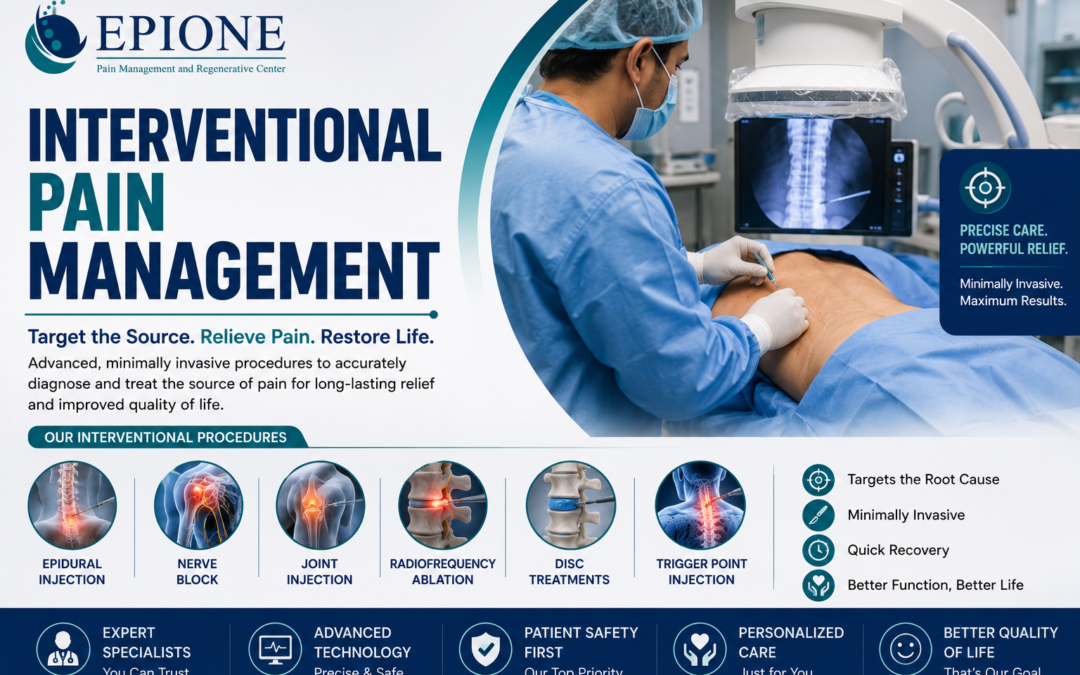
Interventional pain management is a specialized field of medicine focused on diagnosing and treating pain-related disorders using minimally invasive techniques. Rather than relying on heavy medications to mask symptoms, interventional pain doctors use targeted therapies—such as nerve blocks, precise injections, and radiofrequency ablation—to block pain signals at their source and help patients avoid major surgery.
Understanding Chronic Pain: Symptoms You Shouldn’t Ignore
Pain is your body’s way of signaling that something is wrong. While acute pain from a minor injury usually fades in a few days, chronic pain lingers for months. You should pay close attention if you experience any of the following symptoms:
- Constant, deep aching in your back, neck, or joints
- Sharp, electric-shock-like sensations shooting down your arms or legs
- Stiffness and reduced range of motion in the morning
- Muscle spasms that do not respond to rest or massage
- Pain that worsens with specific movements, like sitting or walking
Common Causes Behind Your Pain
To treat pain effectively, we must first understand what is causing it. Our bodies are complex networks of bones, nerves, and tissues. Common culprits include:
- Herniated or Bulging Discs: When the cushions between your spinal bones slip out of place, they compress nearby nerves.
- Osteoarthritis: The gradual wear and tear of cartilage in your joints, leading to painful bone-on-bone friction.
- Spinal Stenosis: A narrowing of the spinal canal that puts severe pressure on the spinal cord.
- Neuropathy: Nerve damage often caused by conditions like diabetes or previous injuries.
- Sports Injuries and Trauma: Unhealed ligament tears or muscle strains from physical activities.
Are You at Risk? Key Risk Factors
Anyone can develop chronic pain, but certain factors increase your likelihood of needing specialized care:
- Age: Natural degeneration of the spine and joints occurs as we get older.
- Occupation: Jobs requiring heavy lifting, repetitive motions, or prolonged sitting put extra stress on the body.
- Weight: Carrying excess body weight places massive, continuous pressure on weight-bearing joints like the knees and lower back.
- Previous Injuries: Old fractures or soft tissue injuries can develop into chronic pain conditions years later.
How We Diagnose the True Source of Your Pain
At Epione Pain & Spine, we do not believe in guesswork. An accurate diagnosis is the foundation of effective relief. When you visit our clinic, our specialists use a combination of physical examinations and advanced imaging to pinpoint your pain.
We may utilize MRI scans, X-rays, or ultrasound imaging to see exactly what is happening beneath the skin. Furthermore, we often use diagnostic nerve blocks. By injecting a small amount of numbing medication near a specific nerve, we can determine instantly if that nerve is the exact source of your suffering.
Interventional Pain Management: Non-Surgical Treatment Options
Our goal is to help your body heal itself using the least invasive methods possible. Here is a look at how an advanced pain management treatment plan can help you get your life back.
Precision Nerve Blocks and Injections
When a specific nerve or joint is inflamed, we deliver strong anti-inflammatory medication directly to the exact site of the pain.
- Epidural Steroid Injections: Highly effective for spinal pain and sciatica, reducing nerve root swelling.
- Facet Joint Injections: Targeted relief for arthritis pain in the small joints of the spine.
Radiofrequency Ablation (RFA)
If injections only provide temporary relief, RFA is an excellent next step. This advanced technique uses specialized radio waves to safely heat and disable the specific nerve endings sending pain signals to your brain, often providing relief that lasts for months or even years.
Regenerative Pain Treatment Innovations
Modern medicine has unlocked incredible ways to heal damaged tissues. Regenerative pain treatment uses your body’s own biological materials to repair damage rather than just masking the pain.
- Platelet-Rich Plasma (PRP) Therapy: We use concentrated platelets from your own blood to accelerate the healing of tendons, ligaments, and joints.
- Stem Cell Therapy: Utilized for more severe joint degeneration to help rebuild lost cartilage and reduce systemic inflammation.
Spinal Cord Stimulation
For patients with severe, treatment-resistant nerve pain, a tiny device can be implanted to send mild electrical impulses to the spinal cord. This intercepts pain signals before they ever reach the brain, replacing the feeling of pain with a gentle, soothing flutter.
Prevention Tips: Protecting Your Spine and Joints
While treatments are highly effective, prevention is always the best medicine. You can protect your body by following these simple daily habits:
- Maintain Good Posture: Keep your computer monitor at eye level and avoid slouching when sitting.
- Stay Active: Gentle exercises like walking, swimming, or yoga strengthen the core muscles that support your spine.
- Lift Carefully: Always bend at your knees and keep heavy objects close to your body—never twist your spine while lifting.
- Manage Your Weight: Every extra pound on your stomach adds ten pounds of pressure to your lower back.
When Is It Time to See a Doctor?
You should not wait for the pain to become unbearable before seeking help. It is time to book a consultation if:
- Your pain lasts for more than four to six weeks.
- The pain travels down your arms or legs.
- You experience tingling, numbness, or sudden weakness.
- Over-the-counter medications are no longer providing relief.
- Your daily routine and sleep are being severely disrupted.
The Benefits of Early Treatment
Ignoring chronic pain often leads to a vicious cycle. You hurt, so you move less. Because you move less, your muscles weaken, making the pain even worse. Seeking early intervention breaks this cycle.
Early treatment prevents temporary issues from becoming permanent nerve damage. Additionally, by addressing the root cause quickly, you dramatically reduce your reliance on pain medications and drastically lower the chances of needing invasive open surgery later in life.
Why Choose Epione Pain & Spine?
Finding the right pain relief center is a crucial decision for your health. Epione Pain & Spine is recognized as a premier chronic pain treatment clinic dedicated to patient-centered care.
We understand that no two patients are exactly alike. Therefore, our expert multidisciplinary team takes the time to listen to your story, review your medical history, and craft a personalized treatment plan. We utilize the latest state-of-the-art medical technology in a compassionate, safe, and welcoming environment, ensuring you receive world-class care right here in India.
Doctor Consultation: Get Expert Help Today
Living in pain is not a life sentence. Our highly trained interventional pain specialists are ready to help you discover the exact cause of your discomfort and map out a clear, non-surgical path to recovery. Stop letting pain dictate what you can and cannot do.
Take the first step toward a pain-free life today.
📞 Call us directly at 8008008729 to schedule your comprehensive consultation with our top spine and pain experts.
Frequently Asked Questions (FAQs)
1. Is interventional pain management painful?
No, the procedures are designed to be minimally invasive. We use local anesthesia and sometimes mild sedation to ensure you remain completely comfortable throughout your treatment.
2. How long does it take to recover from these treatments?
Because there are no large surgical incisions, recovery is typically very fast. Most patients can walk out of the clinic the same day and return to their normal daily activities within 24 to 48 hours.
3. Will I need multiple treatments?
This depends entirely on your specific condition. Some patients find permanent relief after just one injection or regenerative treatment, while others with complex chronic conditions may require a series of treatments over a few months.
4. Is regenerative pain treatment safe?
Yes, it is extremely safe. Because therapies like PRP use your own body’s blood and natural growth factors, there is virtually no risk of allergic reaction or rejection.
5. How do I know if I need surgery or interventional treatments?
The vast majority of pain conditions can be managed without surgery. During your consultation, our doctors will thoroughly evaluate your MRI and physical symptoms to determine if interventional treatments are the right first step for you.
Conclusion
Chronic pain does not just hurt your body; it impacts your mind, your relationships, and your overall quality of life. Understanding what interventional pain management is gives you the power to make informed choices about your healthcare. You do not have to choose between a lifetime of pills or the risks of open surgery. With advanced diagnostics, targeted injections, and regenerative therapies, real, lasting relief is absolutely possible.
Ready to Reclaim Your Life?
Do not let chronic pain hold you back for another day. Contact Epione Pain & Spine, your trusted partner in comprehensive pain care.
Call us now at 8008008729 to book your appointment and start your journey toward a healthier, more active future.