

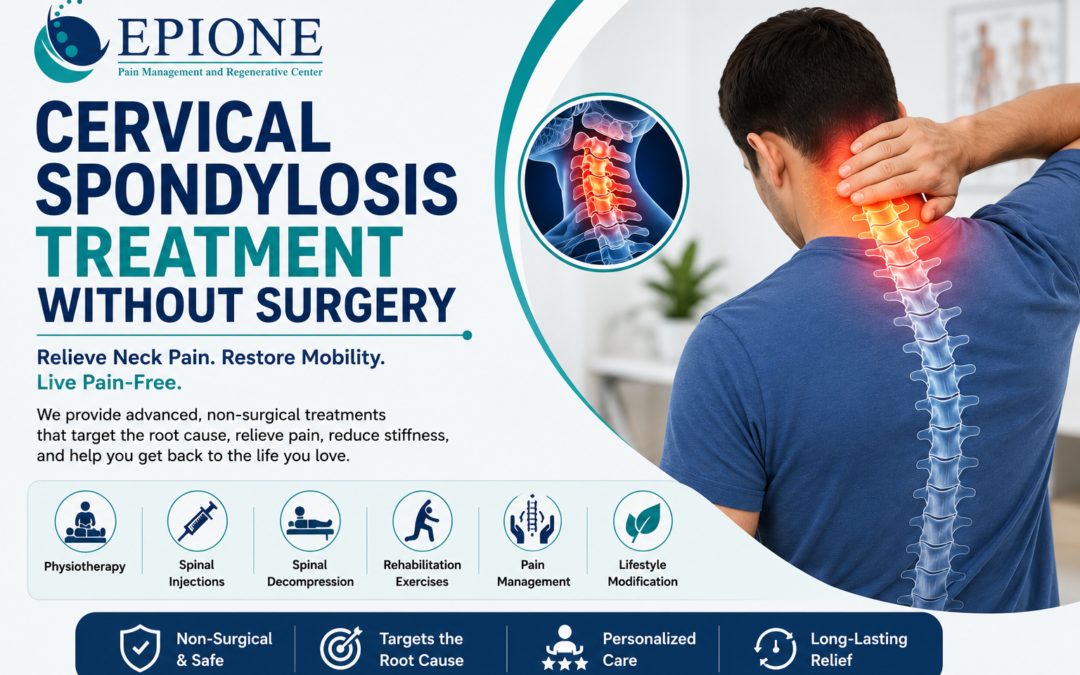
Waking up with a stiff neck is frustrating. But when that stiffness turns into chronic, radiating pain that shoots down your arm, makes turning your head while driving difficult, or keeps you awake at night, it becomes exhausting. If you have been diagnosed with cervical spondylosis, you might be worried that invasive spine surgery is your only option.
Here is the good news: surgery is rarely the first or only answer. Today, advanced cervical spondylosis treatment focuses on minimally invasive, non-surgical therapies that effectively relieve pain, reduce inflammation, and restore your mobility.
In this comprehensive guide, we will explore exactly what cervical spondylosis is, why it happens, and how you can find lasting relief without going under the knife.
What is the Best Non-Surgical Treatment for Cervical Spondylosis?
The most effective non-surgical treatments for cervical spondylosis include targeted physical therapy, epidural steroid injections, radiofrequency ablation (RFA), and regenerative medicine like PRP therapy. These advanced interventions reduce nerve inflammation, block pain signals, and heal damaged tissues without the risks, high costs, or long recovery times associated with traditional spine surgery.
Cervical spondylosis is a medical term for age-related wear and tear affecting the spinal disks in your neck. As the disks dehydrate and shrink, signs of osteoarthritis develop, including bone spurs (osteophytes) that can pinch the nerves exiting the spinal cord.
While it is a natural part of aging, the pain it causes is not something you have to simply “live with.”
Recognizing the Symptoms
The symptoms can range from mild discomfort to severe, debilitating pain. You might be experiencing:
- Stiff Neck: A persistent aching or stiffness, especially worse in the morning.
- Radiating Pain: Pain that travels from your neck down to your shoulders, arms, or fingers.
- Numbness and Tingling: A “pins and needles” sensation in your upper extremities.
- Muscle Weakness: Difficulty lifting objects or a weak grip.
- Headaches: Frequent pain originating at the base of the skull (cervicogenic headaches).
Leading Causes and Risk Factors
Why do some people develop severe cervical pain while others do not? Several factors contribute to the deterioration of the cervical spine:
- Aging: The most common cause. By age 60, most people show signs of cervical spondylosis on X-rays.
- Dehydrated Disks: Disks act like cushions between the vertebrae of your spine. Over time, they dry out and shrink.
- Bone Spurs: Disk degeneration often causes the spine to produce extra bone to strengthen the joint, which can narrow the space for nerves to pass through.
- Occupation: Jobs requiring repetitive neck motions, awkward positioning, or heavy lifting put extra strain on the spine.
- Past Injuries: Previous neck trauma (like whiplash from a car accident) accelerates the aging process of the spine.
Before determining the right cervical pain treatment, an accurate diagnosis is crucial. A neck pain specialist will start with a physical exam to check the range of motion in your neck, test your reflexes, and evaluate your muscle strength.
To see exactly what is happening inside your spine, your doctor may order:
- X-rays: To look for bone spurs and disk deterioration.
- MRI (Magnetic Resonance Imaging): To identify pinched nerves or herniated disks in high detail.
- CT Scans: To get a more detailed view of the bones in the cervical spine.
- EMG (Electromyography): To measure the electrical activity of your nerves and determine if they are functioning properly.
The primary goal of non surgical neck pain treatment is to relieve pain, help you maintain your normal activities, and prevent permanent injury to your spinal cord and nerves. Here are the most effective non-invasive options available today:
- Targeted Injection Therapies
When over-the-counter pain relievers aren’t enough, specialized injections can provide profound relief:
- Cervical Epidural Steroid Injections: A powerful anti-inflammatory medication is injected precisely into the epidural space of the spine. This rapidly reduces swelling around the pinched nerves, providing months of relief.
- Facet Joint Injections: If the pain originates from the small joints behind the vertebrae (facet joints), injecting a numbing agent and steroid directly into the joint can eliminate the pain.
- Radiofrequency Ablation (RFA)
RFA is a cutting-edge, minimally invasive procedure that uses radio waves to heat up and “turn off” the specific nerves sending pain signals to your brain. It provides long-lasting relief, often keeping patients pain-free for 6 to 18 months, allowing them to participate fully in physical therapy.
- Regenerative Medicine (PRP Therapy)
Platelet-Rich Plasma (PRP) therapy utilizes your body’s own natural healing factors. Blood is drawn, processed to concentrate the healing platelets, and injected into the damaged areas of the neck. This promotes the repair of damaged ligaments, tendons, and cartilage, offering a long-term healing solution rather than just a temporary band-aid.
- Advanced Physical Therapy
A cornerstone of neck pain treatment is targeted physical therapy. A customized exercise program will help stretch and strengthen the muscles in your neck and shoulders. Stronger neck muscles provide better support for your cervical spine, reducing the load on your deteriorating disks.
- Medication Management
Under the guidance of a specialist, a tailored regimen of NSAIDs (non-steroidal anti-inflammatory drugs), muscle relaxants, or nerve pain medications (like Gabapentin) can help manage acute flare-ups safely.
While you cannot stop the aging process, you can slow down the wear and tear on your spine by adopting healthy habits:
- Optimize Your Ergonomics: Ensure your computer monitor is at eye level. Avoid hunching over your smartphone (“tech neck”).
- Take Frequent Breaks: If you sit at a desk all day, set a timer to stand, stretch, and walk around every hour.
- Sleep Smart: Use a supportive cervical pillow that keeps your neck aligned with your body. Avoid sleeping on your stomach.
- Stay Active: Regular aerobic exercise increases blood flow to the structures of your spine.
While mild neck stiffness can often be managed at home, you should seek immediate evaluation from a neck pain specialist if you experience:
- Pain that persists for more than a few weeks without improvement.
- Pain that shoots down your arms or into your hands.
- Numbness, tingling, or weakness in your arms or legs.
- Difficulty walking or a sudden loss of balance.
- Loss of bowel or bladder control (this is a medical emergency).
Ignoring chronic neck pain won’t make it go away; in fact, untreated cervical spondylosis can lead to permanent nerve damage. By seeking early intervention, you can:
- Avoid Surgery: The sooner you treat inflammation and relieve nerve pressure, the less likely you are to need invasive procedures.
- Stop Nerve Damage: Relieving the pressure early prevents irreversible changes to your nerve function.
- Regain Your Life: Get back to working, sleeping, and enjoying life without the constant distraction of pain.
At Epione Pain and Spine, we understand that chronic pain affects every aspect of your life. We do not believe in a one-size-fits-all approach. Our multidisciplinary team utilizes the latest diagnostic technology and advanced, minimally invasive treatments to pinpoint the exact source of your pain and treat it safely.
Our focus is entirely on improving your quality of life through comprehensive, non-surgical spine care. You deserve to be heard, properly diagnosed, and treated with compassion.
Do not let cervical spondylosis dictate your life for another day. Our renowned specialists at Epione Pain and Spine are here to design a personalized treatment plan that gets you back to living pain-free.
Ready to find relief? Call us today to book your consultation: 8008008729
FAQ Section
1. Can cervical spondylosis be cured entirely without surgery?
While the structural changes of aging (like bone spurs) cannot be reversed without surgery, the pain and symptoms can be successfully eliminated or managed long-term using non-surgical treatments like targeted injections and physical therapy.
2. How long does a cervical epidural steroid injection last?
The relief from a cervical epidural injection varies from patient to patient, but it typically lasts anywhere from a few months to a year. It is often used to provide enough pain relief so patients can comfortably complete physical therapy.
3. Is walking good for cervical spondylosis?
Yes. Walking is a low-impact cardiovascular exercise that improves blood circulation throughout the body, including the spine, which promotes healing and reduces stiffness.
4. What is the best sleeping position for neck pain?
The best sleeping positions for neck pain are on your back or on your side. Sleeping on your stomach forces your head to be turned to the side for hours, which severely strains the cervical spine. Use a supportive pillow that maintains the natural curve of your neck.
5. How do I know if my neck pain is muscular or nerve-related?
Muscular pain usually feels like a dull, localized ache or stiffness in the neck and shoulder area. Nerve-related pain (often caused by cervical spondylosis) typically feels sharp, burning, or electrical, and often travels down the arm into the fingers, accompanied by tingling or numbness.
Take the First Step Toward a Pain-Free Life
If you are tired of living with constant neck pain, it is time to seek expert help. Contact Epione Pain and Spine today to discover the best non-surgical treatments tailored for you.
Call us now at 8008008729 to book your appointment!