

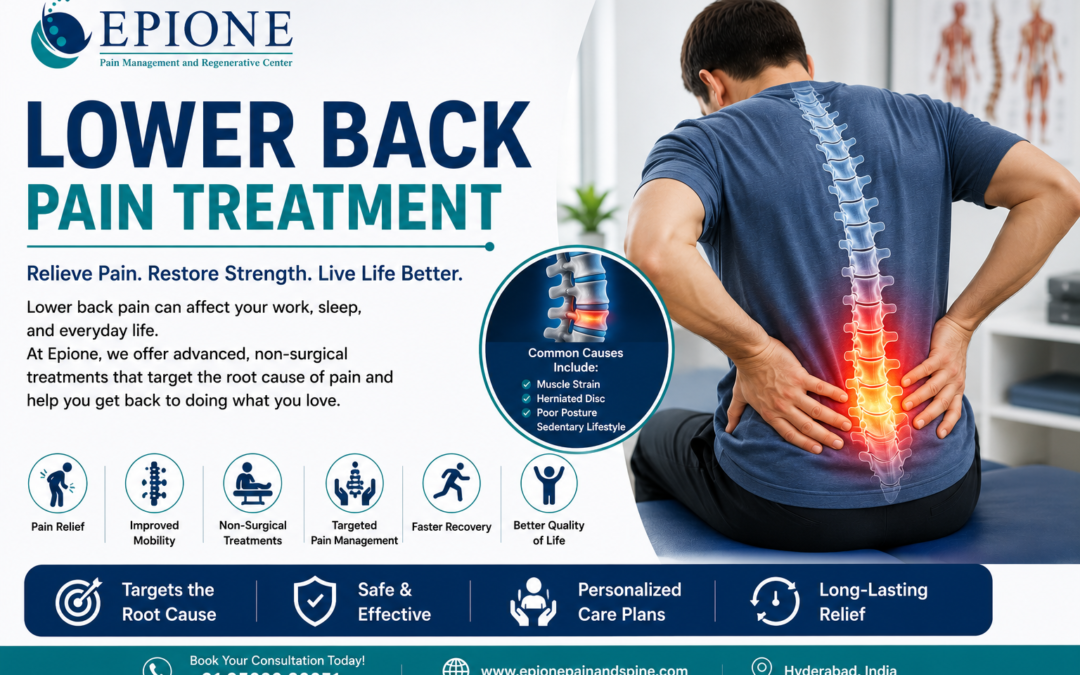
Are you waking up every morning with a stiff, aching back? Does sitting at your desk for work feel like a punishment? If you are silently nodding, you are not alone. Millions of people struggle with back discomfort daily, often missing out on family time, hobbies, and simple joys because of the constant fear of triggering another painful flare-up.
Living with pain can be exhausting, both physically and emotionally. However, finding the right lower back pain treatment shouldn’t be a guessing game. Medical technology has evolved tremendously. Today, finding lasting relief rarely requires invasive open surgery. Instead, modern medicine offers highly effective, minimally invasive solutions that can help you get your life back on track.
What is the Best Lower Back Pain Treatment?
The most effective lower back pain treatment focuses on non-surgical interventions customized to the patient’s specific condition. First-line treatments include targeted physical therapy, posture correction, and anti-inflammatory medications. For chronic pain, advanced options like epidural steroid injections, nerve blocks, radiofrequency ablation, and regenerative medicine provide rapid, long-lasting relief without the need for traditional spine surgery.
Common Symptoms You Shouldn’t Ignore
Back pain is rarely just a simple ache. It can manifest in several different ways, and understanding your symptoms is the first step toward healing. You might be experiencing:
- A dull, constant ache in your lower back.
- Sharp, shooting pain that travels down your buttocks and legs.
- Muscle spasms that make it difficult to stand up straight.
- Pain that worsens after prolonged sitting or standing.
- Stiffness in the morning that gradually improves with movement.
Severe Lower Back Pain Causes and Triggers
To treat the problem effectively, doctors must first identify what is causing it. The human spine is a complex structure of bones, joints, ligaments, and muscles. An injury to any of these components can lead to significant discomfort. Some of the most common severe lower back pain causes include:
- Muscle or Ligament Strain: Repeated heavy lifting or a sudden awkward movement can strain back muscles and spinal ligaments.
- Bulging or Ruptured Discs: The soft material inside a spinal disc can bulge or rupture, pressing on a nerve.
- Arthritis: Osteoarthritis can affect the lower back, leading to a narrowing of the space around the spinal cord (spinal stenosis).
- Skeletal Irregularities: Conditions like scoliosis, where the spine curves to the side, can lead to back pain in middle age.
- Osteoporosis: The spine’s vertebrae can develop painful fractures if your bones become porous and brittle.
Risk Factors: Who is Most at Risk?
Anyone can develop back pain, even teenagers. However, certain factors increase your risk:
- Age: Back pain becomes more common as you get older, starting around age 30 or 40.
- Lack of Exercise: Weak, unused muscles in your back and abdomen might lead to back pain.
- Excess Weight: Carrying extra body weight puts added stress on your lower back joints.
- Improper Lifting: Using your back instead of your legs to lift heavy objects.
- Psychological Conditions: People prone to depression and anxiety appear to have a higher risk of back pain, as stress causes muscle tension.
How is Back Pain Diagnosed?
When you visit a specialist, they will conduct a thorough physical examination to assess your ability to sit, stand, walk, and lift your legs. If your doctor suspects a specific underlying condition, they may order imaging tests.
X-rays are often used to check for arthritis or broken bones. Magnetic Resonance Imaging (MRI) or CT scans can reveal herniated discs, problems with blood vessels, or issues with muscles and ligaments. Sometimes, nerve studies (EMG) are conducted to confirm nerve compression.
Advanced Lower Back Pain Treatment Options for 2026
The landscape of healthcare is shifting away from aggressive surgeries toward precision-based therapies. Depending on your diagnosis, your doctor will recommend a tailored treatment plan.
Non Surgical Back Pain Treatment
For most patients, conservative care is highly effective. A robust non surgical back pain treatment plan typically involves:
- Physical Therapy: Strengthening the core and back muscles to better support the spine.
- Lifestyle Modifications: Ergonomic workplace adjustments and weight management.
- Medications: Muscle relaxants and topical pain relievers to manage acute flare-ups.
Chronic Back Pain Treatment and Interventions
When conservative methods are not enough, specialized chronic back pain treatment steps in. These are minimally invasive procedures designed to target the exact source of the pain:
| Treatment Type | How It Works | Best For |
|---|---|---|
| Epidural Steroid Injections | Delivers anti-inflammatory medicine directly to the nerves. | Sciatica and herniated discs. |
| Radiofrequency Ablation | Uses heat to temporarily disable the nerve sending pain signals. | Facet joint pain and arthritis. |
| Regenerative Medicine | Uses the body’s natural healing agents to repair damaged tissue. | Degenerative disc disease. |
| Nerve Blocks | Anesthetic injected near specific nerves to interrupt pain signals. | Localized, severe spinal pain. |
Spine Pain Management: The Benefits of Early Treatment
Ignoring back pain is one of the biggest mistakes patients make. Hoping the pain will magically disappear often leads to worsened conditions. Proactive spine pain management offers significant benefits:
- Prevents Chronic Conditions: Early intervention stops acute pain from becoming a lifelong struggle.
- Avoids Surgery: Treating the root cause early drastically reduces the likelihood of needing invasive spine surgery later.
- Restores Mobility: You can return to your daily activities, work, and exercise routines much faster.
- Improves Mental Health: Chronic pain is heavily linked to anxiety and depression; treating the pain improves your overall quality of life.
Simple Tips to Prevent Lower Back Ache
While not all back problems can be prevented, you can take practical steps to keep your spine healthy:
- Exercise regularly to keep your back muscles strong and flexible.
- Maintain a healthy weight to reduce pressure on your lumbar spine.
- Practice good posture, especially if you sit at a computer all day. Use chairs with good lower back support.
- Lift smart by bending at the knees and keeping the heavy object close to your body.
When Should You See a Doctor?
Most back pain gradually improves with home treatment and self-care within a few weeks. However, you should contact a doctor immediately if your back pain:
- Causes new bowel or bladder problems.
- Is accompanied by a fever.
- Follows a severe fall, blow to your back, or other injury.
- Causes weakness, numbness, or tingling in one or both legs.
- Is accompanied by unexplained weight loss.
Why Choose Epione Pain & Spine Clinic?
At Epione Pain & Spine Clinic, we understand that your pain is unique. We don’t believe in a one-size-fits-all approach. As a premier destination for pain management in India, we combine state-of-the-art medical technology with deep compassion for our patients. Our multidisciplinary team is dedicated to finding the root cause of your discomfort and treating it with the most advanced, minimally invasive techniques available today.
Consult Our Expert Spine Specialists Today
You do not have to let back pain dictate how you live your life. Our expert pain specialists are ready to listen to your concerns, evaluate your condition, and create a personalized roadmap to recovery. By utilizing the latest advancements in non-surgical treatments, we can help you achieve long-lasting relief and regain your mobility.
Frequently Asked Questions (FAQs)
1. Is walking good for lower back pain?
Yes, walking is a low-impact exercise that increases blood flow to the spine, helps reduce stiffness, and strengthens the muscles that support your lower back.
2. Can severe back pain be cured without surgery?
Absolutely. Over 90% of back pain cases can be successfully treated using non-surgical methods such as targeted physical therapy, nerve blocks, and radiofrequency ablation.
3. How do I know if my back pain is serious?
If your pain is accompanied by numbness in your legs, loss of bladder control, fever, or unexplained weight loss, it is considered a medical emergency and requires immediate attention.
4. How long does a steroid injection for back pain last?
The relief from an epidural steroid injection varies from patient to patient, but it typically provides significant pain relief lasting anywhere from a few months to over a year, allowing you to engage in physical therapy comfortably.
5. What is the success rate of spine pain management at Epione Clinic?
Our comprehensive, non-surgical protocols have an incredibly high success rate, helping the vast majority of our patients return to their daily lives pain-free and without the need for invasive open surgery.
Conclusion
Lower back pain can feel like a heavy burden, but the right medical guidance can lift that weight off your shoulders. From understanding the root causes to exploring advanced regenerative and interventional therapies, the journey to a pain-free life is entirely possible. Don’t let chronic discomfort limit your potential. Embrace the modern advancements in spine care and take the first step toward a healthier, more active future.
Ready to finally overcome your back pain without surgery?
Don’t let another day pass in discomfort. Schedule your comprehensive evaluation with India’s leading pain management experts today.