

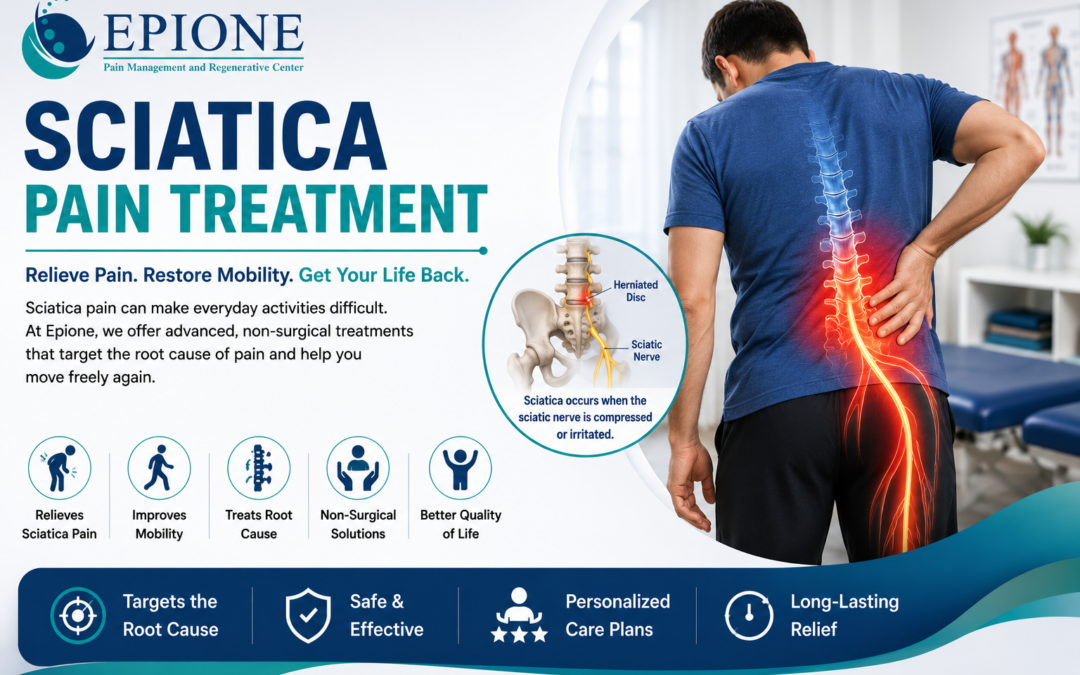
Have you ever felt a sudden, sharp, electric shock-like pain shooting from your lower back down through your buttock and into your leg? If this burning sensation makes it hard to walk, stand, or even sit comfortably, you are likely dealing with sciatica.
Living with this kind of constant, radiating discomfort is exhausting. It disrupts your sleep, drains your energy, and keeps you from enjoying your daily life. But the good news is that you don’t have to simply “live with it.” With the right sciatica pain treatment, you can heal the underlying issue, calm the irritated nerve, and find lasting relief—often without ever needing to step foot in an operating room.
In this guide, we will walk you through exactly what causes sciatic nerve pain, how to recognize the symptoms, and the highly effective, non-surgical treatment options available to help you get your life back.
What is the best treatment for sciatica?
The most effective sciatica pain treatment involves a combination of non-surgical approaches tailored to the patient. This typically includes targeted physical therapy, specialized nerve medications, epidural steroid injections, and advanced pain block procedures. Addressing the root cause, such as a herniated disc or spinal narrowing, ensures long-term pain relief and restores full mobility without invasive surgery.
What is Sciatica?
Sciatica is not actually a medical condition in itself; rather, it is a symptom of an underlying problem in your lower back. It refers to pain that travels along the path of the sciatic nerve—the longest and thickest nerve in the human body. This nerve branches from your lower back, extends through your hips and buttocks, and runs down the back of each leg. Usually, sciatica affects only one side of the body at a time.
Common Symptoms of Sciatica
Sciatic pain can vary widely. For some, it is a mild ache; for others, it is a sharp, excruciating pain that makes simple movements feel impossible.
Common symptoms include:
- Radiating Pain: Discomfort that travels from the lower spine to the buttock and down the back of the leg.
- Electric Shock Sensations: Sudden jolts of sharp pain, often triggered by coughing, sneezing, or sitting for long periods.
- Numbness and Tingling: A “pins and needles” sensation in the affected leg or foot.
- Muscle Weakness: Difficulty moving the leg or foot, or feeling like your leg might give out when you stand.
- Constant Lower Back Pain: While leg pain is the primary complaint, a dull, constant ache in the lower back is also very common.
What Causes Sciatic Nerve Pain?
Sciatica occurs when the sciatic nerve becomes pinched, compressed, or irritated. But what causes this pressure? Here are the most common culprits:
- Herniated or Slipped Disc: This is the most common cause of sciatica. The cushions (discs) between your spinal bones can bulge or rupture, pressing directly against the sciatic nerve. If this is the root cause, seeking prompt slipped disc treatment is crucial to prevent long-term nerve damage.
- Spinal Stenosis: Over time, the spinal canal can naturally narrow, putting pressure on the nerves housed inside.
- Bone Spurs (Osteophytes): Overgrowth of bone on the spine, often due to osteoarthritis, can press against the sciatic nerve.
- Piriformis Syndrome: A small muscle deep in the buttocks (the piriformis) can spasm and irritate the sciatic nerve located right beneath it.
- Spondylolisthesis: A condition where one spinal vertebra slips forward over the one below it, pinching the nerve root.
Risk Factors: Who is Most Likely to Get Sciatica?
Certain lifestyle and health factors can increase your risk of developing sciatic nerve pain. These include:
- Age: Age-related changes in the spine, like bone spurs and herniated discs, are the most common triggers.
- Obesity: Excess body weight increases the stress placed on your spine.
- Occupation: Jobs that require heavy lifting, twisting the back, or driving for long periods can contribute to disc breakdown.
- Prolonged Sitting: People with sedentary lifestyles or desk jobs are more prone to sciatica than active individuals.
- Diabetes: This condition increases the risk of nerve damage across the entire body.
How is Sciatica Diagnosed?
Proper diagnosis is the first step toward effective lower back pain treatment. During your visit to a spine care clinic, your doctor will check your muscle strength and reflexes. They may ask you to walk on your toes or heels, rise from a squatting position, or lift your legs one at a time while lying on your back.
If your pain is severe or doesn’t improve with basic care, your doctor may order imaging tests to see exactly what is pinching the nerve:
- X-rays: To look for bone spurs.
- MRI Scans: The best tool to see soft tissues like herniated discs and pinched nerves.
- CT Scans: Sometimes used with a contrast dye to image the spinal cord and nerves.
Effective Sciatica Pain Treatment Options
At Epione Pain & Spine, we believe in a conservative, patient-first approach. Surgery is rarely the first step. Our goal is to relieve your pain and heal the underlying issue using advanced, non-surgical medical treatments.
Non-Surgical Treatments for Sciatica
Here is a breakdown of the most effective non-surgical interventions:
| Treatment Type | How It Works | Best For |
|---|---|---|
| Medications | Anti-inflammatories, muscle relaxants, and specific nerve pain treatment medications help calm nerve misfiring and reduce swelling. | Acute, sharp pain and muscle spasms. |
| Physical Therapy | Customized exercises to strengthen the core, correct posture, and improve flexibility to take pressure off the sciatic nerve. | Long-term prevention and structural support. |
| Epidural Steroid Injections | A targeted injection of a corticosteroid directly around the irritated nerve root to flush out inflammation. | Severe, radiating pain that hasn’t responded to oral medications. |
| Radiofrequency Ablation (RFA) | A minimally invasive procedure that uses heat to temporarily turn off pain signals from specific nerves. | Chronic, persistent back and leg pain. |
| Ozone Disc Therapy | A specialized injection into a herniated disc that shrinks the disc volume, relieving pressure on the sciatic nerve. | Patients with confirmed slipped or bulging discs. |
Benefits of Early Sciatica Pain Treatment
Ignoring sciatica won’t make it go away. In fact, “powering through” the pain can lead to permanent nerve damage. Seeking early treatment offers several major benefits:
- Faster Pain Relief: Medical interventions can stop the pain cycle quickly, allowing you to sleep and move comfortably.
- Avoid Surgery: By addressing the problem early with physical therapy and injections, you significantly reduce the likelihood of needing invasive spine surgery later.
- Prevent Muscle Wasting: Chronic nerve compression can lead to permanent weakness in the leg. Early treatment protects your muscle function.
- Improved Quality of Life: Get back to your family, your job, and your hobbies without the constant fear of triggering a pain flare-up.
Prevention Tips: Keeping Your Spine Healthy
Once you find relief, keeping your spine healthy is vital to prevent the pain from returning.
- Exercise regularly: Focus on core-strengthening exercises to support your lower back.
- Maintain proper posture: When sitting, ensure your lower back is supported and your feet are flat on the floor.
- Use good body mechanics: If you must lift something heavy, let your legs do the work. Keep your back straight and bend only at the knees.
- Take movement breaks: Avoid sitting in one position for hours. Stand up, stretch, and walk around every 45 minutes.
When Should You See a Spine Pain Specialist?
Mild sciatica might go away with a few days of rest, but you should not wait to seek medical care if your symptoms are severe. You need to consult a spine pain specialist immediately if:
- The pain lasts longer than a week and is getting worse.
- The pain follows a violent injury, like a car accident or a bad fall.
- You experience sudden, severe weakness or numbness in your leg.
- You have trouble controlling your bowels or bladder (this is a medical emergency known as Cauda Equina Syndrome).
Why Choose Epione Pain & Spine for Sciatica Relief?
At Epione Pain & Spine, we understand that chronic pain is exhausting. Our clinic is dedicated to providing world-class, non-surgical pain management tailored to your specific needs.
- Accurate Diagnosis: We don’t just treat the symptoms; we find and target the exact root cause of your nerve pain.
- Advanced Non-Surgical Options: From targeted epidural injections to regenerative medicine, we offer the latest medical advancements.
- Compassionate Care: We listen to you. Our multidisciplinary team ensures you feel comfortable, informed, and supported at every step of your recovery journey.
Consult Our Expert Pain Specialists
Stop letting sciatic pain dictate what you can and cannot do. Our highly experienced doctors at Epione Pain & Spine are ready to help you map out a personalized recovery plan. Whether you need specialized nerve pain treatment, advanced injections, or targeted therapy, we are here to guide you back to a pain-free life.
Ready to take the first step toward lasting relief?
Call us today to schedule your comprehensive spine evaluation. Let us help you get back on your feet.
Frequently Asked Questions (FAQs)
1. How long does a sciatica flare-up usually last?
Acute sciatica flare-ups typically last between one to two weeks, gradually improving with rest and basic care. However, if the underlying cause (like a slipped disc) isn’t addressed, chronic sciatica can persist for months.
2. Is walking good for sciatica?
Yes, in most cases, gentle walking is highly beneficial. It promotes blood flow, reduces inflammation, and keeps the spine flexible. However, if walking causes sharp, shooting pain, stop and consult a doctor.
3. Does sciatica require surgery?
No, the vast majority of sciatica cases do not require surgery. Over 90% of patients find complete relief through non-surgical treatments like physical therapy, medications, and epidural steroid injections.
4. What is the difference between normal back pain and sciatica?
Normal back pain usually stays localized to the back area and can be achy or stiff. Sciatica specifically features sharp, shooting, or burning pain that travels down from the lower back through the buttock and into the leg.
5. Which sleeping position is best for sciatica?
Sleeping on your back with a pillow tucked under your knees helps maintain the natural curve of your spine and reduces pressure on the sciatic nerve. If you prefer sleeping on your side, place a firm pillow between your knees to keep your hips aligned.
Conclusion
Sciatica is a painful, disruptive condition, but it is also highly treatable. You do not have to accept chronic leg and back pain as your new normal. By understanding the root causes and seeking the right non-surgical sciatica pain treatment, you can eliminate the pain, heal your spine, and reclaim your active lifestyle.
Don’t wait for the pain to become unbearable. Early intervention is the key to a fast, complete recovery. Reach out to the experts at Epione Pain & Spine and take control of your spinal health today.
Don’t Let Sciatica Control Your Life. Get Expert Help Today!
Are you tired of living with sharp, shooting leg pain? At Epione Pain & Spine, our expert spine specialists are ready to provide you with the most advanced, non-surgical relief options available.
📞 Call us now at 8008008729 to book your consultation and take your first step toward a pain-free life!