


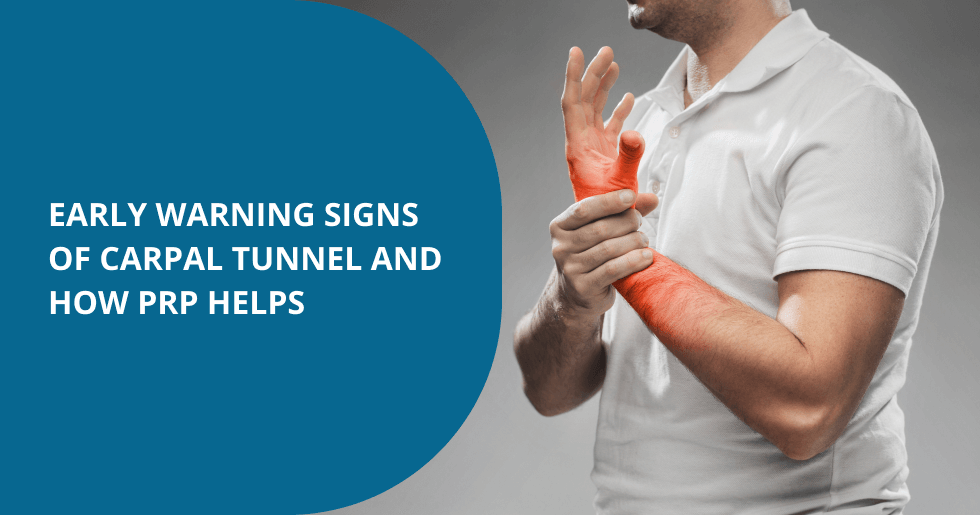
Typing at your desk or even holding a steering wheel, these simple everyday actions can sometimes trigger an unexpected discomfort in your hands or wrists.
What may seem like a mild tingling or occasional numbness could be an early sign of Carpal Tunnel Syndrome. This condition happens when one of the main nerves to the hand gets squeezed or compressed as it passes through the wrist.
The good news? Recognising Carpal Tunnel Syndrome symptoms makes treatment easier, and in many cases, non-surgical solutions are one of the effective treatments for many.
At Epione, Bangalore, we provide personalised and advanced non-surgical treatment such as PRP to promote natural healing and long-term relief for CTS.
Let’s explore more about the CTS and PRP treatments.
What is Carpal Tunnel Syndrome?
Carpal Tunnel Syndrome (CTS) is a common issue affecting the hand and wrist, caused by compression of the median nerve passing through the wrist’s carpal tunnel.
The compression can cause swelling or irritation in this space, putting pressure on the nerve, leading to pain, tingling, or numbness.
In most cases, it worsens over time. If untreated for a long period, it can cause permanent hand dysfunction, such as loss of finger sensation and weakness.

Common Early Signs of CTS
The symptoms of Carpal Tunnel Syndrome often start gradually and include:
- Tingling or Numbness – You might feel numbness or tingling in the palm of your hand or in your fingers. Primarily, there might be a pain-and-needles sensation primarily in the thumb, index, middle, and half of the ring finger.
- Weakness – You might experience weakness and find it hard to pick up small objects.
- Shock-like Sensations – You might experience a jolt-like shock running through the palm and wrist.
- Swollen Fingers – Many people with CTS experience a sensation of swollen fingers, even if there is no visible swelling.
Symptoms to Watch for at Night
Carpal tunnel symptoms often get worse at night. This is because people usually sleep with their wrists bent, which raises pressure on the median nerve.
While sleeping, blood flow to the arms and hands drops as circulation focuses on essential organs. This can make carpal tunnel symptoms worse by increasing the sensitivity of the median nerve. The mix of lower blood flow and added pressure can heighten nighttime symptoms.
Causes and Risk Factors
The CTS happens when there is pressure on the median nerve. This nerve travels from the forearm through a tunnel in the wrist to the hand. This tunnel is called the carpal tunnel.
Here are some of the common Carpal Tunnel causes –
- Repetitive Hand Movements: Activities that include repetitive motions, prolonged gripping, or using vibrating tools can strain tendons and increase pressure on the median nerve.
- Anatomical Factors: A wrist fracture or dislocation can change the space inside the carpal tunnel. This change can put pressure on the median nerve.
- Health Conditions: Certain conditions, like diabetes, thyroid disorders, and rheumatoid arthritis, can raise the risk.
- Gender and Age: Women are more susceptible to developing CTS because of differences in hand and wrist structure. Furthermore, with age, tissues become more prone to compression and irritation, increasing the risk of CTS.
How Carpal Tunnel is Diagnosed
A healthcare provider will diagnose carpal tunnel syndrome with a physical exam and some tests.
The specialist tests the feeling in the fingers and the strength of the muscles in the hand. Bending the wrist, tapping on the nerve, or simply pressing the nerve can trigger symptoms in many people.
Further, nerve electrodiagnostic tests, including nerve conduction studies (NCS) and electromyography (EMG), help confirm the diagnosis. NCS measures the flow of electrical signals through the median nerve. EMG checks muscle function and finds early nerve damage.
Moreover, other tests include Tinel’s sign, Phalen’s test, wrist x-ray, ultrasound, and Magnetic resonance imaging (MRI) help to evaluate the severity of the CTS.

Stages of Carpal Tunnel Syndrome
Carpal Tunnel Syndrome progresses through three stages –
- Mild: CTS generally starts slow with symptoms like numbness, weakness, tingling, and swelling that often resolve with at-home treatment.
- Moderate: Symptoms occur frequently during the day as the condition worsens, accompanied by noticeable hand weakness.
- Severe: Long-term CTS may develop, with constant numbness, loss of thumb muscle strength, and find it difficult in grabbing or holding small objects.
Non-Surgical Treatment Options
If carpal tunnel syndrome is diagnosed and treated early, the symptoms can often be relieved without surgery.
Here are some non-surgical Carpal tunnel syndrome treatment options –
- Wrist Splints and Support -Wearing a wrist splint keeps your wrist in a neutral position. It also reduces pressure on the median nerve.
- Physical or Occupational Therapy – It is another great treatment that helps strengthen the muscles in your hand and wrist. Making simple changes, like taking regular breaks from repetitive tasks, can help reduce strain on your wrist.
- Medications: For short-term relief, over-the-counter medications can help to reduce pain or manage the symptoms temporarily.
Role of PRP Therapy in Carpal Tunnel Syndrome
Platelet Rich Plasma (PRP) is an advanced, regenerative, non-surgical wrist pain treatment method offered at Epione that has shown promising results for Carpal Tunnel Syndrome (CTS). PRP injections for Carpal Tunnel help to reduce inflammation and promote nerve healing, leading to improvements in pain, function, and median nerve swelling.
PRP comes from your own blood and is placed in a centrifuge to separate the platelets from other components. The concentrated platelets are then injected directly near the median nerve.
At Epione Bangalore, this natural approach helps decompress the nerve and provides lasting relief without the risks of surgery.
When Surgery is Recommended
Surgery for CTA can be considered when
- Symptoms are severe or worsening
- Nonsurgical treatments haven’t helped after several months
- You’re experiencing significant muscle weakness or wasting
- Nerve testing shows damage to the median nerve

FAQs
-
What are the first signs of carpal tunnel syndrome?
The first signs are usually tingling, numbness, or a burning sensation in the thumb, middle and ring fingers, often occurring or worsening during the night.
-
Is PRP better than steroid injections for carpal tunnel?
PRP stimulates natural healing and provides long-lasting results, reducing inflammation.
-
How long does non-surgical recovery take?
Recovery takes minimal time after non-surgical treatments like PRP, and patients often notice improvement within weeks to months.
-
Can carpal tunnel go away without treatment?
Mild cases might see improvement with rest and splinting. However, moderate and severe cases need professional care.
-
Are PRP injections safe for hand/wrist conditions?
Yes, they are very safe and performed by specialists.
